
TU Delft participates in innovative projects on compact reactors and molten salt reactors
 Scan to share
The MOOI Kernenergie nuclear funding programme, operated by the Netherlands Enterprise Agency (RVO), has recently selected four innovative projects to support research and development in reactor and fuel cycle technologies, radioactive waste storage, and geological disposal solutions. TU Delft is involved in three of these projects, with researchers from its Reactor Institute participating in the MARLIN and PRONTO projects.
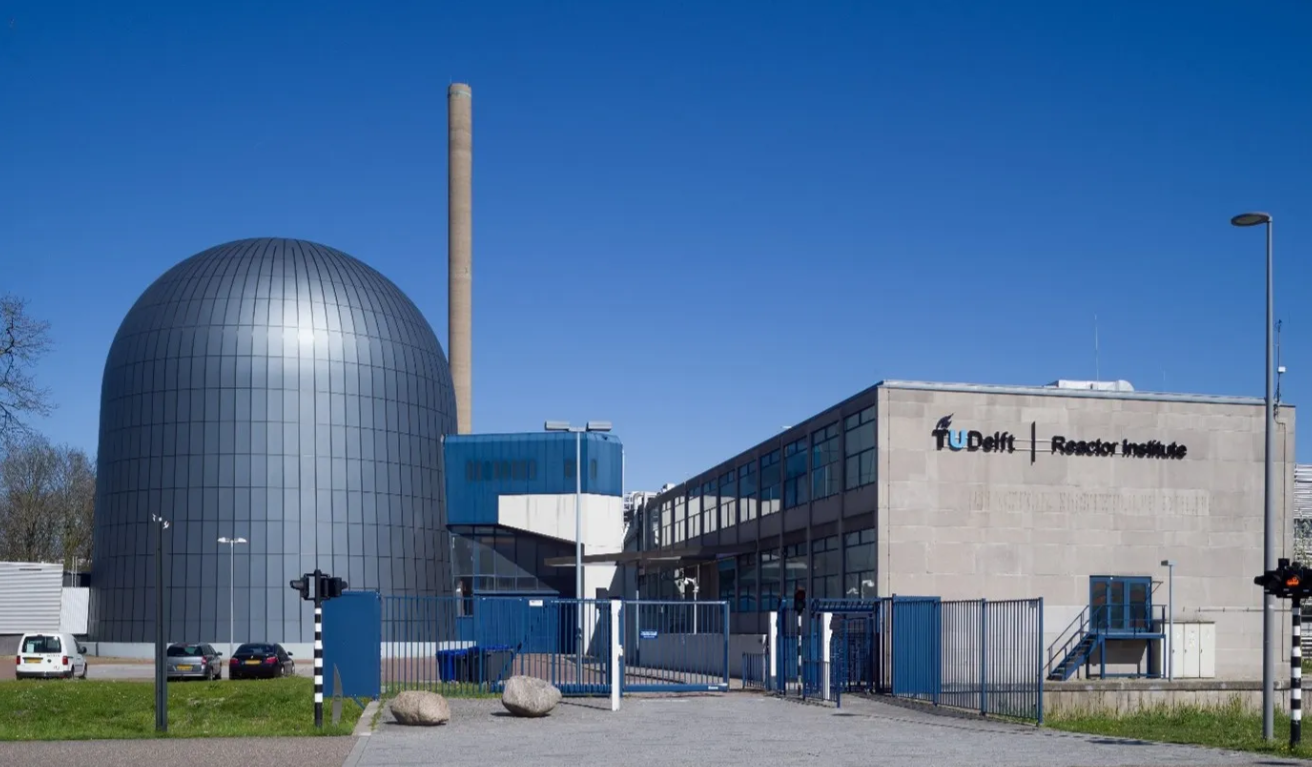
The MARLIN project focuses on compact modular high-temperature gas-cooled reactors (HTGRs) for industrial, maritime, and offshore applications. Based on measurement data and models, the project consortium will develop and validate a reactor prototype capable of simultaneously providing electricity and high-temperature process heat, targeting industrial clusters as well as maritime and offshore scenarios.
The maritime industry faces significant pressure in terms of emission reduction and the energy transition. Building on its expertise in innovative nuclear reactor research, TU Delft is contributing to the advancement of high-temperature reactor technology to assess its feasibility as a clean, reliable energy source for future maritime applications. The main project partner is Allseas.
The PRONTO project, meanwhile, focuses on the development of innovative molten salt reactor concepts, with plans to develop a molten salt reactor prototype equipped with replaceable "fuel cartridges." The design intends to use a mixture of thorium and long-lived radioactive elements extracted from recycled nuclear fuel as fuel, thereby reducing the volume of long-lived nuclear waste. The project will also study the service life of materials under high-temperature conditions and develop new monitoring methods to mitigate related technical risks at an early stage. The project is led by Thorizon.
In addition to the two projects mentioned above, TU Delft also leads the TUNED project, which studies the design of a final geological disposal repository. The TUNED project, whose full name is "Tunnel Design and Engineering for a Geological Disposal Facility in Dutch Clay Layers," has received €2.7 million in funding from RVO, with support from TU Delft, the Dutch Central Organisation for Radioactive Waste (COVRA), and project partners. The project aims to establish a validated methodology and decision-making framework for tunnel design guidelines required for the geological disposal of high-level radioactive waste in clay layers.
The TUNED project is led by Anne-Catherine Dieudonné of TU Delft. Project partners include COVRA, Fugro, Tunnel Engineering Consultants, the European Underground Research Infrastructure for Disposal of Nuclear Waste in Clay Environment (EURIDICE), and the Belgian National Agency for Radioactive Waste and Enriched Fissile Materials (ONDRAF/NIRAS). Tunnel Engineering Consultants is a joint venture between Witteveen+Bos and Haskoning.
MOOI Kernenergie is operated by RVO on behalf of the Dutch Ministry of Economic Affairs and Climate Policy and the Ministry of Infrastructure and Water Management. It is part of the Energy Innovation NL energy innovation instruments and aims to support R&D projects that contribute to the objectives of the multi-year mission-driven innovation programme for nuclear energy.
Disclaimer: Information republished from partner media, institutions or other websites is provided for reference and communication purposes only. It does not imply endorsement of its views or verification of its accuracy. Please contact us if any content infringes rights or requires correction.