
Malaysia Advances Nuclear Energy Workforce Planning Capacity Building
 Scan to share
The International Atomic Energy Agency (IAEA) recently held a national workshop on nuclear energy human resource planning in Malaysia to help the country enhance its workforce forecasting and capacity building for existing and future nuclear applications. The workshop was held from 17 to 21 August 2026 over five days, with participants from MyPOWER Corporation, the Malaysian Nuclear Agency, regulatory bodies, national utilities, and academic and training institutions.
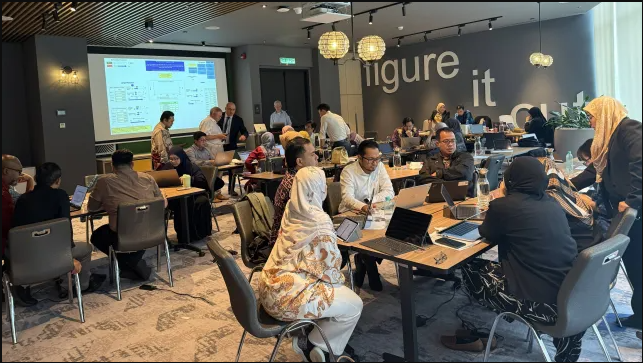
The five-day workshop was held in Malaysia from 17 to 21 August 2026, with participants including representatives from MyPOWER Corporation and the Malaysian Nuclear Agency, as well as staff from the country's regulatory bodies, national utility companies, and academic and training institutions. (Photo: IAEA)
The workshop focused on the use of the IAEA's Nuclear Power Human Resources (NPHR) modelling tool, and marked the first release of an updated version of the tool. The new model includes a dedicated module for small modular reactors (SMRs) to accommodate the growing planning needs of countries for this reactor type.
Malaysia currently has no operating nuclear power reactors, but has operated the TRIGA PUSPATI research reactor in Bangi for more than four decades for isotope production, neutron imaging, and personnel training. In recent years, Malaysia has renewed its focus on the role of nuclear energy in long-term energy diversification, including small modular reactors, while also considering the construction of a new multipurpose research reactor.
During the workshop, participants conducted phased exercises using the NPHR model and the Research Reactor Human Resources (RRHR) model, mapping out national organizational structures and competency categories, and analysing factors such as recruitment sources, staff attrition, localization levels, and training pathways. The training also involved populating the models with Malaysia-specific data in line with relevant IAEA guidelines, and reviewing staffing projections against IAEA reference benchmarks.
Pedro Diego Porras, Head of the IAEA's Nuclear Knowledge Management section, stated that the workshop enabled participants to use the NPHR model to establish national workforce projections, ensuring that the results reflect Malaysia's nuclear power planning needs and its institutional capacity building objectives.
Akmal Zyti Yahya, Head of Capacity Building at MyPOWER Corporation, stated that the NPHR workshop provided a shared data foundation for Malaysia's collaboration with universities, regulatory bodies, and utility companies, helping to determine the types of talent, skills, and timelines needed in the future. She noted that structured, phased workforce forecasting is important for Malaysia, which has years of research reactor operating experience and is advancing its nuclear power plans.
The NPHR model was first released in 2011, with early versions primarily targeting new large light-water reactor projects. As more countries focus on small modular reactors, the IAEA has expanded the model's job categories and organizational assumptions to reflect the relatively smaller staffing requirements of SMR projects.
Andrey Sitnikov, IAEA Technical Lead for Research Reactor Infrastructure Development, stated that the national human resources required for building a new research reactor is a key challenge not only for countries new to nuclear energy, but also for countries that already operate research reactors. The RRHR model helps countries assess existing capabilities, identify gaps, and determine additional human resource requirements.
According to current plans, Malaysia is scheduled to undergo its first Integrated Nuclear Infrastructure Review for Research Reactors (INIR-RR) mission in January 2027. The review is coordinated by the IAEA, with an international team of experts conducting a peer review of areas related to research reactor infrastructure.
Julia Abdul Karim, Director of the Technical Support Division at the Malaysian Nuclear Agency, stated that this training will strengthen Malaysia's capabilities in human resource planning and modelling for the new multipurpose research reactor project, particularly in identifying competency gaps, forecasting future staffing needs, and developing structured human resource development strategies to support the deployment of qualified and competent personnel throughout the reactor's entire lifecycle.
This workshop is part of the IAEA's efforts to support Member States in developing nuclear infrastructure in accordance with the "Milestones Approach," with funding provided through the Peaceful Uses Initiative. The IAEA has to date provided NPHR and RRHR-related training to more than 20 Member States, covering countries at various stages of considering, planning, or operating nuclear power and research reactor programmes, and will continue to update the relevant models based on Member State experience.
Disclaimer: Information republished from partner media, institutions or other websites is provided for reference and communication purposes only. It does not imply endorsement of its views or verification of its accuracy. Please contact us if any content infringes rights or requires correction.