
IAEA Launches ATLAS Initiative to Advance Nuclear Energy Maritime Applications
 Scan to share
The International Atomic Energy Agency (IAEA) launched the "Atomic Technology for Maritime Applications Licensing Scheme (ATLAS)" on August 26 in Washington, D.C., United States, aiming to support the safe, reliable, and peaceful use of nuclear energy in civilian vessels and floating nuclear power plants.
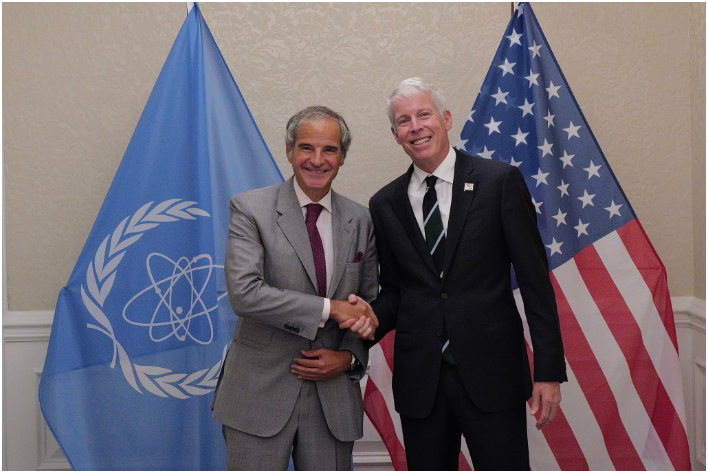
The two-day ATLAS ministerial launch event, hosted by the United States, attracted approximately 600 delegates from over 50 countries, including international organizations, nuclear and maritime industry enterprises, port authorities, and relevant regulatory and policy departments. The IAEA stated that as nuclear-powered ships and floating nuclear power plants gain increasing attention, closer coordination mechanisms between the nuclear and maritime communities are needed.
Maritime shipping carries approximately 80% of global trade volume, and maritime trade demand continues to grow at around 2% annually. The IAEA believes that nuclear energy, particularly advanced reactor technologies such as small modular reactors (SMRs), offers high energy density and extended endurance capabilities, enabling vessels to operate for extended periods without refueling. Floating nuclear power plants can provide stable energy to coastal regions, remote communities, and offshore industries with limited traditional energy infrastructure.
According to the IAEA, with continued advances in reactor design, fuel technology, and marine engineering, some nuclear-powered maritime installations could enter service as early as the 2030s. The relevant technologies can be applied to container ships, bulk carriers, tankers, cruise ships, icebreakers, and offshore support vessels, as well as providing electricity, heat, seawater desalination, and emergency energy support for remote communities, ports, disaster relief, and offshore industries.
IAEA Director General Rafael Mariano Grossi stated at the launch event that the ATLAS initiative connects the nuclear and maritime sectors, helping to drive future development in energy and shipping while building confidence in the safe, reliable, and peaceful use of nuclear technology at sea.
A joint statement released the same day showed that member states including Argentina, Bangladesh, Belgium, Brazil, Canada, Denmark, France, India, Japan, South Korea, Singapore, the United Kingdom, and the United States support the ATLAS initiative. The statement said that the international nuclear and maritime communities need to strengthen cooperation to ensure the safe and reliable deployment of relevant technologies and reinforce the effective implementation of safeguards for civilian nuclear applications at sea. The statement also emphasized that ATLAS adheres to the principle of technology neutrality and does not promote or endorse any specific reactor design or supplier.
U.S. Secretary of Energy Christopher Wright said at the event that the ATLAS ministerial meeting helps advance maritime nuclear energy and nuclear-powered shipping from vision to commercial application. During the meeting, ministers and officials from various countries will deliver national statements on the potential role of future nuclear technologies in maritime applications, and hold thematic discussions on practical needs, deployment challenges, infrastructure, partnerships, and international cooperation.
The IAEA stated that following its launch, ATLAS will advance implementation through six expert working groups, progressively building a comprehensive ATLAS framework. The working groups will comprise representatives from countries, industry, and other stakeholders, focusing on nuclear safety, nuclear security, safeguards, and regulatory issues related to nuclear-powered ships and floating nuclear power plants, while working across different deployment models and technical characteristics.
During the event, nuclear and maritime enterprises also showcased the latest advances in civilian nuclear applications at sea. Delegates will subsequently travel to the Port of Baltimore to visit the world's first civilian nuclear-powered merchant ship, the NS Savannah. The ship's reactor began operation in 1962. The IAEA stated that the ATLAS initiative will build on its long-standing support for the peaceful use of nuclear technology, promoting the early integration of safety, security, and safeguards requirements into the design and deployment of next-generation maritime nuclear applications.
Disclaimer: Information republished from partner media, institutions or other websites is provided for reference and communication purposes only. It does not imply endorsement of its views or verification of its accuracy. Please contact us if any content infringes rights or requires correction.