
Safety-level DCS Response Time Testing for Unit 3 of Xudabao Nuclear Power Plant Successfully Completed
 Scan to share
Recently, with the final test data confirmed to be accurate, the safety-level DCS (Digital Control System) response time testing for Unit 3 of Xudabao Nuclear Power Plant was successfully completed. All test results met the requirements, with no abnormal equipment actions throughout the entire process, providing reliable instrumentation and control assurance for the subsequent fuel loading and stable operation of the unit.
The test lasted 14 days and covered 182 test cases, encompassing more than 1,500 functional tests for reactor trip and engineered safety features systems. As a critical step before fuel loading, the safety-level DCS response time test holds significant reference value for verifying the response performance of the unit's safety systems.
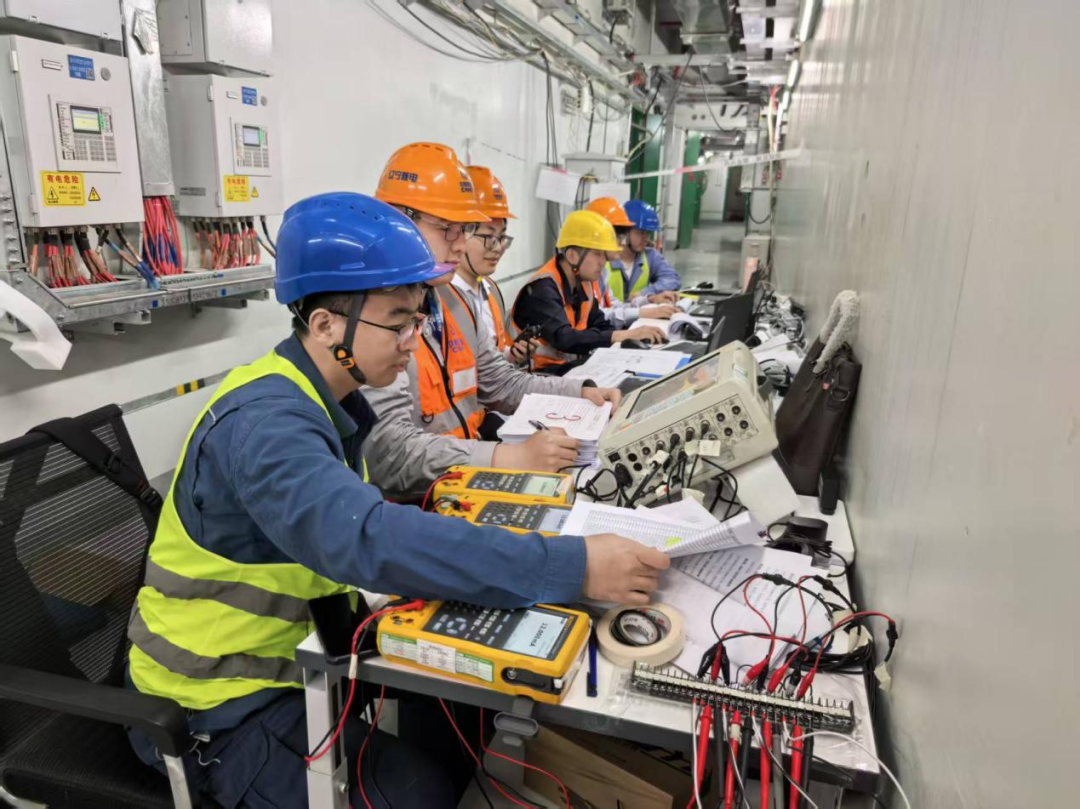
To ensure the successful completion of the test, the instrumentation and control team adhered to the work philosophy of "comprehensive preparation, strong collaboration, experience feedback, and pragmatic execution," advancing all tasks in an orderly manner. In the early stage, the team benchmarked against peer plants, systematically reviewed experience feedback, and implemented measures item by item in areas such as personnel training, documentation preparation, material implementation, technical preparation, and schedule coordination, while coordinating multi-departmental division of labor and collaboration. During the testing period, the team strictly followed the established plan, precisely defined isolation boundaries, reasonably coordinated test windows, meticulously controlled operational procedures, properly addressed various detailed issues, and closely monitored equipment status, strictly maintaining the safety bottom line throughout the entire process.
The successful completion of this test verified that the response performance of the safety-level DCS system for Unit 3 meets the design standards, and also provided a reference basis for subsequent periodic tests. In the next phase, the instrumentation and control team will focus on organizing test data and archiving documentation, conduct a systematic review of the test procedures, summarize lessons learned in areas such as isolation equipment selection, wiring schemes, and software forcing point settings, identify areas for optimization, and provide references for similar tests in the future, ensuring the orderly progress of various unit test tasks.
Disclaimer: Information republished from partner media, institutions or other websites is provided for reference and communication purposes only. It does not imply endorsement of its views or verification of its accuracy. Please contact us if any content infringes rights or requires correction.