
U.S. Think Tank Recommends European Nuclear Power Adjust Cooling Configurations to Address High Temperatures and Drought
 Scan to share
The U.S. Boston-based think tank Clean Air Task Force (CATF) recently stated that extreme heat and drought are placing new pressure on Europe's energy infrastructure, with nuclear power plant operations also affected. The organization believes the nuclear industry needs to place greater emphasis on climate resilience in energy planning and assess the impact of different cooling configurations on long-term plant operations.
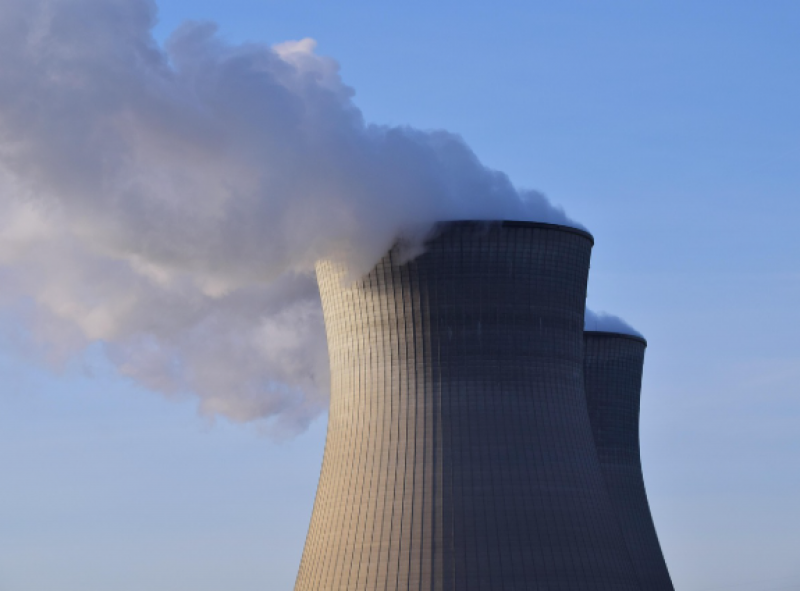
CATF pointed out that for nuclear power plants, temperature changes, water resource availability, environmental conditions, and related regulatory requirements over the coming decades could all affect unit operations. The selection of cooling schemes for nuclear power plants should be determined based on site-specific conditions, including local water resource availability, environmental regulations, geographical conditions, construction and operating costs, and reactor design factors.
For operating nuclear power plants, operators should assess the impact of rising temperatures, drought, and changes in available water volumes on operations over the remaining plant lifetime. Where necessary, adaptive capacity can be enhanced through measures such as adjusting operating procedures, strengthening monitoring, optimizing water resource management practices, or upgrading cooling systems. CATF believes that different cooling configurations can help reduce a nuclear power plant's dependence on a specific water source's temperature or flow rate.
For new nuclear projects, climate factors can be incorporated at the siting and design stages in advance. Developers can design corresponding cooling systems based on projected temperatures, water resource conditions, and drought risks. Small modular reactors and microreactors deployed dispersedly within a country or region may reduce water demand pressure on a single water source compared to a single large reactor, and may also lessen environmental impacts on specific water bodies.
CATF also stated that some advanced reactors can operate at higher thermal efficiencies, discharging less waste heat to the environment per unit of electricity generated than existing reactors. New units can also adopt indirect cooling or air cooling systems, thereby reducing or even essentially eliminating water consumption and decreasing dependence on freshwater or seawater resources. This flexibility may make certain new reactor types more suitable for deployment in regions under significant water stress.
This summer, multiple nuclear units in France reduced output or were temporarily shut down due to rising river water temperatures approaching environmental limits for cooling water discharge, leading to tighter electricity supply and higher power prices. The Gravelines nuclear power plant on France's northern coast also experienced temporary outages of several reactors due to jellyfish clogging the cooling water intake system.
In Romania, record-low water levels in the Danube River forced the shutdown of the two operating reactors at the Cernavodă nuclear power plant. Low water levels also affected operations at Hungary's Paks nuclear power plant, where operators were forced to reduce unit output.
Disclaimer: Information republished from partner media, institutions or other websites is provided for reference and communication purposes only. It does not imply endorsement of its views or verification of its accuracy. Please contact us if any content infringes rights or requires correction.