
U.S. PACMAN AI Framework Achieves Millisecond-Level Control of Fusion Plasma
 Scan to share
The PACMAN AI framework, developed by researchers at the U.S. Department of Energy's Princeton Plasma Physics Laboratory (PPPL) and Princeton University, has completed five experimental validations in real fusion experimental systems. The framework can complete data processing, state prediction, and control command output in approximately 20 milliseconds, addressing rapidly developing instabilities in fusion plasma.
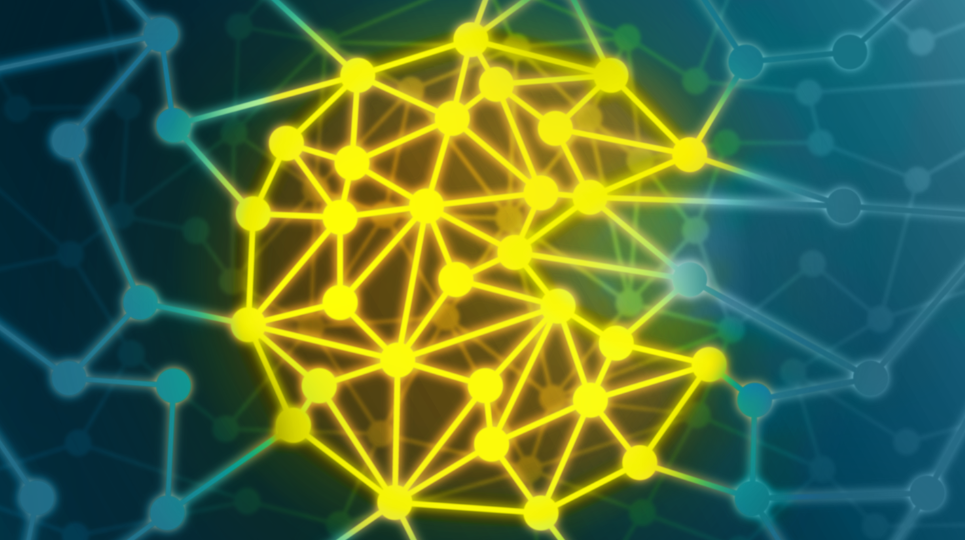
This is an artist's rendition of the PACMAN AI framework for fusion systems. (Illustration credit: Kyle Palmer / PPPL Communications Department)
PACMAN stands for "Prediction and Control via Machine Learning." Related design and preliminary experimental results have been published in the journal Nuclear Fusion. The research team stated that plasma temperature, density, and stability in tokamak devices require continuous regulation, and parameters such as heating systems, magnets, and gas injection can all affect discharge conditions. Some plasma disturbances can grow within millisecond timescales, making traditional manual operations difficult to respond to in a timely manner.
The core of the framework is integrating multiple machine learning models and controllers into the same control loop. The system first collects real-time measurement data from the tokamak, including temperature, density, and magnetic signals; it then checks data errors and completes data conditioning; machine learning models subsequently predict the current state of the plasma or imminent changes; controllers then calculate operational commands such as heating beam adjustments; finally, an output stage coordinates command conflicts among different controllers, enforces hardware safety limits, and sends control commands to the device.
The research team completed five experiments on the tokamak device at the DIII-D National Fusion Facility in the United States. In the experiments, PACMAN achieved control of the heating system by an AI model trained through reinforcement learning, predicted edge energy bursts in the plasma, detected and regulated plasma waves driven by fast particles, and adjusted plasma density and rotation states to approach preset targets.
In one experiment, the machine learning model predicted tearing mode instabilities approximately 200 milliseconds in advance, enabling the system to adjust the plasma state before the instability formed. Researchers stated that traditional controllers typically can only suppress tearing modes after they appear, which may lead to significant degradation in plasma performance. PACMAN also simultaneously regulated six gyrotrons on the DIII-D device, completing preset control objectives by adjusting gyrotron mirror angles and power in real time.
The researchers emphasized that PACMAN does not mean AI completely replaces human operators. The framework incorporates built-in hardware and operational safety limits, and control recommendations proposed by AI models must still be executed within established boundaries; after each experiment, physicists also review the data and adjust control parameters for the next experimental campaign accordingly.
Because PACMAN adopts a modular architecture, new machine learning models and controllers can be integrated into the system without affecting other modules. The research team believes this approach has the potential to expand from DIII-D to tokamak devices of different sizes, configurations, and diagnostic setups, providing a reusable software foundation for future fusion plasma control research.
Disclaimer: Information republished from partner media, institutions or other websites is provided for reference and communication purposes only. It does not imply endorsement of its views or verification of its accuracy. Please contact us if any content infringes rights or requires correction.