
South Korea Plans to Open Up "Direct Purchase" of Nuclear Power: A Low-Cost Pathway for Industrial Decarbonization, or a New Challenge for the Electricity Market?
 Scan to share
Recently, South Korean National Assembly member Lee Sang-hui proposed a partial amendment to the Electricity Business Act on behalf of others, which would add Article 16-6, allowing nuclear power operators to supply electricity directly to specific electricity-consuming enterprises through long-term contracts without going through the existing electricity market. According to the design of the bill, the main targets include steel enterprises advancing low-carbon steelmaking technology and production process transformation, as well as electricity users planning to produce clean hydrogen. The core issue of this proposal is not merely "whether enterprises can directly purchase nuclear power," but how South Korea should redistribute interests and responsibilities among industrial competitiveness, carbon neutrality goals, electricity market fairness, and the full life-cycle costs of nuclear power.
I. Background of the Bill: Heavy Industry Decarbonization Is Approaching "Electricity Constraints"
South Korea's proposal of this institutional design is driven by real pressure. Industries such as steel, petrochemicals, semiconductors, and hydrogen energy are important pillars of South Korea's manufacturing competitiveness, but they also generally feature high energy consumption and high emissions. Taking steel as an example, traditional blast furnace steelmaking relies on coal as a reducing agent and heat source, and is one of the main sources of global industrial carbon emissions. Institutions such as the International Energy Agency have long pointed out that the steel industry accounts for about 7% of carbon dioxide emissions in the global energy system, making it one of the hardest industries to decarbonize.
As the European Union's Carbon Border Adjustment Mechanism, namely CBAM, enters its transitional period and plans to formally implement financial obligations in 2026, export-oriented enterprises face stronger pressure regarding product carbon footprints. If South Korean steel products cannot prove their low-carbon attributes in the production process, they may bear higher costs when entering markets such as Europe in the future. At the same time, multinational supply chains such as Apple, Microsoft, and automobile companies are also increasingly emphasizing low-carbon certification of upstream materials, and the "source attributes" of electricity purchased by enterprises are becoming part of international competition.
Against this background, low-carbon steelmaking and clean hydrogen have significantly increased demand for stable, low-carbon electricity at predictable prices. The cost of hydrogen production by water electrolysis is highly dependent on electricity prices, and hydrogen-based iron reduction also requires large amounts of low-carbon electricity. If relying only on the spot market or short-term electricity prices, it is difficult for enterprises to make investment decisions for equipment retrofits worth billions of dollars. Therefore, allowing enterprises to directly purchase nuclear power through long-term agreements is ostensibly an adjustment of the electricity trading system, but in essence it provides financial predictability for heavy industry decarbonization.
II. The Attractiveness of Direct Nuclear Power Trading: Stable Power Supply and Long-Term Contracts
Supporters believe that nuclear power has two advantages: first, low carbon emissions during operation; second, relatively stable generation output. Compared with wind power and photovoltaics, which are greatly affected by weather and time, nuclear power is more suitable for continuous-production process industries such as steel, hydrogen, and chemicals. If enterprises can sign power purchase agreements with nuclear power operators for 10 years, 15 years, or even longer, they can lock in part of their electricity costs and reduce uncertainty caused by future fuel price and wholesale electricity market fluctuations.
Similar trends already exist internationally. France has long relied on nuclear power to provide a relatively low-carbon electricity foundation for its industrial system; in recent years, the United States has also seen cases in which large technology companies, data centers, and manufacturing enterprises sign long-term power purchase agreements with nuclear power projects to meet round-the-clock carbon-free electricity demand. For South Korea, given the still-existing constraints in renewable energy resource conditions, land availability, and grid bottlenecks, nuclear power is regarded as a realistic option for supporting industrial decarbonization.
However, it must be pointed out that directly purchasing nuclear power is not equivalent to a "low-price electricity channel." The value of long-term contracts lies first in price stability and confirmation of carbon attributes, rather than simply lowering prices. If the institutional objective is understood as providing cheap electricity to specific large enterprises, social controversy will be inevitable.
III. One of the Key Controversies: Will Low-Cost Power Sources "Leak Out" from the Public Market?
South Korean nuclear power is currently mainly supplied to society as a whole through the electricity market. If part of nuclear generation is carved out and used for direct contracts with specific enterprises, whether remaining users will bear higher costs is a question that must be answered in the bill's deliberation.
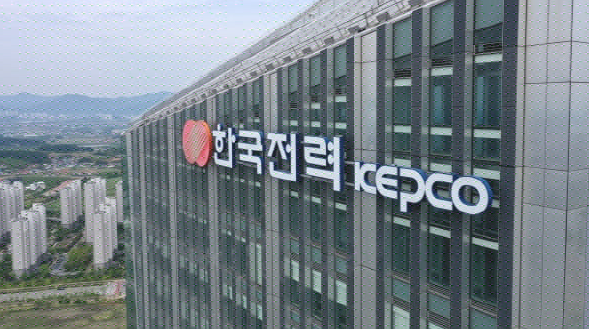
In the power system, nuclear power, coal power, gas power, renewable energy, and energy storage jointly maintain the balance of supply and demand. If low-cost or stable power sources are preferentially allocated to a small number of enterprises, ordinary residents, small and medium-sized enterprises, and other industries may face higher average system costs. Especially against the background that South Korea's electricity prices have long been subject to policy regulation and KEPCO faces relatively large financial pressure, any "low-price direct supply" may trigger cross-subsidy disputes.
Therefore, contract prices must fully reflect generation costs, transmission and distribution network usage fees, system reserves, frequency regulation, line losses, congestion management, settlement services, and policy-related charges. Nuclear power also involves long-term costs such as decommissioning, spent fuel handling, and safety investment, and these cannot be excluded from the contract. Otherwise, on the surface enterprises obtain cheap electricity, but in reality the back-end risks of nuclear power and system costs are shifted to all users.
IV. One of the Key Controversies: Who Is Eligible to Purchase Nuclear Power?
The bill currently focuses on low-carbon steel and clean hydrogen, which is reasonable to a certain extent, because these two fields face great difficulty in emissions reduction, high electricity demand, and strong external trade pressure. But the problem is that once a direct nuclear power purchase mechanism is opened, industries such as semiconductors, secondary batteries, data centers, and petrochemicals may also raise the same demand. Nuclear generation is not an unlimited resource, and how to allocate it will become the core of policy fairness.
A more reasonable approach should not use enterprise size or electricity consumption as the sole criterion, but should establish a comprehensive evaluation mechanism. For example, whether the enterprise truly has new emissions reduction investment, whether the project can produce clear product carbon reduction effects, whether it drives local employment and technological innovation, whether it is tied to new carbon-free power investment, and whether it accepts third-party carbon accounting and information disclosure. If enterprises merely purchase existing nuclear generation without substantially advancing process transformation, the policy effect will be weakened and may even become a "green label" transaction.
Furthermore, reallocating existing nuclear generation does not increase the total amount of carbon-free electricity nationwide. If the system is to truly serve carbon neutrality, direct power purchase contracts should be encouraged to be linked with new nuclear power, continued operation investment, equipment upgrades, or other carbon-free power expansion, so that enterprise demand is transformed into new low-carbon supply.
V. Grid and Certification: The Success of the System Depends on Details
Even if enterprises sign contracts directly with nuclear power operators, the actual electricity still needs to rely on the public transmission and distribution grid. Unless dedicated lines are built, electricity cannot be identified "point-to-point" at the physical level. Therefore, arrangements must be clarified for grid usage fees, time-period deviation settlement, reserve power procurement, replacement power during planned maintenance, and regional congestion charges.
If the contract only stipulates annual electricity volume without addressing hourly supply-demand matching, a situation may arise in which enterprises claim to use carbon-free electricity during certain periods, but the system is actually supplemented by fossil power sources. This will affect the credibility of international carbon certification. This is especially true for clean hydrogen, as different countries and certification systems have not entirely identical requirements for electricity sources, temporal matching, geographic correlation, and additionality. If South Korea hopes enterprises can obtain international recognition through direct nuclear power purchases, it must establish a traceable, verifiable electricity attribute certificate system that prevents double claims.
At the same time, the carbon footprint of steel products is not determined only by electricity, but also includes raw materials, reducing agents, heat sources, transportation, and process efficiency. Direct nuclear power purchases can reduce emissions in the electricity segment, but cannot replace full product life-cycle accounting.
VI. Commentary: Direct Nuclear Power Purchases Can Be Piloted, but Must Not Become Hidden Subsidies
From the perspective of policy direction, the bill is positive. It recognizes that industrial decarbonization is not a slogan, but requires the joint support of the electricity system, financial contracts, and carbon certification systems. For hard-to-abate industries such as steel and clean hydrogen, long-term carbon-free power contracts may indeed become an important prerequisite for investment in transformation.
However, the institutional design must avoid three risks: first, avoid transferring public electricity resources to a small number of enterprises at low prices; second, avoid enterprises obtaining only a "carbon-free nominal status" without real emissions reduction; third, avoid ignoring long-term costs such as nuclear safety, spent fuel, decommissioning, and regional compensation.
It is recommended that South Korea introduce four mechanisms during the bill's deliberation: first, set transparent qualification evaluation standards centered on actual emissions reduction contributions and new investment; second, establish complete cost pricing principles, clarifying transmission and distribution, system services, and nuclear back-end costs; third, require disclosure of total contract volume, average price range, emissions reduction performance, and cost-sharing methods, accepting social oversight while protecting trade secrets; fourth, incorporate direct nuclear power purchases together with renewable energy, energy storage, and demand response into a carbon-free power portfolio, rather than creating a simplistic opposition of "nuclear power versus renewable energy."
Overall, direct nuclear power purchasing is not a master key, but it may become an important institutional tool for the low-carbon transformation of South Korea's heavy industry. Its success does not depend on whether trading itself is opened up, but on whether a sustainable set of rules can be established among industrial competitiveness, market fairness, system security, and real emissions reduction. Only when enterprises obtain stable electricity while also bearing corresponding costs and emissions reduction responsibilities will direct nuclear power purchasing avoid becoming a new controversy over interest redistribution and truly serve carbon neutrality and manufacturing upgrading. (The core facts of this article are cited from related reports by South Korea's Energy Daily; the industrial cost proportions, cases, and other content in the text are based on rational inference from industry common knowledge and are for readers' reference only.)
Disclaimer: Information republished from partner media, institutions or other websites is provided for reference and communication purposes only. It does not imply endorsement of its views or verification of its accuracy. Please contact us if any content infringes rights or requires correction.