
The "Weaponized" Nuclear Power Plant: Dual Narratives and Governance Dilemmas of the Zaporizhzhia Nuclear Crisis
 Scan to share
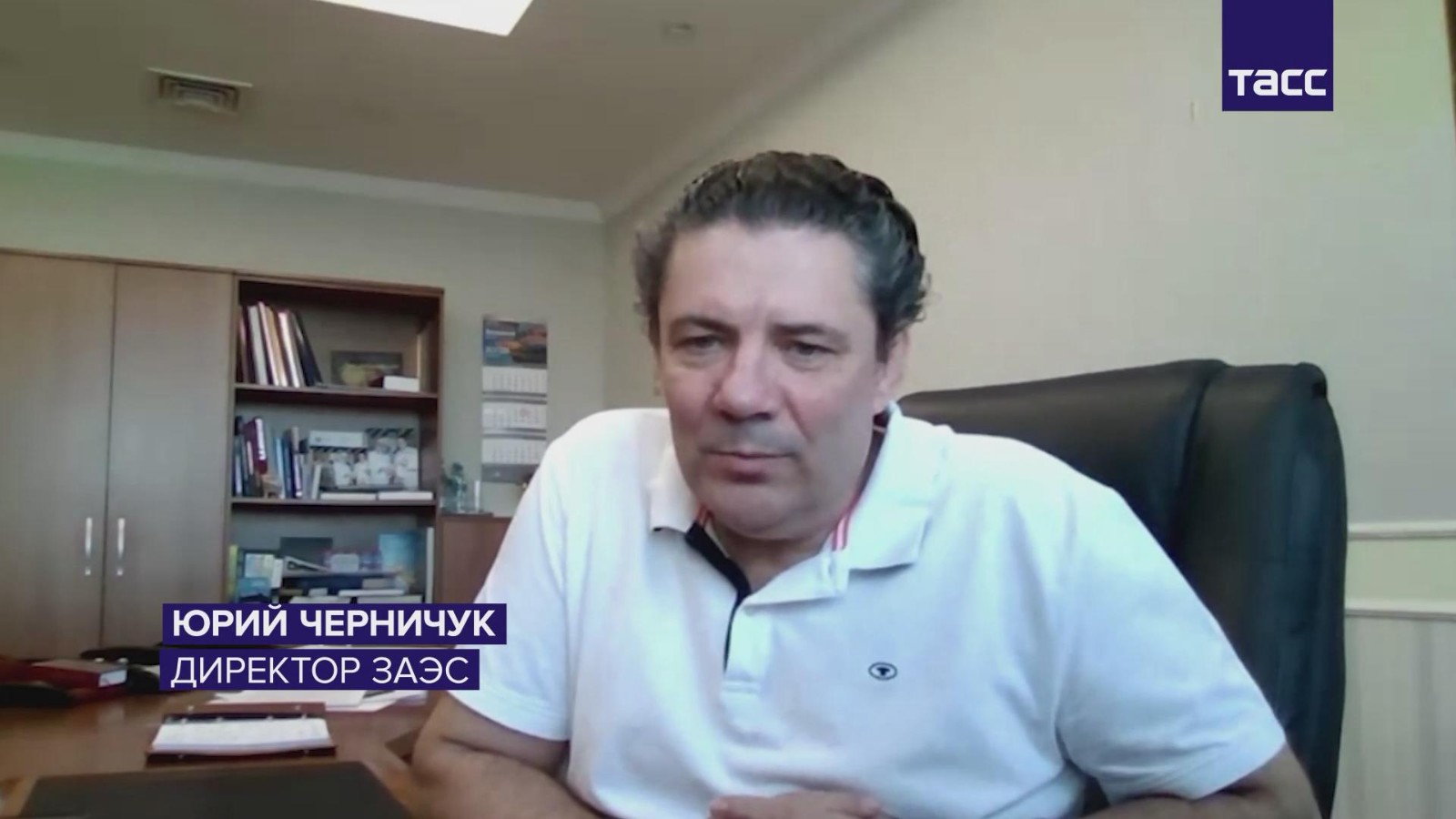
As the Ukrainian Armed Forces continue to carry out drone attacks and shelling on the Zaporizhzhia Nuclear Power Plant, senior Russian officials have adopted an increasingly tough tone. On September 16, Yuri·Chernichuk, director of the Zaporizhzhia Nuclear Power Plant, claimed to TASS that Ukraine "lacks highly qualified personnel capable of operating the plant," and used the argument that "if Russian personnel stop their services, an irreversible process will ultimately lead to a nuclear accident," in an attempt to strengthen accusations against Ukraine in public opinion. This statement once again pushed the most dangerous nuclear facility on the European continent to the center of public discourse. This article attempts to break away from a single narrative and, from the four dimensions of technology, jurisprudence, geopolitics, and international governance, analyze the complex substance behind this discursive contest surrounding the nuclear power plant.
The fundamental issue of safety lies not in "who operates" but in "how to guarantee"
The author believes that this controversy surrounding the Zaporizhzhia Nuclear Power Plant is essentially a debate over a false proposition. Since the outbreak of the Russia-Ukraine war in February 2022, for safety reasons, the plant's six units have remained in cold shutdown, meaning they do not generate electricity or supply power externally. This state itself is an affirmation of the bottom line of nuclear safety——avoiding severe accidents caused by grid fluctuations or insufficient operating personnel amid the hostilities.
However, "cold shutdown" brings with it an overlooked technical paradox: after a nuclear reactor ceases operation, its decay heat still requires continuous cooling, and this precisely requires a stable external power supply. This means the nuclear power plant itself cannot achieve energy self-sufficiency, and its safe operation is highly dependent on an external power supply line that crosses the war front line and is unilaterally controlled by the Russian side. According to Mikhailov, Russia's representative to international organizations in Vienna, the plant has been disconnected from power 10 times in the past three months, while Ukraine is accused of "obstructing power line repair work."
This is precisely the core of the problem: the "highly qualified personnel" mentioned by Chernichuk are certainly important, but even if personnel are in place, if the power supply lines are repeatedly damaged and repairs are blocked, the plant's safety situation remains fragile. Simply blaming the other side for "lacking talent" precisely evades the engineering support shortcomings on which the plant's safety truly depends. In other words, tying the operational safety of a nuclear power plant entirely to the identity of the operator is technically untenable.
How should the nature of a nuclear power plant on occupied territory be defined?
The legal situation of the Zaporizhzhia Nuclear Power Plant is equally intriguing. The plant is located on the left bank of the Dnieper River, within the area of Zaporizhzhia Oblast actually controlled by Russia, near the line of contact between the two sides.
The International Committee of the Red Cross (ICRC) and the United Nations Security Council have repeatedly warned that placing a nuclear facility within military occupation, a line of fire, and the military activities of conflicting parties makes it "one of the most dangerous nuclear facilities in the world." This judgment reveals the key to the problem: the occupied status of the location of the nuclear power plant itself constitutes a fundamental threat to nuclear safety. How can the safety of a nuclear facility operating within territory at the forefront of war be fundamentally guaranteed? This is the substantive issue of greatest concern to the international community.
Discursive contest: How nuclear safety is "weaponized"
Regarding this nuclear power plant, both sides tend to use highly emotional and threatening language such as "destruction" and "irreversible." Likhachev stated that Kyiv intends to push the nuclear power plant "into a critical state." Meanwhile, Ukraine and international institutions accuse Russia of repeatedly "cutting power," "obstructing repairs," and "deliberately creating conditions for an accident."
This "each side telling its own story" discursive pattern essentially reflects the trend of nuclear safety issues being "weaponized" in contemporary conflicts. Nuclear facilities should be a symbol of peaceful use, yet they have now become political chips for conflicting parties to compete for discursive power, guide public opinion, and exert international pressure. The issue of nuclear safety has partially detached from the realm of engineering technology and evolved into a means of psychological warfare and cognitive warfare.
What warrants vigilance is that this discursive contest carries a dual risk: on the one hand, excessive dramatization by either side may obscure the plant's real safety hazards; on the other hand, binding the safety narrative entirely to political accusations makes consultation and verification based on reason and evidence increasingly difficult, which may instead exacerbate the risk of losing control.
International governance: The role and limitations of the IAEA
The IAEA's role in crisis management highlights its importance. As a verification body with authority and technical credibility, accepted by both conflicting parties, the IAEA's independent investigations, real-time monitoring, and public reporting are precisely the institutional safeguards that balance the aforementioned dual narrative risks. International Atomic Energy Agency (IAEA) Director General Grossi has also personally visited the site multiple times.
However, the IAEA's role is also constrained by objective conditions: first, verification activities are always conducted under a security framework unilaterally dominated by Russia, and the autonomy and credibility of its conclusions face questioning; second, under the reality of continuous external power interruptions and ongoing occupation, even if the IAEA proposes technical recommendations, it lacks the capacity for enforcement and guarantee. This exposes the structural impotence of the current international nuclear governance system when dealing with scenarios where "sovereign territorial disputes" and "occupation status" overlap.
Alexei Likhachev has also publicly stated that the situation at the Zaporizhzhia Nuclear Power Plant is grave, and the International Atomic Energy Agency should not merely stop at recording attack facts and issuing danger alerts.
From "discursive contest" to "mechanism rebuilding"
First, rebuild an independent, verifiable safety guarantee mechanism. The international community should promote the establishment of an external power supply guarantee fund led by the IAEA and recognized by all parties, and implement independent power supply monitoring of the nuclear power plant, replacing mutual political accusations with verifiable engineering data.
Second, clarify and advance the demilitarization of the nuclear power plant. Under Russian occupation, the safety of the nuclear facility cannot restore itself. Within the framework of the Security Council or the United Nations, the neutral status of the nuclear power plant and its surrounding military zone should be clarified, and a safety zone isolated from military activities should be mandatorily established. This is both an inherent requirement of international law and an urgent priority for eliminating safety risks.
Third, establish multi-level crisis management channels. Given the possibility that the conflict cannot be thoroughly resolved in the short term, conflicting parties should rely on the IAEA and neutral international institutions to establish a dedicated crisis communication mechanism for nuclear power plant accidents, clarifying operational contingency plans for "what international response is triggered under what circumstances," to avoid catastrophic escalation caused by misjudgment and information asymmetry.
Fourth, reshape the discourse ethics of nuclear safety. The international community should jointly promote the formation of a nuclear safety discourse ethics that is "based on verifiable engineering evidence and benchmarked against independent verification," curb the tendency to politicize and weaponize nuclear facility issues, and prevent inflammatory rhetoric such as "irreversible" from obscuring real risks.
Conclusion
The Zaporizhzhia Nuclear Power Plant is indeed in a perilous situation unprecedented in human history. However, the root of this crisis is not a simple comparison of "talent," but the fact that the nuclear power plant has been placed within multiple overlapping predicaments of occupation, warfare, and resource plundering. Only by shifting the focus of discussion from "who operates it" to "how to provide fundamental guarantees at the engineering, legal, and international mechanism levels" can the Damocles sword hanging over the globe by this nuclear power plant truly be defused. After all, on the issue of nuclear safety, there is no room for any wishful thinking in the face of any irreversible disaster.
(This article provides an objective analysis based on public information and statements from relevant parties, aiming to present multi-dimensional perspectives. Some content has been organized with the assistance of artificial intelligence technology, and the specific factual determinations involved in the article still require further independent verification and validation.)
Disclaimer: Information republished from partner media, institutions or other websites is provided for reference and communication purposes only. It does not imply endorsement of its views or verification of its accuracy. Please contact us if any content infringes rights or requires correction.