
Nuclear technology helps boost disease resistance and food security in Latin American rainbow trout farming.
 Scan to share
Rainbow trout farming in Latin America is shifting from a model driven by traditional experience to one supported by science and technology. Widely farmed in freshwater rivers, lakes, lagoons, and coastal net pens, rainbow trout constitute a vital part of the aquaculture sectors in countries like Chile and Peru, while also supporting the livelihoods of many rural and high-altitude communities. However, open-water farming environments leave fish populations vulnerable to pathogen transmission; disease outbreaks often subject farmers to multiple pressures, including reduced yields, financial losses, and unstable food supplies.
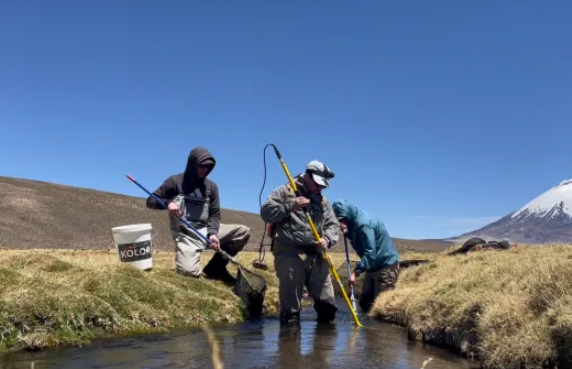
Infectious pancreatic necrosis virus (IPNV) is a major disease threat to the rainbow trout industry, particularly affecting fry and juvenile fish. Severe outbreaks can result in mortality rates exceeding 50%, or even approaching 90% in extreme cases. In the past, limited diagnostic capabilities in some countries made early detection difficult, forcing control efforts to rely largely on reactive measures. Through a technical cooperation project—and in collaboration with the Joint FAO/IAEA Centre of Nuclear Techniques in Food and Agriculture—the International Atomic Energy Agency (IAEA) has provided laboratory equipment and specialized training to nine countries (Argentina, Brazil, Chile, Ecuador, Mexico, Panama, Peru, Uruguay, and Venezuela), helping the region shift from "reactive response" to "proactive prevention."
Nuclear-derived techniques have played a pivotal role in this transition. Advanced DNA analysis, gene sequencing, and molecular diagnostics enable researchers to identify pathogens earlier and analyze the genetic characteristics of rainbow trout populations to pinpoint molecular markers associated with antiviral resistance. This means the industry is no longer limited to mitigating losses after an outbreak occurs; instead, it can proactively select fish populations with greater disease-resistance potential during the breeding process. Project data indicate that, under conservative estimates, selective breeding based on these markers can boost survival rates by approximately 1.2%—translating to an additional 1.2 tonnes of production per 100 tonnes of fish with each generation. Given the short growth cycle of rainbow trout, these generational gains accumulate rapidly, resulting in significant economic benefits.
For Latin America's aquaculture sector, this technological advancement signifies not only increased production but also enhanced industry resilience. Healthier and more disease-resistant fish stocks help reduce losses for farmers, stabilize market supplies, and improve food security for communities that rely on rainbow trout as a nutritional source. Breeding programs in Chile have been strengthened, and a breeding foundation has been established in Brazil, shifting decision-making from empirical judgment to a science-based approach. Through marker-assisted selection, producers can breed populations that are better adapted to local conditions and possess greater disease resistance.
At the same time, the project is fostering standardization and collaboration at the regional level. Rainbow trout farming systems across Latin America vary significantly—ranging from small family farms to large commercial enterprises—with disparities among countries regarding technology, infrastructure, and broodstock sources. By standardizing diagnostic procedures for Infectious Pancreatic Necrosis Virus (IPNV), assessing the genetic diversity of rainbow trout populations, promoting selective breeding for disease resistance, and strengthening ties between laboratories, regulatory bodies, and producers, a tighter aquaculture innovation network is taking shape across the region. This collaborative mechanism helps mitigate technological imbalances, enhances disease monitoring and response capabilities, and lays the groundwork for the long-term, stable development of the rainbow trout industry.
Disclaimer: Information republished from partner media, institutions or other websites is provided for reference and communication purposes only. It does not imply endorsement of its views or verification of its accuracy. Please contact us if any content infringes rights or requires correction.