
Nuclear Technology Bolsters Food Safety: Sichuan Institute of Atomic Energy Promotes Irradiated Food via "Three Rural Services" Outreach
 Scan to share
Recently, during a provincial-level "Three Rural Services" (bringing culture, science/technology, and healthcare to rural areas) demonstration event in Sichuan, the Sichuan Institute of Atomic Energy showcased "irradiated lemon-flavored chicken feet," highlighting the significant role of civilian nuclear technology in everyday life.
Addressing the question of why an atomic energy institute was displaying chicken feet, engineer Deng Lijuan explained on-site that the packaging bore the "Irradiated Food" label, indicating the use of food irradiation processing technology—a key area of the institute's research. She noted that the applications of atomic energy (or nuclear energy) extend far beyond the nuclear reactors and fuel cycles familiar to the public; radiation technology is already widely used in fields such as agricultural breeding, medicine, and the food industry. As a specialized provincial research institution for civilian non-power nuclear technology applications, the Sichuan Institute of Atomic Energy has long been dedicated to the research, development, and promotion of technologies like food irradiation and agricultural radiation breeding.
Responding to concerns raised by citizens about how radiation—often perceived as harmful—could be used for food preservation, Deng explained that food irradiation is an "external irradiation" process. Since the food does not come into direct contact with the radiation source during treatment, no radioactive contamination occurs. The technology's unique advantage lies in its ability to thoroughly eliminate insects and bacteria without opening the product packaging, thereby effectively extending shelf life and ensuring food safety. Citing the national standard GB18524-2016, she emphasized that food irradiation is a safe, legal, and compliant processing method that utilizes specific effects of ionizing radiation to achieve sterilization, preservation, and the inhibition of sprouting.
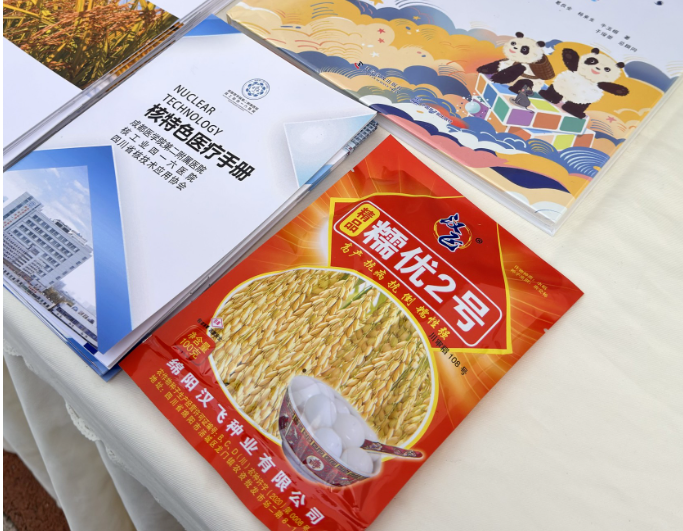
In addition to irradiated food, the exhibit featured crop seeds—such as corn and rice—improved through nuclear breeding techniques. Deng stated that the primary goal of participating in such events was to dispel public misconceptions about "radiation" through tangible demonstrations and to raise awareness of the positive applications of nuclear technology in areas that directly benefit people's livelihoods.
Through initiatives like the "Science and Technology Fair," the event promoted practical scientific knowledge—including nuclear technology applications—to rural areas. It also organized expert service teams to facilitate the practical application of agricultural scientific achievements, thereby supporting rural revitalization.
Disclaimer: Information republished from partner media, institutions or other websites is provided for reference and communication purposes only. It does not imply endorsement of its views or verification of its accuracy. Please contact us if any content infringes rights or requires correction.