
60th Anniversary of the Joint FAO/IAEA Centre: Nuclear Techniques Continue to Serve Global Agriculture and Food Safety
 Scan to share
In 2024, the Joint FAO/IAEA Centre of Nuclear Techniques in Food and Agriculture marks its 60th anniversary. Established in 1964 through a partnership between the Food and Agriculture Organization of the United Nations and the International Atomic Energy Agency, the Centre primarily promotes the application of nuclear science and related technologies in food security, agricultural production, and sustainable environmental development.
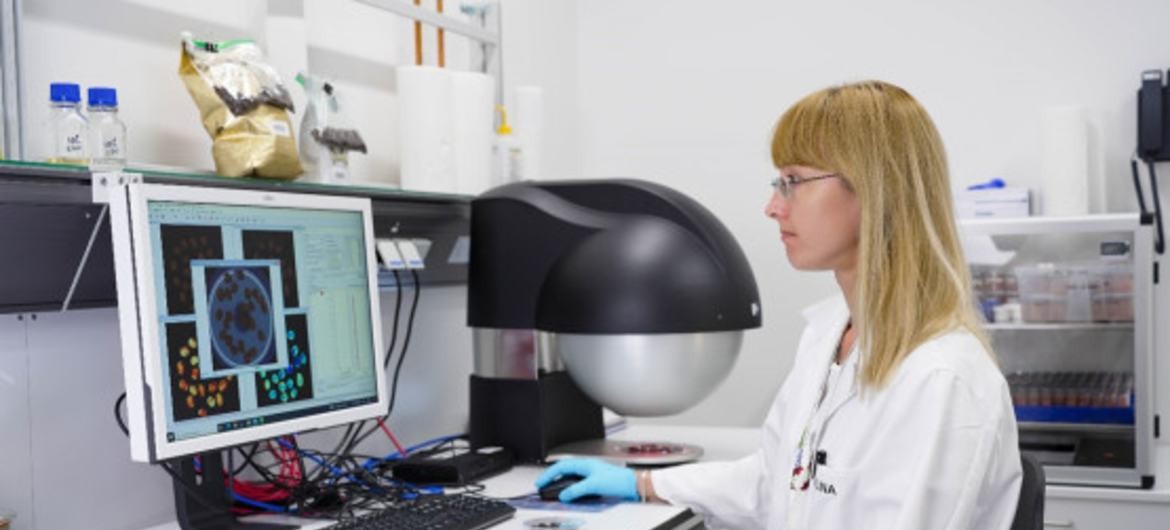
Over the past 60 years, the Joint Centre has carried out work in areas including pest control, plant breeding and genetics, soil and water management, animal production and health, and food safety and quality control. Its Agriculture and Biotechnology Laboratories have long undertaken tasks in technology development, capacity building, and technology transfer, providing support for the improvement of agricultural and food systems in multiple countries.
In the field of pest control, the Joint Centre has continuously promoted the sterile insect technique and other radiation-based pest control technologies. The sterile insect technique uses ionizing radiation to render target male insects reproductively sterile, thereby suppressing pest populations and reducing or replacing the use of certain chemical pesticides. According to available information, the technique is being used in Fort Myers, Florida, United States, to suppress mosquito populations that have developed resistance to insecticides. In 2024, the Mediterranean fruit fly control network also played a role in the eradication of Mediterranean fruit flies in the Dominican Republic, helping the country regain access to important export markets.
In the field of plant breeding, the Joint Centre uses radiation-induced mutation breeding techniques to treat plant seeds and other materials, accelerating the natural mutation process to screen for crop varieties with desirable traits. As of 2024, the FAO/IAEA Mutant Variety Database has catalogued 3,433 officially released improved mutant varieties worldwide, covering more than 200 plant species. In 2022, the Joint Centre also sent seeds to the International Space Station to study the effects of cosmic radiation and microgravity on plant genetics, with related research currently focusing on identifying traits that could help crops adapt to climate change.
In the field of soil and water management, nuclear and isotopic techniques are used to quantify soil fertility, plant nutrition, and water dynamics. The Joint Centre has used nitrogen-15 isotope technology to train local researchers and farmers in Laos, helping them optimize fertilizer application and more efficiently utilize rice straw and manure as nutrient sources. On-farm trials in the country have shown that this approach helps increase rice yields. Equipment such as cosmic-ray neutron sensors is also used for real-time soil moisture monitoring, providing data support for water resource management.
In the fields of animal production and health and veterinary medicine, the Joint Centre uses nuclear techniques and related methods to support animal disease diagnosis and improvements in livestock production. In August 2020, with its support, laboratories in Bosnia and Herzegovina and Serbia completed genome sequencing of the COVID-19 virus and used real-time reverse transcription-polymerase chain reaction methods to trace the origin and transmission patterns of the virus. The Joint Centre has also strengthened the capacity of veterinary laboratories in multiple countries through its Veterinary Diagnostic Laboratory Network, promoting the surveillance of transboundary animal diseases and zoonoses.
Food safety and quality control are equally important areas of work for the Joint Centre. Vietnam has enhanced its food export capacity by adopting food irradiation technology, which prevents the spread of transboundary pests and eliminates microorganisms that can cause food spoilage. Sri Lanka's Food Safety and Quality Control Laboratory has received support since 2001 to develop methods for detecting aflatoxins. In Bangladesh, the Veterinary Drug Residue Analysis Laboratory, with training support, uses isotopic and nuclear analytical tools to detect antimicrobial and mycotoxin residues in foods of animal and plant origin, analyzing more than 3,000 food samples annually.
In addition, the Joint Centre applies isotope analysis to combat food fraud. For example, scientists at the Jožef Stefan Institute in Slovenia, with its support, have used isotope analysis to identify counterfeit white truffles, determining the geographical origin of truffles and preventing fraud.
In 2023, the International Atomic Energy Agency and the Food and Agriculture Organization of the United Nations launched the "Atoms4Food" initiative, which plans to apply innovative nuclear technologies through country-specific approaches to improve agricultural productivity, increase food production, ensure food safety, and address agricultural challenges posed by climate change. The Joint Centre stated that it will continue to provide nuclear technology solutions for agriculture and food systems through research and development, capacity building, knowledge sharing, and partnerships.
Disclaimer: Information republished from partner media, institutions or other websites is provided for reference and communication purposes only. It does not imply endorsement of its views or verification of its accuracy. Please contact us if any content infringes rights or requires correction.