
IAEA and IDB Sign Cooperation Agreement to Advance Nuclear Energy and Nuclear Technology for Sustainable Development in Latin America and the Caribbean
 Scan to share
On September 24, 2026, on the margins of the United Nations General Assembly in New York, the International Atomic Energy Agency (IAEA) and the Inter-American Development Bank (IDB) formally signed a Memorandum of Understanding (MoU) on cooperation. The two sides aim to establish a long-term partnership to jointly advance in-depth cooperation in Latin America and the Caribbean in the safe, secure and sustainable use of nuclear energy and nuclear technology. This also represents an important step by the IAEA to expand its network of cooperation with multilateral development finance institutions in support of the global low-carbon clean transition.
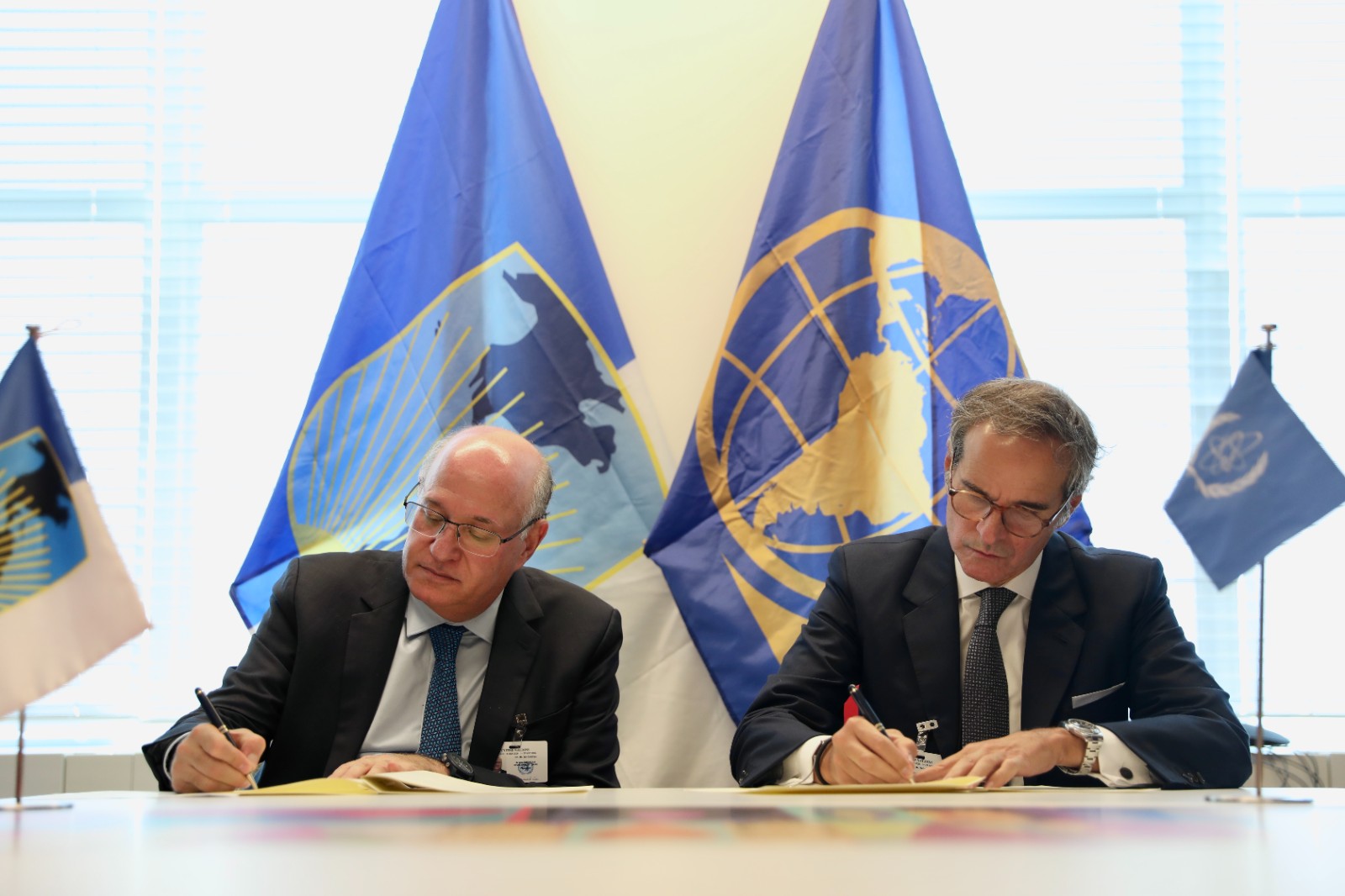
The memorandum was jointly signed by IAEA Director General Rafael Mariano Grossi and IDB President Ilan Goldfajn. The cooperation framework established by the two sides covers multiple core dimensions, including high-level dialogue, knowledge sharing, technical assistance, capacity building, integrated energy system planning and infrastructure development. Director General Grossi stated that the signing reflects the international community's growing recognition of the strategic value of nuclear energy in ensuring energy security, driving economic growth and promoting sustainable development; by deeply integrating the IAEA's specialized nuclear engineering and technical expertise with the IDB's development finance experience and regional reach cultivated through deep local engagement in Latin America, the two sides will work in synergy to help countries in the region make more scientifically grounded and forward-looking strategic choices when assessing future energy transition pathways.
In the specific field of nuclear energy cooperation, the IAEA and IDB will jointly carry out engineering feasibility, institutional and economic assessments of nuclear energy technologies, covering conventional large commercial reactors, small modular reactors (SMRs) and other cutting-edge emerging nuclear power technologies. Currently, Argentina, Brazil and Mexico are the only three countries in Latin America and the Caribbean with operating commercial nuclear power; in 2025, nuclear power accounted for only 1.8% of the region's total electricity generation, far below the global average of 8.4%. According to the latest projections released by the IAEA in 2026, thanks to small modular reactors (SMRs), which offer high flexibility, short construction periods and suitability for off-grid or small-grid deployment, the region's installed nuclear power capacity is expected to more than double by 2050, and is projected to increase to 2.5 times the current level by 2060, with SMRs expected to account for about 40% of the region's newly added nuclear power capacity. In addition, Brazil, South America's largest economy, has previously formally joined the "triple global nuclear power capacity by 2050" initiative launched at COP28.
In addition to cooperation on clean electricity and grid baseload dimensions, the MoU signed this time further expands the two sides' existing cooperation landscape in the field of non-power civil nuclear technology. In the future, the two sides will continue to make efforts in healthcare, food security and water resources management, with a focus on deepening the use of radiodiagnosis and radionuclide therapy technologies to improve regional public health accessibility (especially tumor radiotherapy screening and cancer prevention and control programs), as well as relying on cutting-edge technologies such as radiation-induced mutation breeding and isotope hydrological tracing to enhance agricultural productivity, promote climate-resilient agriculture, and optimize the integrated scientific regulation of soil, nutrients and water resources. In recent years, the IAEA has successively established strategic collaboration with the World Bank Group, the Asian Development Bank (ADB), the Development Bank of Latin America (CAF) and the OPEC Fund, and the global multilateral financial system is accelerating the formation of synergies to provide diversified funding and institutional safeguards for the global deployment of nuclear energy in addressing surging electricity demand and withstanding climate change.
Disclaimer: Information republished from partner media, institutions or other websites is provided for reference and communication purposes only. It does not imply endorsement of its views or verification of its accuracy. Please contact us if any content infringes rights or requires correction.