
Nuclear Mutation Breeding Technology Helps Increase Rice Yield and Quality in Laos: Excellent New Varieties Combine Early Maturity with Stress Resistance
 Scan to share
In the Lao People's Democratic Republic, rice is both the core staple food and main source of income for rural households, and a strategic cornerstone for maintaining national food security. Currently, more than 80% of the country's farming households are engaged in rice cultivation, and paddy fields account for about 60% of the nation's total cultivated land area. The Lao government has set the national paddy production target at 5.5 million tons. Facing multiple challenges such as climate warming, frequent flooding, crop diseases, and tightening agricultural resources, enhancing the climate resilience and scientific research capacity of the rice production system has become an urgent priority.
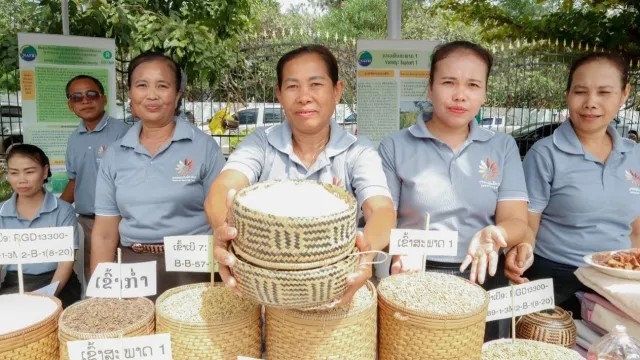
With support from the International Atomic Energy Agency (IAEA) technical cooperation program and the Joint FAO/IAEA Centre of Nuclear Techniques in Food and Agriculture, the research team at the National Agriculture and Forestry Research Institute (NAFRI) of Laos has carried out cross-disciplinary collaboration with local farmers, deeply integrating nuclear-induced mutation breeding technology with traditional breeding methods, and successfully developed new rice varieties that can achieve early maturity, high yield, and meet diverse market demands under harsh growing environments.
Nuclear mutation breeding technology can effectively induce and screen for superior mutant genes that are rare in conventional genetic backgrounds. Combined with field selection and breeding, researchers have successively released two representative new rice varieties. Among them, the "Saphart 1" rice has a whole growth period about 20 days shorter than conventional control varieties, and its field-measured yield is about 20% higher; the other improved variety, "Houykhod 2," combines resistance to rice blast and tolerance to flooding, and its grain quality characteristics are particularly suited to deep processing of rice flour and the processing needs of high-value-added agricultural products. Fatma Sarsu, a technical officer at the Joint FAO/IAEA Centre, stated that the pathway combining induced mutation with modern breeding has significantly accelerated the breeding process of excellent varieties that possess both stress resistance and farmer acceptance.
Siviengkhek Phommalath, Director of the Rice and Economic Crops Research Center at the National Agriculture and Forestry Research Institute of Laos, pointed out that local farmers are not merely recipients of technology, but have been deeply involved in the trial planting evaluation and trait selection of new varieties in specific ecological regions, thereby ensuring a precise match between new seeds and practical field needs. Since the promotion of the new varieties in 2022, grassroots farmer cooperative groups have fully led the seed purity maintenance, multiplication, and distribution network, with women agricultural laborers playing a backbone role in seed production and technology dissemination.
Taking Saphart Village in Vapy District, Salavan Province, Laos as an example, a seed production cooperative group composed of 19 farmers successfully produced and distributed 9.5 tons of "Saphart 1" quality seeds in the 2026 planting season. Up to now, more than 300 farmers in Vapy District alone have cultivated this variety on a large scale, with a planted coverage area of 350 hectares in the dry season, expected to further expand to 450 hectares in the rainy season, and gradually extend to surrounding districts of Salavan Province, providing strong support for ensuring regional food supply and increasing farmers' income.
Mutant rice lines with earlier maturity and stable, high yields have greatly reduced the risk of agricultural losses during extreme weather windows such as floods and pest and disease outbreaks. The establishment of a quality seed breeding system has also injected nuclear science and technology momentum into Laos's agricultural sector for responding to climate change and safeguarding the long-term bottom line of food security.
Disclaimer: Information republished from partner media, institutions or other websites is provided for reference and communication purposes only. It does not imply endorsement of its views or verification of its accuracy. Please contact us if any content infringes rights or requires correction.