
Search Results
Keyword:food security
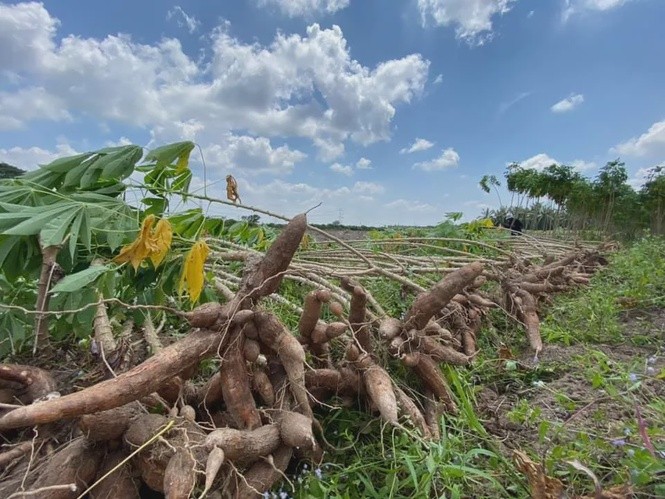
Malaysia Expands Nuclear Radiation Mutation Breeding Applications to Bolster Food Security and Industrial Inspection
Malaysia's nuclear technology applications are extending from traditional fields such as medicine and industry further into agricultural production and food security. Dr. Sukri, Senior Director of Project Management at the Malaysian Nuclear Agency, stated that through research and development using nuclear radiation mutation breeding technology, the agency has shortened the maturation period of cassava from the original 10 to 12 months down to 6 months. Sukri noted that this technological application helps reduce farmers' production costs, improve land use efficiency, and cultivate larger cassava varieties. In addition to cassava, the Malaysian Nuclear Agency, in collaboration with the Ministry of Agriculture and Food Security and the Department of Agriculture, has successfully developed two new rice varieties, NMR 151 and NMR 152. These new varieties feature higher yields and demonstrate strong resistance to diseases, extreme weather conditions such as prolonged drought, and flooding.
2026-09-07
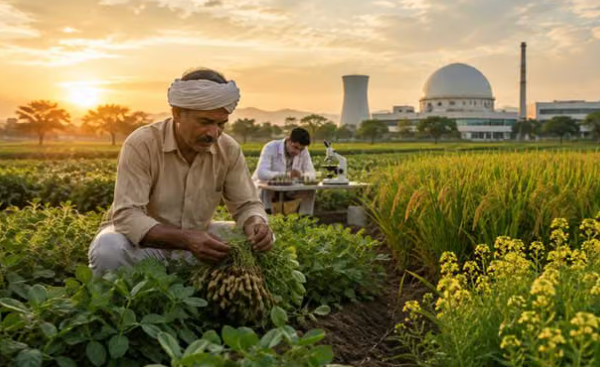
Bhabha Atomic Research Centre (BARC) in India develops 72 improved crop varieties through radiation mutation technology
The integration of nuclear technology with agricultural production is demonstrating increasingly tangible value in Indian farmlands. Through radiation-induced mutation and hybrid breeding techniques, the Bhabha Atomic Research Centre in India has successively developed 72 improved crop varieties, covering peanuts, rice, mung beans, mustard, and other crops. India's Minister of State Jitendra Singh disclosed this progress in a written reply to Parliament, showing that the peaceful application of nuclear science has extended from laboratories to the frontlines of agricultural production. In terms of variety composition, peanut new varieties are the most numerous, reaching 17; rice has 10, mung beans and mustard 9 each, black gram 8, pigeon pea 5, sorghum 3, and cowpea, wheat, and soybean 2 each. Additionally...
2026-08-13

Russian Ambassador Says Willing to Transfer Civilian Nuclear Technology to Morocco, Covering Power Generation, Seawater Desalination, Nuclear Medicine, and Agriculture
New directions are emerging in Morocco-Russia economic and technical cooperation, with both sides intending to expand the scope of collaboration from traditional energy sectors to strategic industries such as civilian nuclear technology, seawater desalination, medicine, and agriculture. Russia's Ambassador to Morocco, Igor Belyaev, stated that Russia is willing to share civilian nuclear technology expertise with Morocco, a remark indicating that bilateral cooperation may extend from equipment supply and energy projects to more technology-intensive comprehensive partnerships. This development is closely linked to Morocco's current needs. In recent years, Morocco has continuously promoted the diversification of energy sources and accelerated efforts to address water scarcity, with seawater desalination having become a...
2026-08-10
IAEA Supports Nicaragua in Enhancing Agricultural Health and Food Security through Nuclear Technology
The Nicaraguan Institute for Agricultural Protection and Health (IPSA) recently hosted an official visit from Raúl Ramírez García, Director of the Technical Cooperation Division for Latin America and the Caribbean at the International Atomic Energy Agency (IAEA). The meeting, chaired by IPSA Executive Director Ricardo Somarriba Reyes, focused on agricultural health, food safety, and the application of nuclear science and technology in agriculture. During the working session, both parties reaffirmed Nicaragua's continued participation in national and regional cooperation projects as a member of the Agreement for the Promotion of Nuclear Science and Technology Cooperation in Latin America and the Caribbean (ARCAL). The core objective of such projects is to...
2026-07-09
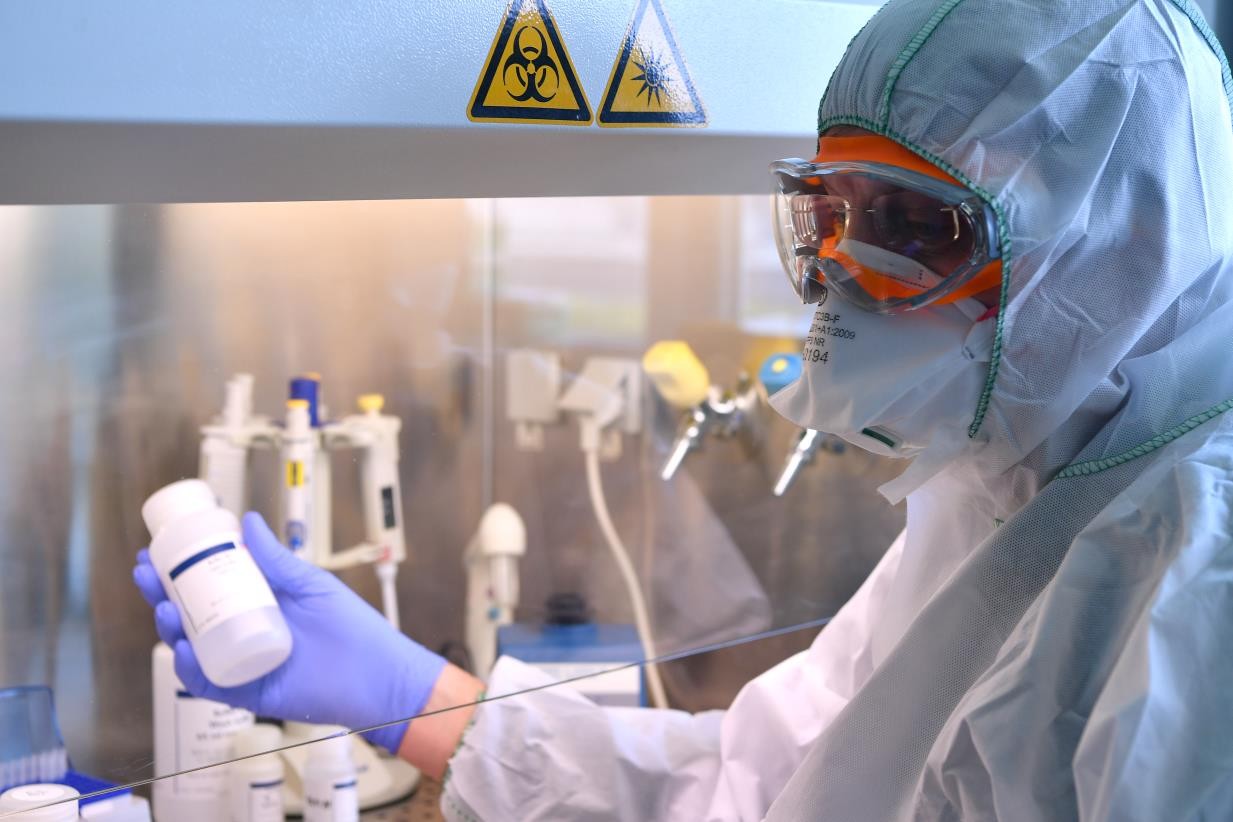
FAO and IAEA: Nuclear Technologies Are Enhancing Agricultural Production and Food Security
On March 30, 2021, the Food and Agriculture Organization of the United Nations and the International Atomic Energy Agency presented multiple applications of nuclear technologies in agriculture and food security. The two organizations have collaborated for over 50 years in knowledge sharing and capacity building, further strengthening their partnership through the establishment of the Joint FAO/IAEA Centre of Nuclear Techniques in Food and Agriculture. In the field of animal health, nuclear technologies are used for the detection, control, and prevention of transboundary animal diseases and zoonoses. Belize previously had to send animal disease testing samples to overseas laboratories; with support from the Joint FAO/IAEA Centre, the Belize Agricultural Health Authority established a molecular diagnostic laboratory for animal health and adopted real-time polymerase chain reaction (PCR) testing technology. This method can detect animal diseases within 24 hours, helping frontline personnel take rapid prevention and control measures. Recently, the laboratory has also been used to assist in human COVID-19 testing, reflecting the "One Health" concept that animal, human, plant, and environmental health are interconnected.
2021-03-30

IAEA Supports Nicaragua in Enhancing Agricultural Health and Food Security through Nuclear Technology
The Institute for Agricultural Protection and Health (IPSA) of Nicaragua recently hosted an official visit by Raúl Ramírez García, Head of the Division for Latin America and the Caribbean at the International Atomic Energy
2026-07-27
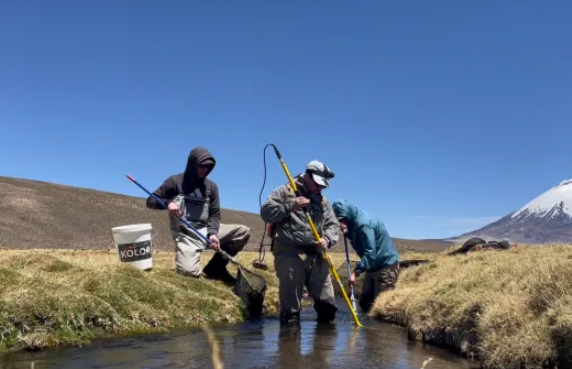
Nuclear technology helps boost disease resistance and food security in Latin American rainbow trout farming.
Rainbow trout farming in Latin America is shifting from a model driven by traditional experience to one supported by science and technology. Widely farmed in freshwater rivers, lakes, lagoons, and coastal net pens, rainbow trout constitute a vital part of
2026-07-27