
France Releases Ten-Year Nuclear Fusion Energy Development Strategy Roadmap
 Scan to share
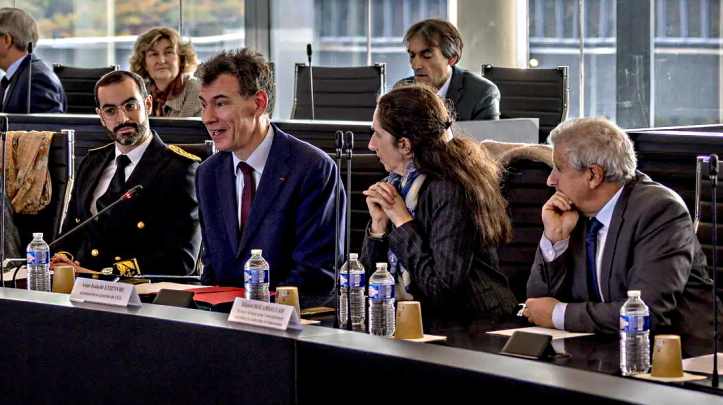
Recently, Philippe Baptiste, Minister of Higher Education, Research and Space of France, officially announced France's new ten-year national strategy for nuclear fusion energy development during an on-site visit to the International Thermonuclear Experimental Reactor (ITER) construction site and the Cadarache Centre of the French Alternative Energies and Atomic Energy Commission (CEA). The roadmap aims to systematically coordinate research forces, guide dedicated investment, and make every effort to accelerate the pace toward the commercialization of fusion energy.
The national strategy relies closely on three core research facilities, namely the International Thermonuclear Experimental Reactor, the WEST tokamak of the French Alternative Energies and Atomic Energy Commission, and the Laser Mégajoule for inertial confinement fusion. At the same time, the strategy places high importance on professional talent reserves, planning to double the number of students in relevant fields such as plasma physics, nuclear engineering, and cryogenic technology, and to fully cultivate the next generation of nuclear fusion technology experts.
According to the phased plan, in the short term (2026 to 2030), France's national strategy will focus on consolidating the scientific and technological foundation, strengthening experimental infrastructure, and securing necessary funding; in the medium term, its core objective is to lay a solid foundation for the research and development of key technologies required for Europe's pilot plant in 2035. French Minister Philippe Baptiste emphasized that while France firmly supports ITER as a key asset, it will also vigorously develop domestic facilities to provide indispensable complementary technologies for the successful development of global fusion.
As a large international scientific research project jointly funded and built by 35 countries around the world, ITER aims to achieve a fusion reaction with an output of 500 MW lasting at least 400 seconds through an input of 50 MW of plasma heating power. According to the updated project plan, ITER is scheduled to conduct deuterium-deuterium fusion operations in 2035, and subsequently advance magnetic energy and plasma current operations in an all-round way, providing scientific and technological support for the future of global clean energy.
Disclaimer: Information republished from partner media, institutions or other websites is provided for reference and communication purposes only. It does not imply endorsement of its views or verification of its accuracy. Please contact us if any content infringes rights or requires correction.