
France Inaugurates New Research Facility for Passive Cooling Systems
 Scan to share
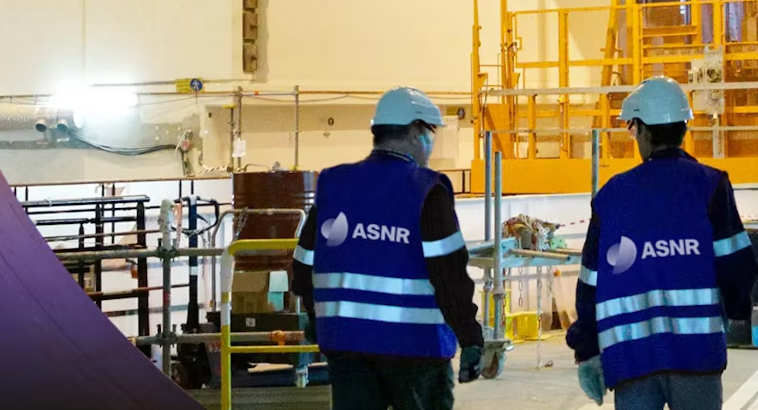
Recently, the French Nuclear Safety and Radiation Protection Authority (Autorité de Sûreté Nucléaire et de Radioprotection, ASNR) officially inaugurated a new research facility codenamed PASTIS (Passive Systems Thermalhydraulic Investigations for Safety) at its Cadarache research center. The project received €9 million (approximately $10 million) in dedicated funding from the French government's “France 2030” national investment plan, aimed at conducting in-depth research on the physical mechanisms of passive cooling systems applicable to innovative reactors and small modular reactors (SMRs).
It is understood that the core objective of passive safety systems is to automatically bring a nuclear reactor to a safe shutdown state and maintain that state over the long term without human intervention and with minimal reliance on external support functions. As global nuclear energy design advances toward next-generation technologies, how to efficiently integrate these systems into light water reactors and SMRs has become a central focus of the nuclear industry and regulatory bodies. The official operation of the PASTIS project will provide essential scientific reference data for regulators to independently evaluate the safety review dossiers of future nuclear power projects.
The research platform primarily comprises two proprietary and highly modular experimental facilities: first, a thermal-hydraulic loop named ALCINA, mainly used to study pressure losses in piping, forced convection, and natural circulation patterns of single-phase or two-phase flow under accident or incident scenarios; second, a confined containment vessel named KoKoMo, specifically designed to simulate convection and wall condensation dynamics under extreme accident conditions such as the complete submersion of an SMR containment in a water pool. The data generated by these experiments will be used to continuously calibrate and refine French domestic numerical simulation software, such as the CATHARE code for normal and incidental operation analysis and the ASTEC code for severe accident analysis.
ASNR stated that the PASTIS project adopts a broadly generic scientific approach and is not limited to any specific industrial design. Currently, the platform has engaged in extensive cooperation with the R&D team of Électricité de France (EDF) as well as international research projects such as EASI-SMR under the EU's “Horizon” Euratom framework. With the full rollout of various simulation experiments, the facility will lay a solid technical foundation for the safety certification and regulatory compliance of global advanced nuclear energy technologies in the coming decades.
Disclaimer: Information republished from partner media, institutions or other websites is provided for reference and communication purposes only. It does not imply endorsement of its views or verification of its accuracy. Please contact us if any content infringes rights or requires correction.