
Russian Ambassador Says Willing to Transfer Civilian Nuclear Technology to Morocco, Covering Power Generation, Seawater Desalination, Nuclear Medicine, and Agriculture
 Scan to share
New directions are emerging in Morocco-Russia economic and technical cooperation, with both sides intending to expand the scope of collaboration from traditional energy sectors to strategic industries such as civilian nuclear technology, seawater desalination, medicine, and agriculture. Russia's Ambassador to Morocco, Igor Belyaev, stated that Russia is willing to share civilian nuclear technology expertise with Morocco, a remark indicating that bilateral cooperation may extend from equipment supply and energy projects to more technology-intensive comprehensive partnerships.
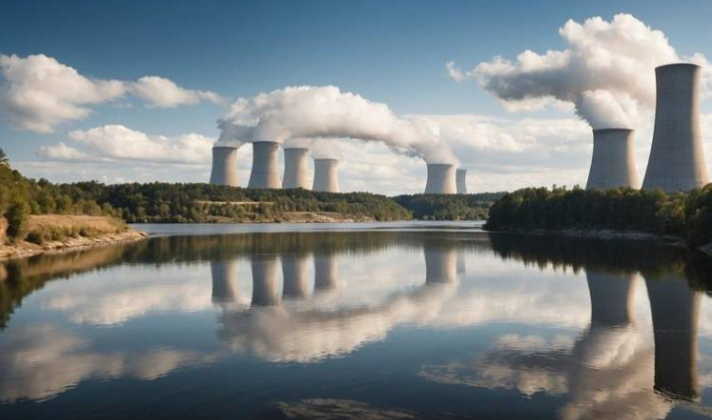
This development is closely linked to Morocco's current needs. In recent years, Morocco has continuously promoted the diversification of energy sources and accelerated efforts to address water scarcity, with seawater desalination having become one of its key options for ensuring water supply security. If civilian nuclear technology can be combined with large-scale desalination facilities, stable power supply, or related scientific research capacity building, it will help Morocco gain more technical pathways in water resources and energy security.
The cooperation discussed by both sides is not limited to nuclear power generation. Data shows that nuclear technology can be used for radioisotope applications in medical diagnosis and treatment, and in agriculture for soil erosion monitoring, fertilizer use optimization, and crop yield enhancement. This means that if Morocco-Russia cooperation materializes, it could serve multiple livelihood and development issues in Morocco, including public health, food security, and water resource management.
Morocco and Russia are not starting from scratch in the energy sector. As early as the Soviet era, Morocco's Jerada thermal power plant used Soviet equipment, and later Russian company Power Machines also participated in equipment projects for Moroccan hydropower stations. Russia currently still hopes to maintain its presence in Morocco's energy market through equipment maintenance, renovation and upgrading, and participation in new power projects.
For Morocco, introducing technology and expertise from different countries helps enhance its autonomous capabilities in energy, water conservancy, medicine, and agriculture, and also creates more space for scientific research training and technology transfer. For Russia, leveraging its advantages in civilian nuclear technology and energy equipment to expand into the North African market is expected to drive bilateral relations from traditional energy cooperation toward broader technological and investment collaboration.
Disclaimer: Information republished from partner media, institutions or other websites is provided for reference and communication purposes only. It does not imply endorsement of its views or verification of its accuracy. Please contact us if any content infringes rights or requires correction.