
South Korea Designates SMR as National Strategic Technology, Tax Incentives to Drive New Investment in Nuclear Supply Chain
 Scan to share
The South Korean government's inclusion of Small Modular Reactors (SMR) in its national strategic technology support scope signals that its energy and industrial policies are extending from traditional large-scale nuclear power plants to next-generation nuclear technologies. SMRs feature modular manufacturing, relatively shorter construction periods, and higher site flexibility, making them a key direction for South Korea in balancing energy security, low-carbon transition, and advanced manufacturing upgrades.
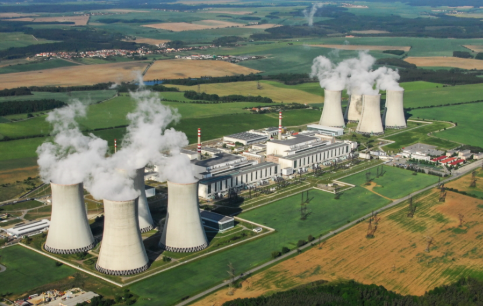
This policy has gained support from South Korea's nuclear industry, with the key being that national strategic technology status typically entails tax credits and other incentives for corporate R&D, equipment investment, and related capital expenditures. For companies involved in nuclear equipment, castings and forgings, control systems, engineering design, and fuel-related businesses, tax support helps reduce upfront investment pressure and encourages the supply chain to expand R&D and production capacity earlier.
South Korea has actively promoted nuclear power exports and localization of indigenous technology in recent years. With SMRs now included in the support scope, the country may further strengthen its competitive position in the international nuclear energy market. Compared to traditional nuclear projects, SMRs can be applied in the future to remote area power supply, industrial parks, data centers, power peak shaving, and seawater desalination, while also forming potential connections with the stable power supply demands of high-energy-consuming industries such as AI and semiconductors.
However, SMR commercialization still faces challenges including regulatory approval, standardized design, cost validation, public acceptance, and long-term operation and maintenance systems. Tax credits can drive supply chain investment, but whether the technology can move from demonstration projects to large-scale deployment also depends on whether government procurement, licensing systems, international certification, and electricity market mechanisms can mature in tandem.
South Korea's move also reflects new shifts in global energy policy: while renewable energy continues to expand, some countries are reassessing the role of nuclear power in carbon reduction and power supply stability. If South Korea can leverage policy tools to integrate R&D, manufacturing, and export resources, SMRs are poised to become a new growth area for its nuclear supply chain following large-scale nuclear power units.
Disclaimer: Information republished from partner media, institutions or other websites is provided for reference and communication purposes only. It does not imply endorsement of its views or verification of its accuracy. Please contact us if any content infringes rights or requires correction.