
Wolseong NPP Unit 2 in South Korea to Shut Down on November 1
 Scan to share
Wolseong NPP Unit 2, located in Gyeongju, Gyeongsangbuk-do, South Korea, will officially reach the end of its 30-year design operating lifetime and cease operation on November 1. Since entering commercial operation in November 1996, the unit has generated approximately 150 million megawatt-hours (MWh) of electricity cumulatively. Subsequently, the design lifetimes of Wolseong Units 3 and 4 will also expire in December next year and February 2029, respectively.
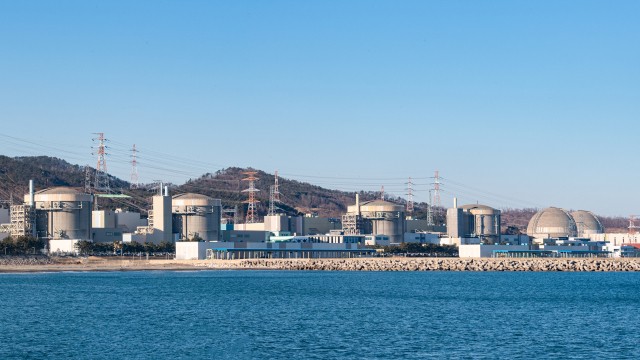
South Korea's Nuclear Safety Act stipulates that nuclear power units reaching the end of their design lifetime may, provided they meet statutory safety standards, extend their operating period by 10 years through an operating change license review. However, since Wolseong Units 2 through 4 submitted their Periodic Safety Review (PSR) reports in April 2024 and completed the public comment collection on the draft radiation environmental impact assessment in May last year, two years and six months have passed, yet Korea Hydro & Nuclear Power (KHNP) has still not formally submitted the operating change license applications for these units.
The main crux causing the severe delay in the life extension approval process lies in the economic evaluation constraints unique to heavy water reactors. Wolseong Units 2 through 4 are Canadian CANDU pressurized heavy water reactors (CANDU), and their life extension requires comprehensive replacement and refurbishment of core components such as fuel channel assemblies (pressure tubes, etc.). Since the levelized cost of electricity for heavy water reactors is approximately 10% higher than that of conventional light water reactors, and the economic assessment guidelines introduced by South Korea in 2021 require accounting based on the actual settlement price of the electricity exchange rather than end-user electricity tariffs, it is very difficult for the units to meet the economic justification criteria. In addition, the procurement of key pressure tube materials and construction must rely on the original Canadian manufacturer, the refurbishment cycle is lengthy, and the actual effective extended operating time remaining is only 6 to 7 years, further exacerbating the difficulty of cost recovery.
The suspension of nuclear power units has also raised concerns among local governments and communities about significant declines in fiscal tax revenue. According to estimates, the shutdown of Wolseong Unit 2 alone for one year would cause Gyeongju City and surrounding areas to face losses of 3.9 billion Korean won in regional resource facility tax and 1.95 billion Korean won in statutory special support grants, totaling an annual shortfall of 5.85 billion Korean won; if Wolseong Units 2 through 4 all cease operation in the future, the annual loss in related comprehensive local fiscal revenue would rise to 17.76 billion Korean won.
Currently, surrounding communities are clearly divided on the issue of unit life extension. Some local residents and legislators concerned about economic decline are calling for the life extension process to be restarted as soon as possible while ensuring safety; while environmental groups and some members of the public, citing historical concerns such as heavy water leakage risks, excessive tritium concentration detected on site, and cracks in spent fuel pools, strongly demand that the units be thoroughly shut down in strict accordance with their design lifetimes. The contest between safety bottom lines and local economic interests continues to expose the life extension prospects of the Wolseong heavy water reactor fleet to multiple variables.
Disclaimer: Information republished from partner media, institutions or other websites is provided for reference and communication purposes only. It does not imply endorsement of its views or verification of its accuracy. Please contact us if any content infringes rights or requires correction.