
KAERI and IAEA Jointly Hold Research Reactor Ageing Management Training Workshop
 Scan to share
On September 28, the "Training Workshop on Ageing Management for Research Reactors," jointly organized by the Korea Atomic Energy Research Institute (KAERI) and the International Atomic Energy Agency (IAEA), officially opened at KAERI's Daejeon headquarters and lasted for five days. This training was aimed at about 16 member states participating in the IAEA Asian regional technical cooperation project, including Jordan and Malaysia, and attracted more than 30 senior practical experts engaged in research reactor operation and maintenance, in-service inspection ageing management programmes (AMP), and nuclear safety regulation to exchange views on site.
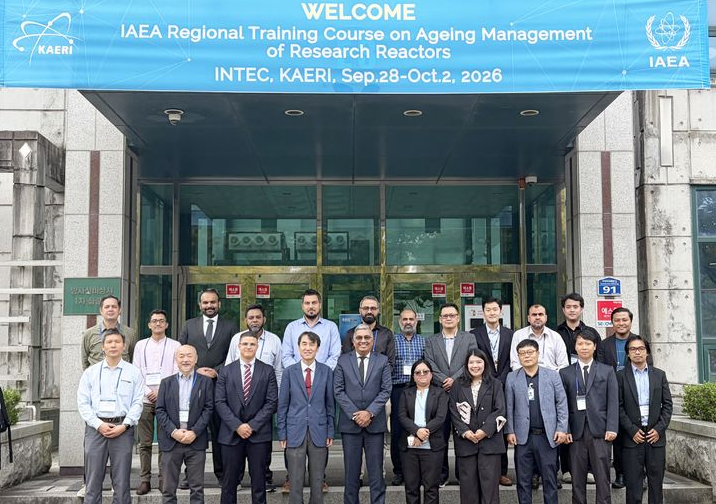
The training workshop was led by the International Atomic Energy Agency and hosted by the "HANARO Utilization Research Division" under the Korea Atomic Energy Research Institute. It aimed to address the increasingly severe pain points of material wear and performance degradation in aging research reactors worldwide and to explore systematic whole-life-cycle paths for safe operation and life extension. IAEA specially invited technical experts gave in-depth lectures on the top-level design, industrial site implementation, and engineering change management of research reactor ageing management programmes (AMP), focusing on periodic inspection of key reactor systems and equipment, technical transformation and upgrading, responses to shortages and interruptions in the supply chain of discontinued spare parts, and solutions for handling the risk of talent gaps caused by the retirement of core highly skilled veteran experts.
To strengthen cross-national data collaboration, this training also included special reports by member states on the current status of research reactor operation and maintenance, and specifically conducted hands-on training on the "IAEA Research Reactor Ageing Database" (RRADB). Through this global big data sharing platform, participants mastered algorithms for tracing historical equipment defects and assessing age-related degradation characteristics, jointly building a cross-national intelligence collaboration network to safeguard the long-term operational safety of small and medium-sized research reactors.
In addition, all foreign experts will also conduct an on-site visit to HANARO, the only 30 MW multi-purpose open-pool research reactor independently developed by Korea. Statistics show that about 55% of research reactors currently in operation worldwide have exceeded 50 years of service life and face severe challenges of irradiation embrittlement of components and declining reliability; by contrast, HANARO, which first reached criticality in 1995 and this year marks the 31st anniversary of its commercial operation, is in excellent operating condition and maintains extremely high safety redundancy through a strict proactive preventive ageing monitoring and maintenance system. Kim Myung-sub, head of the HANARO Utilization Research Division, said that this training will effectively enhance the level of ageing monitoring technology for in-service units in member states, and that Korea will, in the future, rely on the three decades of safe operation experience accumulated by HANARO to continue expanding its deep cooperation network with IAEA member states in the field of advanced research reactor operation and maintenance.
Disclaimer: Information republished from partner media, institutions or other websites is provided for reference and communication purposes only. It does not imply endorsement of its views or verification of its accuracy. Please contact us if any content infringes rights or requires correction.