
South Korea Expects Tripling of Demand for Nuclear Design Personnel by 2034
 Scan to share
Recently, the Industry-Academic Cooperation Foundation of Seoul National University and KEPCO E&C jointly released a report titled "Human Resource Enhancement Plan to Boost Nuclear Power Plant Export Competitiveness," warning that with the revival of nuclear power at home and abroad, South Korea will simultaneously construct 15 nuclear power plants domestically and overseas by 2034, at which point demand for design personnel will surge to 4,171, facing a severe talent gap of up to 2,771.
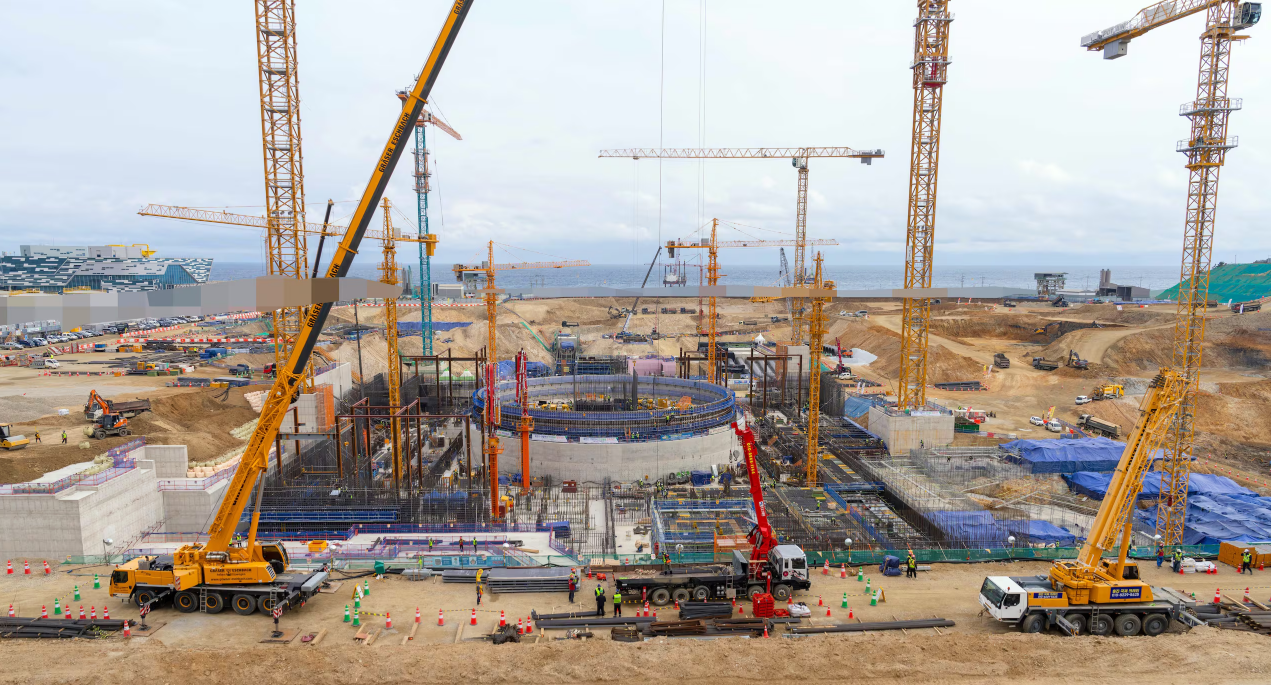
It is reported that the root cause of South Korea's nuclear design talent crisis lies in the brain drain and shrinkage of academic foundations caused by the previous nuclear phase-out policy. Data from the Ministry of Science and ICT of South Korea show that the number of domestic nuclear design personnel has plummeted from 2,486 in 2016 to 1,590 in 2024, a decrease of 36%; female undergraduate enrollment in nuclear engineering has also dropped by 37.4%. Since the design of nuclear power plant piping and structures requires a long training cycle of 5 to 10 years, the current net increase of only 75 people per year is far from sufficient to meet the engineering design verification needs for the construction of Shin Hanul Units 3 and 4 and subsequent overseas export projects.
Facing aging and talent gaps, Choi Sung-min, President of the Korean Nuclear Society, and Lee Jong-ho, Senior Research Fellow at the Nuclear Policy Center of Seoul National University, pointed out that design delays or specification errors will directly impede licensing approval and construction schedules, and global competition has intensified the risk of domestic high-end talent flowing overseas. The International Energy Agency (IEA) also noted that 46% of nuclear power companies worldwide are facing operational disruption risks due to labor shortages.
The report recommends that the South Korean government draw on international experience such as Électricité de France (EDF)'s establishment of a re-employment platform for retired experts, and introduce systematic talent cultivation and retention policies. As an important support for South Korea's domestic new reactor construction and nuclear power exports to the United States and other overseas markets, the restoration of the nuclear design talent supply chain will directly determine the international competitiveness of South Korea's nuclear power industry.
Disclaimer: Information republished from partner media, institutions or other websites is provided for reference and communication purposes only. It does not imply endorsement of its views or verification of its accuracy. Please contact us if any content infringes rights or requires correction.