
Malaysia Expands Nuclear Radiation Mutation Breeding Applications to Bolster Food Security and Industrial Inspection
 Scan to share
Malaysia's nuclear technology applications are extending from traditional fields such as medicine and industry further into agricultural production and food security. Dr. Sukri, Senior Director of Project Management at the Malaysian Nuclear Agency, stated that through research and development using nuclear radiation mutation breeding technology, the agency has shortened the maturation period of cassava from the original 10 to 12 months down to 6 months.
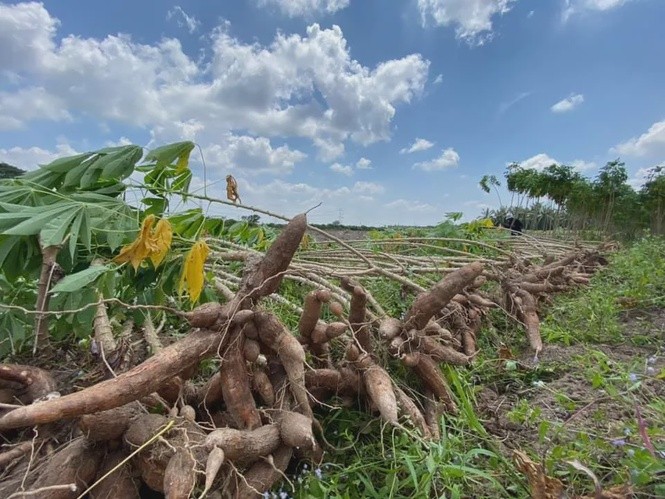
Sukri said that this technological application helps reduce farmers' production costs, improve land use efficiency, and cultivate larger cassava varieties. In addition to cassava, the Malaysian Nuclear Agency, in collaboration with the Ministry of Agriculture and Food Security and the Department of Agriculture, has successfully developed two new rice varieties, NMR 151 and NMR 152. These new varieties feature higher yields and demonstrate strong resistance to diseases, extreme weather conditions such as prolonged drought, and flooding.
Abdul Radauf, Secretary of the Science, Technology and Innovation Culture Promotion and Service Group under the Ministry of Science, Technology and Innovation, stated that the ministry launched the "Nuclear Technology for All Advocacy Program" (ENR) this year, aiming to improve public perception of nuclear technology. Currently, some members of the public still tend to associate nuclear technology with destruction, radiation, or weapons; however, under controlled conditions, nuclear technology can be safely applied in various fields including medicine, food production, and environmental management.
In terms of industrial applications, Sukri pointed out that the use of nuclear technology in non-destructive testing (NDT) has become an important means of quality control and quality assurance in Malaysia's oil and gas sector. Through non-destructive testing, relevant personnel can detect defects early without damaging structures, reducing accident risks and lessening dependence on foreign experts.
To attract the younger generation's interest in nuclear technology, the Ministry of Science, Technology and Innovation has also introduced an animated mascot named "Cik Tom," whose name is derived from the word "atom." Abdul Radauf stated that this initiative aims to spark students' interest in the fields of science, technology, engineering, and mathematics (STEM), and encourage them to pursue nuclear technology-related courses at the higher education level.
Disclaimer: Information republished from partner media, institutions or other websites is provided for reference and communication purposes only. It does not imply endorsement of its views or verification of its accuracy. Please contact us if any content infringes rights or requires correction.