
DARPA Ships Insect Sterility Technique Irradiator to the United States with Panamanian Cooperation
 Scan to share
An insect irradiator used for the sterile insect technique program was recently transshipped to the United States via Panama, where it will support U.S. efforts to address the New World screwworm threat. The equipment was acquired by the U.S. Defense Advanced Research Projects Agency (DARPA) on July 8, 2026, and arrived in Panama, where it was subsequently transferred from the port to the airport with the assistance of Panamanian partners.
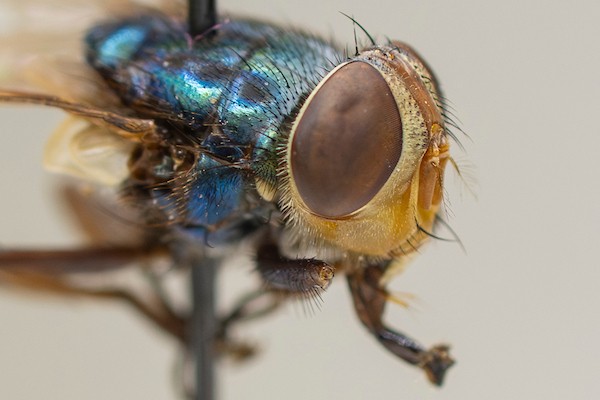
The New World screwworm is a parasitic pest whose flies lay eggs in warm-blooded animals, with larvae burrowing into tissue and feeding, posing a threat to livestock production. Jon O’Rullian, president of the equipment manufacturer Foss Therapy Services, Incorporated, stated that threats of this kind are of great importance to all types of livestock producers.
According to reports, this irradiator was originally built for the International Atomic Energy Agency's sterile insect technique program and was planned for use in fruit fly control efforts in Paraguay. Due to the urgent need for such specialized equipment in the United States, and given that manufacturing a new unit could take nine months to a year, DARPA obtained the irradiator on July 8 with permission from the International Atomic Energy Agency for use in U.S. New World screwworm control efforts.
After the equipment arrived, DARPA faced the logistical challenge of moving the irradiator out of the port. Panamanian partners were involved in coordinating efforts to assist in transporting the equipment from the dock to the airport. O’Rullian noted that moving the irradiator from the port to the airport was the most difficult part of the entire process, with Panama playing a critical role in this effort.
After several weeks of coordination and transportation arrangements, the irradiator arrived at Panama Pacific International Airport on July 23. On August 23, a U.S. Air Force C-17 “Globemaster III” transport aircraft arrived at the location to carry the equipment to the United States. O’Rullian stated that this transfer of equipment from Panama to the United States demonstrates the role of international cooperation in addressing cross-border threats that affect animal health, agricultural production, and community safety.
Disclaimer: Information republished from partner media, institutions or other websites is provided for reference and communication purposes only. It does not imply endorsement of its views or verification of its accuracy. Please contact us if any content infringes rights or requires correction.