
Jamaica Commissions Cobalt-60 Gamma Irradiator to Support Sterile Insect Technique and Agricultural Research
 Scan to share
A new gamma irradiator at the International Centre for Environmental and Nuclear Sciences at the University of the West Indies in Jamaica has been commissioned, providing new technical capabilities for the country's research in vector-borne disease control, agricultural improvement, and nuclear technology applications. The equipment began operation in October 2024 and was officially inaugurated in August 2025, currently focusing primarily on sterile insect technique research, with the main objective of controlling Aedes aegypti mosquitoes.
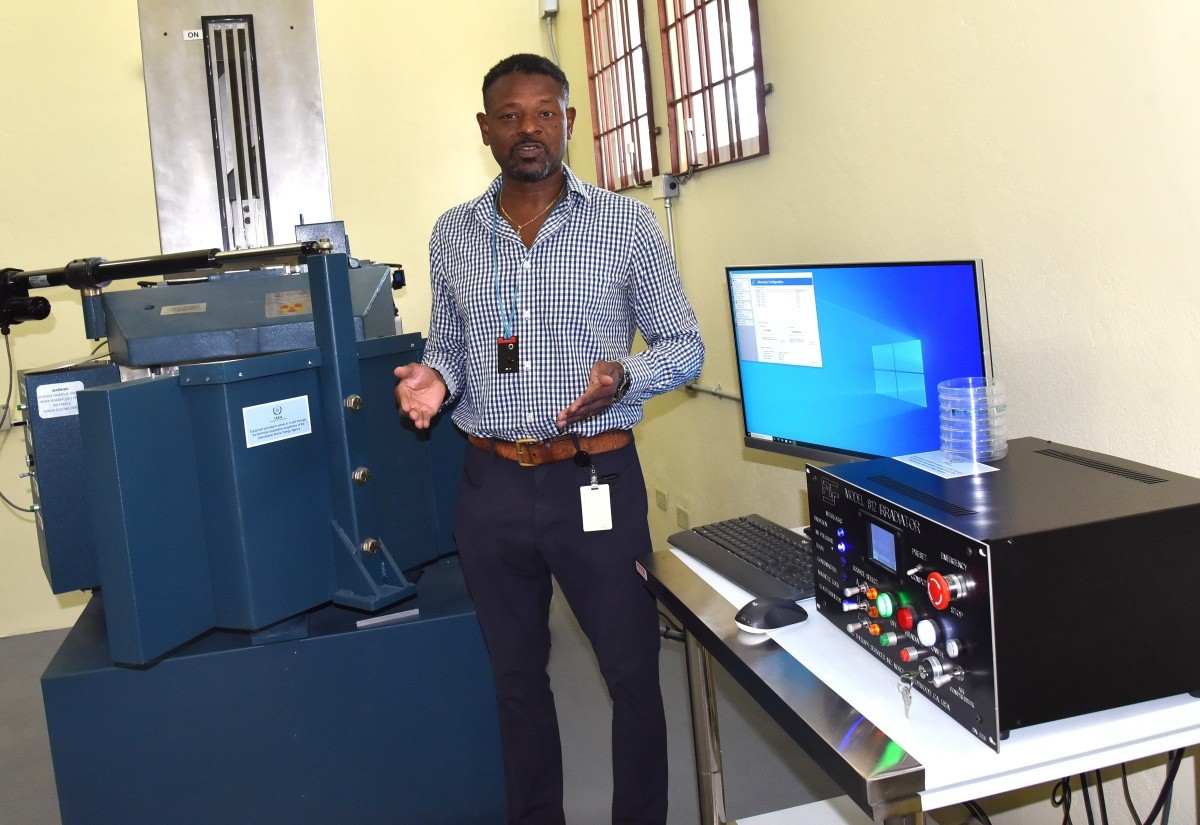
John Antoine, head of the Nuclear Analysis Laboratory and senior research scientist at the International Centre for Environmental and Nuclear Sciences, explained that the irradiator can deliver controlled, measurable doses of radiation to samples or products without making the samples or products themselves radioactive. He likened the process to an X-ray examination, noting that patients do not become radioactive after the procedure. The facility uses cobalt-60 as its radiation source and features a self-shielded design to minimize radiation exposure to operators and nearby personnel.
Antoine stated that the most important current application of the facility is sterile insect technique research. The team will render male mosquitoes sterile through radiation before releasing them, then use them for pest control. The International Centre for Environmental and Nuclear Sciences is collaborating with Jamaica's Ministry of Health and Wellness and the University of the West Indies, with the latter providing laboratory-reared mosquitoes for irradiation trials.
A key aspect of this research is determining the appropriate radiation dose: it must sterilize male mosquitoes while preserving their ability to compete with wild males for mating. Antoine said that female mosquitoes cannot readily distinguish between irradiated and non-irradiated males, and when they mate, no offspring are produced, allowing mosquito populations to decline over time. The sterile insect technique pilot is expected to launch in the coming months, with the exact timeline depending on the arrangements of project partners.
Beyond vector control, the gamma irradiator is also being used to explore mutation breeding in crops and plants. The International Centre for Environmental and Nuclear Sciences is working with the Scientific Research Council, which provides plant tissues and seedlings for irradiation. This approach aims to accelerate the natural mutation process to identify materials with traits such as disease resistance, drought tolerance, or greater adaptability to climate change.
The technology may also serve Jamaica's agricultural exports. Antoine noted that soft fruits often face challenges from pests and diseases and short shelf life when entering overseas markets. Through gamma irradiation research, scientists can evaluate radiation doses that help control pests and extend shelf life. If the research yields progress, Jamaica could potentially introduce industrial-scale irradiation equipment in the future to enable larger-volume processing, helping farmers expand export markets.
Antoine also mentioned that food irradiation is another potential application, which can be used to reduce harmful microorganisms and improve food safety. Food irradiation technology is already applied internationally, with more than 50 countries and regions worldwide operating gamma irradiation processing facilities. Additionally, radiation can be used in materials science research, for example, to improve water resistance and durability of materials.
Antoine expressed hope that this technology will have a tangible impact on vector-borne disease control in Jamaica within the next five years, and envisioned the country eventually acquiring industrial gamma irradiators to reduce food spoilage and expand agricultural exports, while also extending the sterile insect technique to control other pests such as fruit flies and screwworm flies.
Disclaimer: Information republished from partner media, institutions or other websites is provided for reference and communication purposes only. It does not imply endorsement of its views or verification of its accuracy. Please contact us if any content infringes rights or requires correction.