
Busan, South Korea Reports No Abnormal Radiation Detected in Seawater and Seafood Three Years After Fukushima Discharge
 Scan to share
Busan Metropolitan City stated on August 24 that since the discharge of contaminated water from the Fukushima nuclear power plant began in 2023, the city has continuously conducted radiation monitoring and analysis of coastal seawater and seafood. The results show that the safety conditions of Busan's waters and seafood remain stable with no abnormal changes detected.
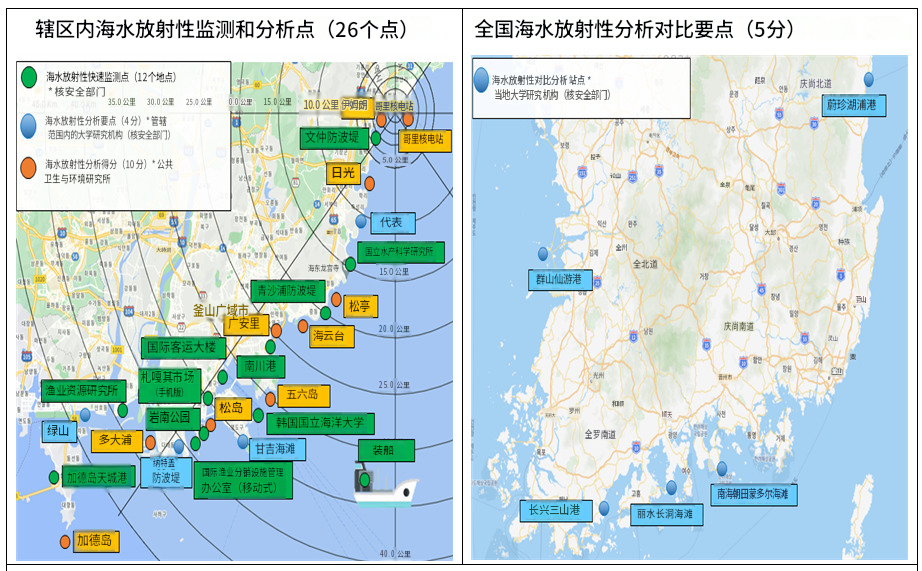
According to Busan Metropolitan City, seawater radioactivity testing is currently conducted at 26 coastal points. Among them, samples from 14 coastal locations including Haeundae, Gwangalli, Dadaepo, Songdo, and Songjeong are analyzed by the Busan Metropolitan City Institute of Health and Environment and local university research institutions. Test results show that the concentrations of relevant radionuclides are far below the World Health Organization drinking water standards, with cesium-134 and cesium-137 standards at 10 Bq/L and tritium standards at 10,000 Bq/L.
The remaining 12 points have been incorporated into the rapid seawater radioactivity monitoring network. Busan Metropolitan City stated that to date, no abnormal changes caused by artificial radionuclides have been detected in the monitoring, and all measurement results remain within normal fluctuation ranges.
To further verify the conditions of Busan's offshore waters, the city government also compared test results from the eastern, western, and southern coastal areas of Busan with data from five points including Chotae Mongseok Beach in Namhae City, Jangdeung Beach in Yeosu City, Samsan Port in Jangheung City, Seonyu Port in Gunsan City, and Hopo Port in Uljin City. The comparison results likewise show that radionuclide concentrations in Busan's offshore waters remain within normal fluctuation ranges.
In terms of food and seafood testing, Busan Metropolitan City conducts radiation inspections separately for production and distribution stages. From 2023 to August 7 this year, a total of 6,789 food and seafood samples were collected and tested, all within standard limits. Among them, the Fisheries Research Institute completed 1,897 tests in the seafood production stage, and the Institute of Public Health and Environment completed 4,892 tests in the food and seafood distribution stage. Since August last year, the Institute of Public Health and Environment has also added testing items for plutonium-238, plutonium-239+240, and strontium-90.
Busan Metropolitan City continues to strengthen management of Japanese seafood products. South Korea has banned imports of aquatic products from eight Japanese prefectures including Fukushima Prefecture since 2013; seafood from other regions of Japan is subject to radiation testing upon import, and if trace amounts of radioactive substances are detected, additional radionuclide testing certificates must be submitted.
During the same period, Busan Metropolitan City also conducted origin labeling inspections for seafood products, checking 27,543 cases and identifying 107 violations, including 49 cases of missing origin labels and 58 cases of false origin labels. To promote consumption of domestic seafood and publicize its safety, the city has carried out 59 related activities and launched a program at 229 traditional markets offering partial refunds in the form of "Royal Meal Vouchers" for purchases of domestic seafood.
Since March 2023, Busan Metropolitan City has established a dedicated task force to address the Fukushima nuclear accident wastewater issue, led by the vice mayor in charge of administration. Radiation monitoring and analysis results are published through the Busan Metropolitan City government website, the Busan Safety ON website, and outdoor electronic bulletin boards. Busan Metropolitan City stated that it will continue to prioritize citizens' health and safety and maintain the operation of the marine and fisheries safety inspection system.
Disclaimer: Information republished from partner media, institutions or other websites is provided for reference and communication purposes only. It does not imply endorsement of its views or verification of its accuracy. Please contact us if any content infringes rights or requires correction.