
Jefferson Lab Signs CRADA to Advance Commercialization of Subsurface Tritium Continuous Monitor: Overcoming the Challenge of Online Monitoring of Low-Energy Beta Particles in Groundwater at Nuclear Power and Fusion Facilities
 Scan to share
The U.S. Department of Energy (DOE) Thomas Jefferson National Accelerator Facility (Jefferson Lab) announced that it has formally signed a Cooperative Research and Development Agreement (CRADA) with startup company Canary Instruments to jointly advance the commercialization of its independently developed Subsurface Continuous Radioisotope Environmental Monitor (SCREM). This technology is specifically designed for real-time online monitoring of tritium contamination in groundwater surrounding nuclear power plants, nuclear fuel facilities, and future nuclear fusion demonstration power plants.
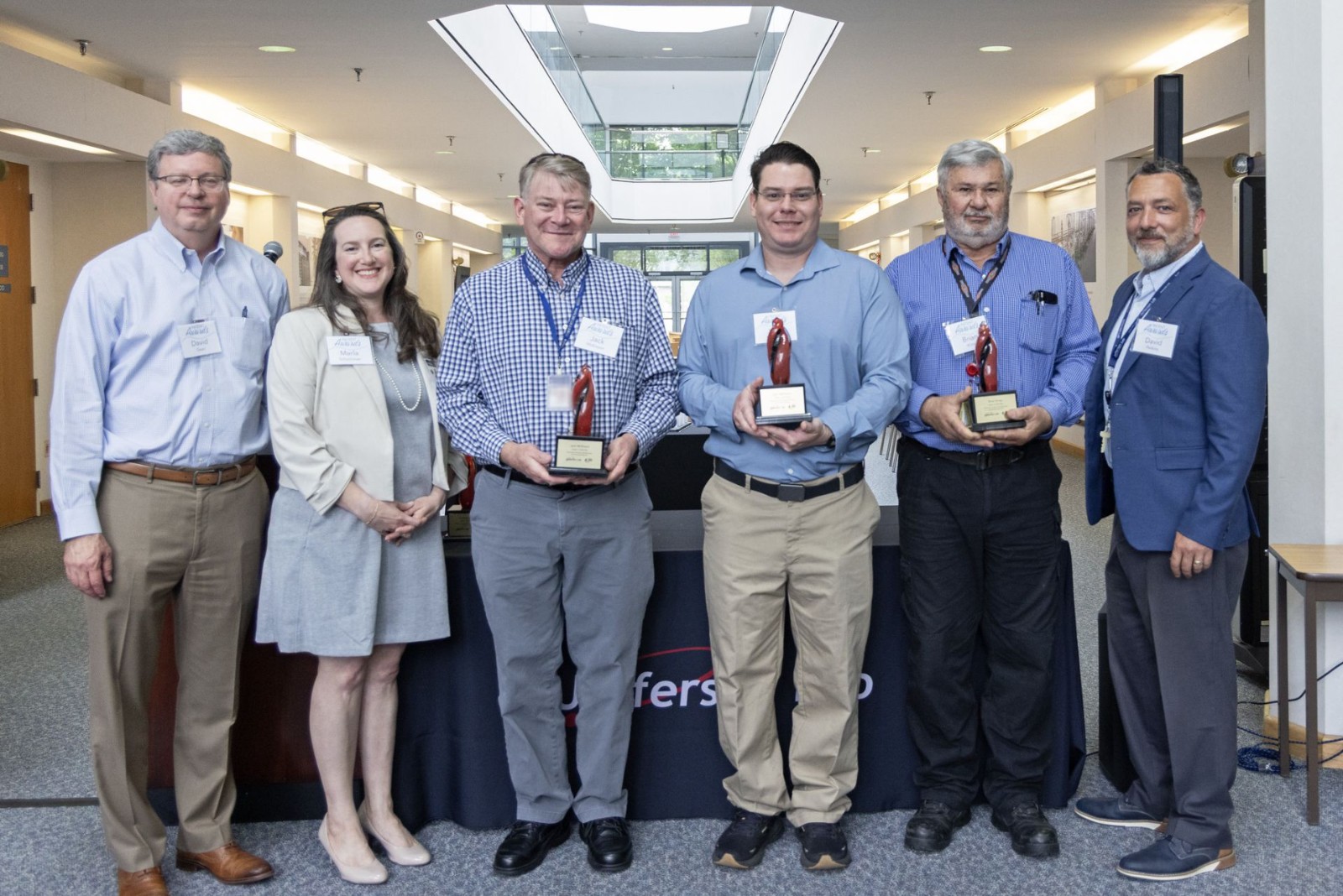
In the current groundwater radiation monitoring system for nuclear facilities, mainstream detection methods rely on manual periodic sampling and laboratory analysis. Although accurate, this approach is "labor-intensive and time-intensive" and can only provide a snapshot of water body data at the moment of sampling, making it difficult to capture sudden, sporadic low-concentration radioactive releases in a timely manner. The SCREM system is designed for long-term monitoring needs and can be buried directly in monitoring wells or geological boreholes, relying on its own power supply to achieve continuous in-situ uninterrupted data collection and recording for months to years, significantly improving the sensitivity and temporal continuity of low-concentration isotope detection.
In terms of detection technology pathway and underlying physical architecture, SCREM has overcome the physical bottleneck that tritium decay releases extremely low-energy beta particles that are difficult to penetrate over long distances and detect. The system adopts a design combining an unclad scintillating fiber grid structure with silicon photomultipliers (SiPM):
Direct water immersion contact and large wetted area:The unclad scintillating fiber array directly contacts groundwater and allows water flow to pass through, maximizing the contact area between the fibers and the water body, enabling ultra-low-energy beta particles in water to directly bombard the scintillator and excite photons;
Miniaturized and low-power SiPM readout:Optical signals are transmitted along both ends of the fibers to SiPMs. Compared with traditional photomultiplier tubes (PMTs), which are bulky, high-voltage driven, and susceptible to underground temperature and humidity effects, SiPMs require only low voltage to provide large signal output within an extremely small micro-package, and their spectral response characteristics are highly matched to the fiber emission wavelength;
Dual-end coincidence measurement eliminates thermal noise:Photon signals collected at both ends of the fibers are discriminated through a precision coincidence detection circuit, almost completely eliminating thermal background noise in deep underground environments. In addition, by adjusting fiber dimensions and parameters, this architecture can also be flexibly expanded for online monitoring of gamma rays, alpha particles, or neutrons.
The startup company Canary Instruments, which has received the rights to this technological achievement, was incubated and established by the U.S. Department of Energy's "Boost Platform" technology transfer support program. Although the original SCREM patent covers groundwater monitoring application scenarios for traditional fission nuclear power plants, Canary Instruments will initially focus its promotion on the nuclear fusion demonstration device market, where regulatory mechanisms are more flexible and commercialization is accelerating. Relying on this CRADA agreement, researchers from both sides will continue to deepen readout electronics optimization, benchmark performance verification, and full-function prototype development, accelerating the translation chain from major nuclear physics detection achievements at national laboratories to their deployment in industrial infrastructure safety protection.
Disclaimer: Information republished from partner media, institutions or other websites is provided for reference and communication purposes only. It does not imply endorsement of its views or verification of its accuracy. Please contact us if any content infringes rights or requires correction.