
Russia helps Kyrgyzstan rehabilitate the Kristall plant and eliminate environmental risks
 Scan to share
Rosatom will cooperate with the Ministry of Emergency Situations of Kyrgyzstan to restore the site of the former “Kristall” plant to a safe state using Russian engineering and environmental technologies. In Tashkumyr, the capital of Kyrgyzstan, Rosatom held an information session with local residents, public representatives and experts to present the upcoming work at the “Kristall” plant. Rosatom experts presented the work stages, technical solutions and environmental monitoring system.
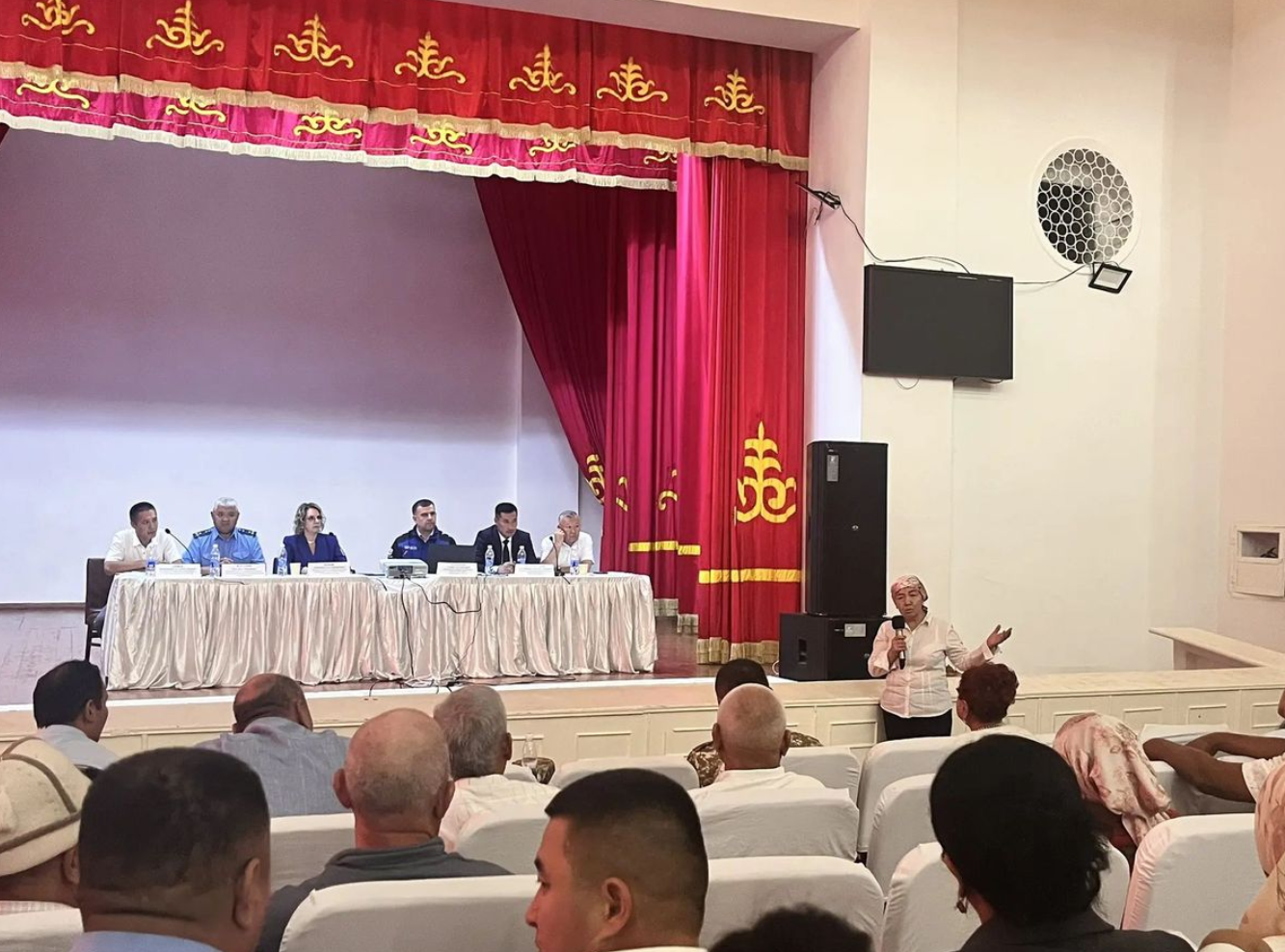
The site has stored up to 155 tonnes of toxic chemicals for about 15 years. These chemicals are kept in process tanks left after the production line was shut down and pose a potential hazard to the surrounding area. Site preparation work is currently underway. Next, as part of emergency response measures, experts will stabilize the pressure in the process tanks, carry out controlled opening and neutralize the off-gas. Subsequently, the hazardous chemicals will be removed from the tanks and neutralized using alkaline hydrolysis. Rosatom, the Ministry of Emergency Situations of Kyrgyzstan and the Ministry of Natural Resources, Ecology and Technical Supervision of Kyrgyzstan will conduct environmental monitoring throughout all project stages.
“The main result we must achieve is eliminating the environmental risk that has existed in the region for many years. A single technical solution is not enough to manage such facilities. We need a system that integrates engineering, environmental monitoring and accountability at every stage. In addition, we must inform the residents of Tashkumyr openly and transparently about the upcoming work and safety measures,” noted Stanislav Zabrikov, a Rosatom representative and Head of Environmental Projects at the Federal Environmental Operator.
“Residents of Tashkumyr need to understand not only the final goal of the project but also how safety will be ensured during the work. Therefore, oversight is essential at every stage. Open dialogue with the public is also a key part of this work. People must receive reliable information and have the opportunity to ask experts any questions,” noted Kilichbek Apiev, Deputy Head of the Tailings Management Department of the Ministry of Emergency Situations of Kyrgyzstan.
This project at the site of the former Kristall plant advances environmental cooperation between Russia and Kyrgyzstan. Combining technical expertise, engineering expertise and an environmental monitoring system will make it possible to continuously eliminate the accumulated risks at the former Kristall plant site and improve the environmental safety of the region.
The Kristall plant was a key facility of the Soviet electronics industry, built in 1989 to produce polysilicon. Due to the accumulation of chemicals on its territory, the plant is considered a high-risk environmental site. The company has been bankrupt since 2010.
In October 2024, the Russian federal state-owned enterprise “FEO” conducted a technical audit of the site. The audit results showed severe aging of the tanks and assessed existing defects and the facility's impact on the environment. Experts noted that due to prolonged idleness, the process tanks have suffered wear and natural aging, creating a risk of failure and loss of pressure.
Previously, representatives of Kyrgyz government agencies, the scientific community and expert groups learned about Russia's experience in remediating industrially contaminated areas at major accumulated environmental damage sites in the Irkutsk region.
Specifically, the Kyrgyz side learned about Rosatom's solutions for work at the sites of the former Usolye-Khimprom company and the Baikal Pulp and Paper Mill. Thanks to Rosatom's actions, the state of emergency in the areas where these facilities are located has been lifted, and the risk of environmental pollution has been minimized. The Tashkumyr project was developed taking full account of the experience and technical solutions accumulated at these sites.
The project to eliminate accumulated environmental damage at the Kristall plant continues the long-standing environmental cooperation between Russia and Kyrgyzstan. In spring 2026, the two countries summarized the results of a nine-year uranium mining site remediation program.
Remediating accumulated damage means not only eliminating environmental threats but also taking a key step toward sustainable urban development. Areas cleared of hazardous industrial remnants have the potential to become a driver of local economic growth.
The Environmental Protection Department of Rosatom plays a vital role in ensuring the environmental safety of the nuclear industry, safeguarding public environmental well-being and promoting the country's sustainable development. The department's work includes industrial waste management, environmental monitoring, contaminated site remediation and ecosystem restoration. As part of the national “Environmental Well-Being” project, the department is also developing a national system for managing hazardous industrial waste of hazard classes I and II.
Disclaimer: Information republished from partner media, institutions or other websites is provided for reference and communication purposes only. It does not imply endorsement of its views or verification of its accuracy. Please contact us if any content infringes rights or requires correction.