
IAEA 2024 Marine Radionuclide Intercomparison Exercise Shows: Credibility of Japan's Monitoring Data Continues to Remain High
 Scan to share
The International Atomic Energy Agency (IAEA) recently releasedthe results of the 2024 Interlaboratory Comparison (ILC) on radionuclides in the marine environment. The report shows that relevant Japanese monitoring institutions have demonstrated a high level of professionalism and data reliability in marine radionuclide analysis, and the credibility of the test data they provided continues to remain high. This intercomparison, as an important component of the IAEA's “Ocean Monitoring: Building Trust and Data Quality Assurance” project, constitutes another independent and systematic verification of Japan's Comprehensive Radiation Monitoring Plan (CRMP).
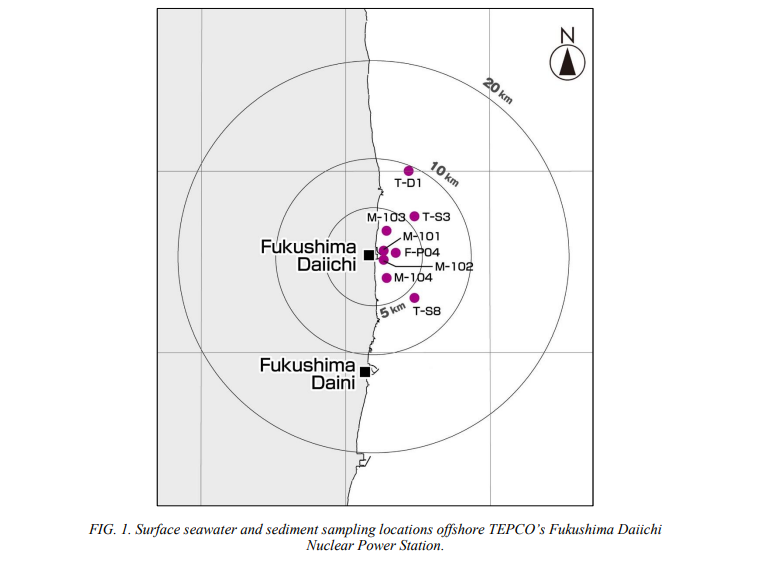
This intercomparison exercise covered three main types of marine environmental media: seawater, sediment, and fish. Sampling work was completed from September to October 2024 in the waters near the Fukushima Daiichi Nuclear Power Station and surrounding markets. In addition to Japanese domestic laboratories and the IAEA's Marine Environment Laboratories in Monaco, third-country analytical laboratories from China, the Republic of Korea, and Switzerland also participated in parallel analysis of similar samples. The entire process was conducted under the direct supervision of observers from the IAEA and relevant Japanese authorities. Sampling geographic coordinates were precisely recorded via GPS, and a complete end-to-end traceability archive was established.
For nuclide detection across different media, participating institutions employed multi-dimensional professional analytical methods. Seawater samples, after acidification and special aliquoting, focused on the detection of nuclides such as tritium, strontium, and cesium, with tritium detection integrating multiple techniques including vacuum distillation, electrolytic enrichment, and mass spectrometry analysis; sediment samples, after high-temperature drying, fine sieving, and homogeneity verification, underwent gamma and α spectrometry analysis; fish samples covered six different ecological niche seafood species including redfin sole, olive flounder, and Japanese saury, with gamma-ray spectrometry measurements lasting up to 24 hours to significantly lower detection limits.
The IAEA conducted rigorous evaluation of the data reported by each institution based on recognized statistical methods such as Zeta scoring. The results showed that approximately 95% of statistical tests passed at a confidence level of 99% or above, with data across laboratories showing high agreement. Notably, among the very few results that failed the confidence tests, the vast majority came from technical deviations at extremely low concentrations by other countries or the IAEA itself, with very few outlier data reported by Japanese domestic institutions, further highlighting the high accuracy of Japan's routine monitoring system.
Report data shows that the activity concentrations of cesium isotopes and key nuclides such as tritium and strontium in seawater, sediment, and fish around the Fukushima Daiichi Nuclear Power Station all remained at low and relatively stable levels, with no abnormal fluctuations observed. The IAEA therefore concluded that Japan's sample collection and analysis procedures continue to comply with international methodological standards. Since its launch in 2014, the project has cumulatively conducted 13 intercomparison activities. The successful completion of this multinational participation not only confirms the transparency and authority of Japan's monitoring data, but also provides a solid foundation of international mutual trust for global marine radioactive environmental monitoring and seafood safety assessment.
Disclaimer: Information republished from partner media, institutions or other websites is provided for reference and communication purposes only. It does not imply endorsement of its views or verification of its accuracy. Please contact us if any content infringes rights or requires correction.