
South Gyeongsang Province Completes 380 Food Radioactivity Tests in First Half of Year, All Meeting Standards
 Scan to share
The Gyeongsangnam-do Institute of Health and Environment recently announced that in the first half of this year, it conducted radioactivity testing on agricultural products, aquatic products, and processed foods already in circulation, completing tests on 380 samples. Testing items included radioactive iodine, radioactive cesium, and tritium, with all results meeting food radiation-related standards.
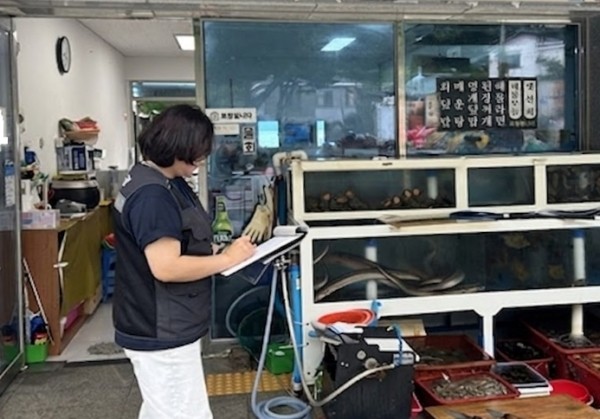
Gyeongnam Institute of Health and Environment
According to the institute, it continues to conduct radiation monitoring on foods with high market consumption to ensure the daily dietary safety of residents. Of the 380 tests completed in the first half of this year, 338 were for iodine and cesium, and 42 were for tritium, with no samples exceeding permissible levels.
In terms of monitoring methods, the institute has established a testing system centered on on-site sampling. In addition to collecting and testing commercially available aquatic products, staff also visit traditional markets and island areas in southern coastal cities and counties, conducting on-site sampling and testing in remote regions to reduce monitoring blind spots and maintain continuity of testing across different areas.
Meanwhile, the Gyeongsangnam-do Institute of Health and Environment also collaborates with the Gyeongsangnam-do Comprehensive Food Support Center to conduct radioactivity testing on aquatic products supplied for school meals, verifying their safety before ingredients enter the school meal supply chain.
Since the Fukushima nuclear accident in Japan in 2011, the Gyeongsangnam-do Institute of Health and Environment has established a food radioactivity testing system and has continuously conducted testing for iodine-131, cesium-134, and cesium-137 since 2012. Since March 2024, the institute has further expanded testing to include tritium detection in aquatic products, forming a more systematic food radiation safety management mechanism.
To enhance the transparency of testing efforts, the Gyeongsangnam-do Institute of Health and Environment regularly publishes food radioactivity testing results on the relevant section of the Gyeongsangnam-do website for residents to access.
Kim Tae-hyung, Director of the Gyeongsangnam-do Institute of Health and Environment, stated that the institute will continue to prioritize resident food safety, persistently conducting radioactivity testing on agricultural products, aquatic products, and processed foods in circulation, and disclosing test results to strengthen resident trust through scientific and systematic radiation safety management.
Disclaimer: Information republished from partner media, institutions or other websites is provided for reference and communication purposes only. It does not imply endorsement of its views or verification of its accuracy. Please contact us if any content infringes rights or requires correction.