
Nuclear science helps reduce global food spoilage and waste
 Scan to share
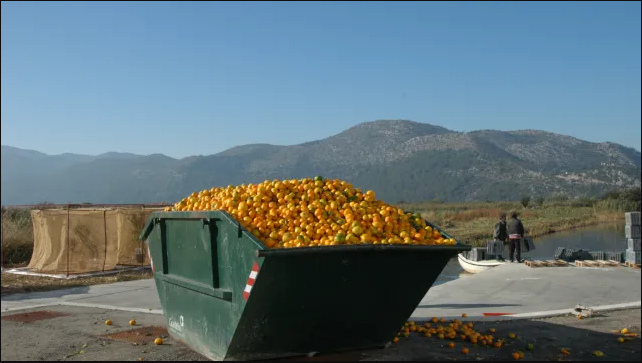
On April 10, 2026, the International Atomic Energy Agency introduced several applications of nuclear science in reducing food spoilage and food waste. According to data from the Food and Agriculture Organization of the United Nations, approximately 1 billion tonnes of edible food are wasted globally each year, accounting for about one-fifth of the total food available to consumers. Of this, 13.2% of food is lost before reaching the retail stage, valued at approximately $400 billion; another 19% is wasted at the retail and consumption stages due to spoilage and other reasons. Food loss not only means wasted resource consumption but also exacerbates greenhouse gas emissions, pollution, and biodiversity loss.
Through the Joint FAO/IAEA Centre of Nuclear Techniques in Food and Agriculture, the International Atomic Energy Agency provides countries with nuclear science-based solutions to help reduce food loss and waste.
In food preservation, food irradiation is used to extend shelf life. This technology uses X-rays, gamma rays, or electron beams to treat food, reducing the number of spoilage-causing microorganisms and pests while maintaining food freshness and safety. Data shows that fresh strawberries treated with irradiation can be stored in the refrigerator for approximately seven additional days. This method can also be applied to fruits, vegetables, grains, and spices, helping to reduce losses during storage and transportation.
In food safety testing, X-ray fluorescence spectrometry, neutron activation analysis, stable isotope techniques, and modern laboratory diagnostic methods can help quickly and accurately identify pathogens, toxins, or other contaminants in food. These methods strengthen food safety oversight and reduce recalls, rejections, and destructions caused by testing uncertainties.
Nuclear techniques are also used to enhance agricultural resilience. Through mutation breeding and related biotechnologies, researchers can accelerate the plant breeding process to develop crop varieties that are more drought-tolerant, salt-tolerant, pest-resistant, and higher-yielding. The International Atomic Energy Agency stated that it has supported Mauritian scientists in using radiation-based plant breeding techniques to develop cauliflower varieties resistant to black rot, reducing pesticide use and improving local food security.
In pest control, the sterile insect technique uses ionizing radiation to render large numbers of insects reproductively sterile, which are then released into pest-infested areas to mate with wild insects, gradually suppressing pest populations. This technique has helped countries such as the Dominican Republic reduce populations of major agricultural pests, protect crops, and improve access to export markets for agricultural products.
In addition, nuclear and isotopic methods can be used for food authenticity verification, counterfeit product identification, and label information verification. Faster and more reliable certification processes help reduce spoilage losses caused by delays during transportation and waiting for compliance testing. The International Atomic Energy Agency and the Food and Agriculture Organization stated that they will continue to promote the application of nuclear techniques in agricultural production, food safety, food loss reduction, and nutrition improvement through relevant cooperation mechanisms and the “Atoms4Food” initiative.
Disclaimer: Information republished from partner media, institutions or other websites is provided for reference and communication purposes only. It does not imply endorsement of its views or verification of its accuracy. Please contact us if any content infringes rights or requires correction.