
New Advances in Food Irradiation Technology Help Enhance Food Safety and International Trade
 Scan to share
The International Atomic Energy Agency (IAEA) states that recent advances in food irradiation technology are helping countries enhance food safety, reduce food losses, and facilitate the international trade of agricultural products. At an international symposium on food safety and control held in Vienna, food safety experts from various countries exchanged views on the application of novel radiation technologies in the food and agricultural sectors.
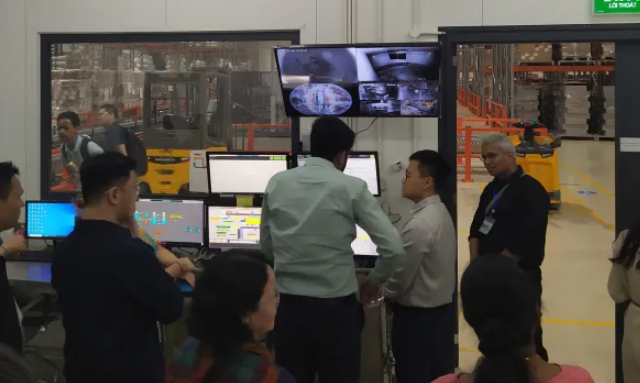
Food irradiation is a gentle, non-invasive processing technique that uses gamma rays, electron beams, or X-rays to eliminate harmful microorganisms and pests in food while preserving its nutritional content, flavor, and sensory qualities as much as possible. The technology can be used to reduce microbial contamination and inhibit the growth of spoilage bacteria, thereby extending the shelf life of perishable foods. High-value products such as seafood, spices, tropical fruits, and vegetables are common targets for this process.
In international trade, irradiation also serves a phytosanitary function. By treating goods such as fruits and vegetables, irradiation prevents pests from spreading to new regions through trade, thereby reducing cross-border biosecurity risks. The IAEA and the Food and Agriculture Organization of the United Nations (FAO) are assisting member states in establishing and expanding food irradiation services to reduce food loss and waste.
A significant trend in the field of food irradiation is the gradual shift from traditional radioactive isotope sources to machine-based sources. Machine-based irradiation uses electricity to generate radiation beams that can be switched on and off as needed; this makes the process more controllable and helps alleviate safety and supply issues associated with managing radioactive isotopes. These technologies are broadening the scope of food irradiation applications.
Carl Blackburn, a food irradiation expert at the Joint FAO/IAEA Centre of Nuclear Techniques in Food and Agriculture, noted that these advancements have improved the efficiency and effectiveness of food irradiation. They help maintain product quality while ensuring food safety and demonstrate the potential to reduce the use of chemicals in food preservation.
Low-energy (or "soft-beam") irradiation technology is also attracting attention. This type of technology treats the surface or near-surface areas of food and is suitable for products requiring specific surface treatments, such as shell eggs, raw meat, and spices. Researchers believe this technology offers a new tool for enhancing the quality and safety of specific food products. The International Atomic Energy Agency (IAEA) and the Food and Agriculture Organization (FAO) have noted that countries such as Vietnam are exporting fresh fruit—treated via irradiation—to markets including the United States and Australia, demonstrating the economic value of this technology in boosting agricultural trade. Institutions such as Tsinghua University and Texas A&M University are also conducting collaborative research to optimize irradiation processes and explore new applications for food safety.
Furthermore, the IAEA and FAO are collaborating with the International Plant Protection Convention (IPPC) and the Codex Alimentarius Commission to harmonize global standards for food irradiation. The two organizations previously launched the "Atoms for Food" initiative, aimed at expanding the application of nuclear technology in areas such as agricultural production, food safety, food loss reduction, nutritional improvement, and climate adaptation.
Disclaimer: Information republished from partner media, institutions or other websites is provided for reference and communication purposes only. It does not imply endorsement of its views or verification of its accuracy. Please contact us if any content infringes rights or requires correction.