
South Korea launches design of 250 MWe sodium-cooled fast reactor Helios
 Scan to share
The Korea Atomic Energy Research Institute (KAERI), in collaboration with Hyundai Engineering & Construction and KEPCO E&C, has initiated the design of the next-generation sodium-cooled fast reactor Helios. The reactor is planned to have an electrical output of 250 MWe, based on the existing 100 MWe-class sodium-cooled fast reactor “Salus-100” design, targeting large-scale power consumption applications such as AI data centers and industrial parks.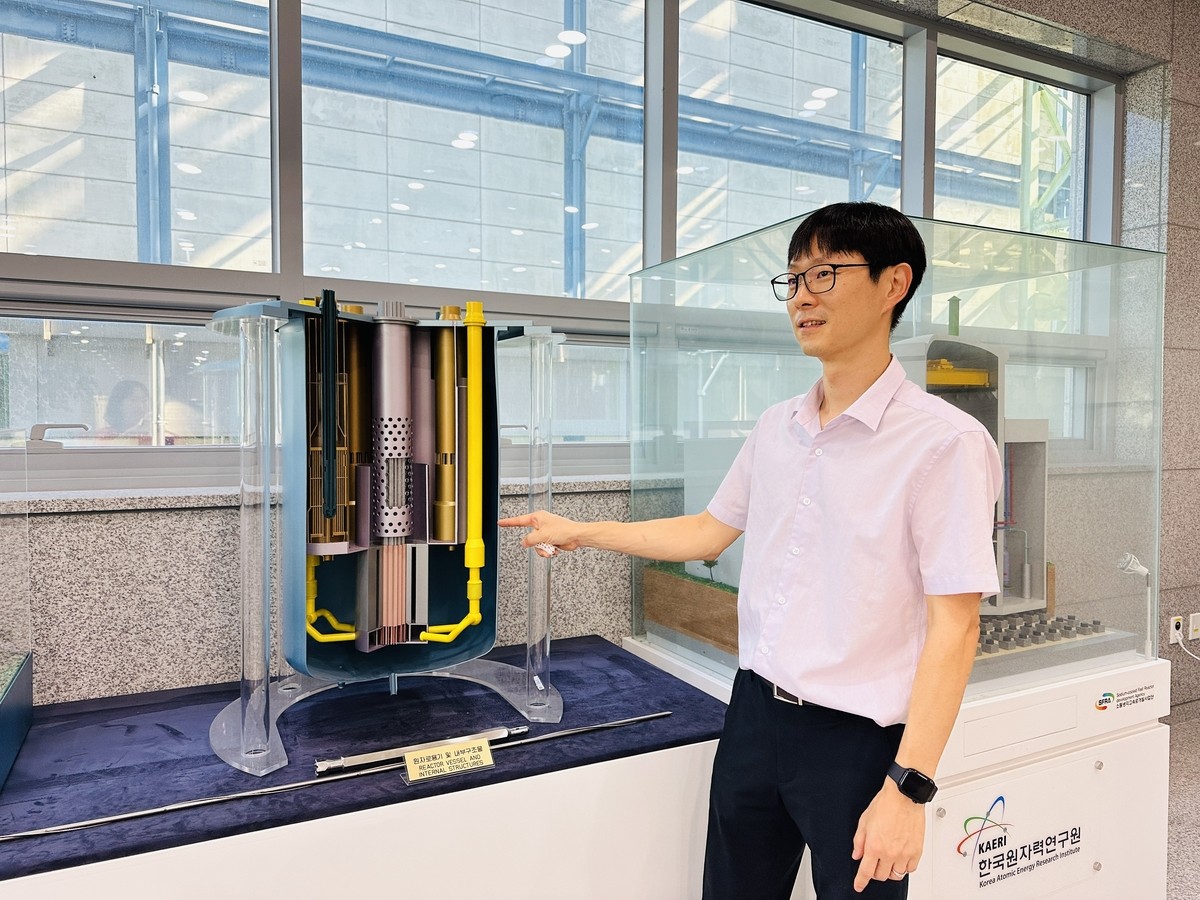
Lee Je-hwan, head of the Fourth Generation Reactor Technology Development Department at KAERI, stated that future demand for large-scale carbon-free electricity around AI data centers and industrial parks will continue to increase. Unlike the original approach of continuing with the 100 MWe-class design, Helios is not a simple supplement to “Salus-100” but a redesign of the sodium-cooled fast reactor concept to meet larger-scale stable power supply needs.
In July last year, KAERI formed a public-private partnership team with Hyundai Engineering & Construction and KEPCO E&C, planning to develop a small modular reactor based on sodium-cooled fast reactor technology. Initially, KAERI intended to proceed with the 100 MWe-class “Salus-100” design. However, after conducting market and demand research from last year to early this year, the team concluded that the 250 MWe-class design is more commercially viable under current market conditions and international competition, thus deciding to shift to developing a new sodium-cooled fast reactor with higher electrical output.
After completing the reactor demand assessment, the research team officially launched the full design of Helios in April this year. The total investment for the project is 58 billion Korean won, funded on a 1:1 ratio, with the government contributing 29 billion Korean won and private entities including Hyundai Engineering & Construction and KEPCO E&C covering the remaining 29 billion Korean won.
The “Salus-100” was originally designed as a small modular reactor with an electrical output of 100 MWe and a thermal output of 267 MWth. Its core feature is a long-cycle core that can operate for up to 20 years without refueling, reducing the need for frequent fuel changes and enhancing long-term stable power generation capability. Helios will build on this design experience, focusing on strengthening power generation capacity for large-scale electricity supply.
According to the project concept, the 250 MWe output will drive the scaling up of key equipment such as the reactor vessel and turbine, thereby improving economic efficiency. Compared to large light-water reactors, such reactors are also expected to be more flexibly deployed near load centers to meet the stable carbon-free electricity needs of data centers, industrial parks, and other scenarios.
In recent years, international competition in the research, development, and commercialization of sodium-cooled fast reactors has intensified. Russia has already put BN-600 and BN-800 fast reactors into commercial operation, and China is building the 600 MWe-class CFR-600 demonstration fast reactor. TerraPower in the United States is also advancing the 345 MWe-class “Natrium” reactor project, with related construction work underway in Wyoming. Lee Je-hwan believes that the sodium-cooled fast reactor is one of the next-generation reactor pathways advancing most rapidly toward commercialization in the United States.
As the market for sodium-cooled fast reactors expands, demand for supporting equipment such as pumps, heat exchangers, piping, instrumentation, and testing facilities may also grow accordingly. In South Korea, Hyundai Engineering & Construction and KAERI are jointly advancing sodium-cooled reactor development; POSCO is involved in helium-cooled reactor-related research and development; and the three major shipbuilding companies are pursuing molten salt reactor projects for maritime applications.
Disclaimer: Information republished from partner media, institutions or other websites is provided for reference and communication purposes only. It does not imply endorsement of its views or verification of its accuracy. Please contact us if any content infringes rights or requires correction.