
South Korean University Team Files Patent for Fusion Reactor Optimization Design Method
 Scan to share
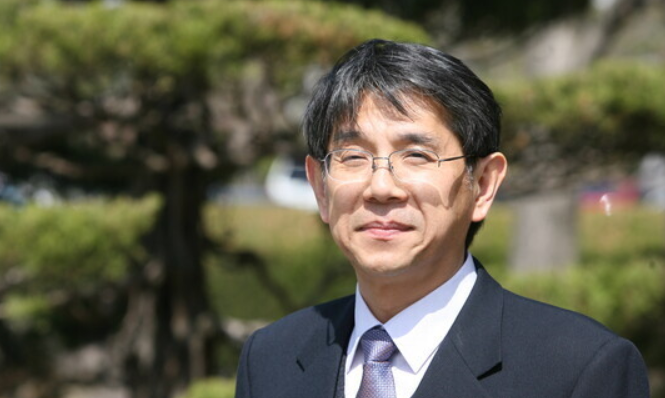
Professor Hong Bong-geun of the Department of Quantum System Engineering at the College of Engineering, Jeonbuk National University, South Korea, has recently filed a patent for a fusion reactor optimization design method. This method can determine device dimensions and key component structures while enabling customized performance design for fusion reactors based on different applications such as power generation, thermal energy utilization, and transmutation neutron sources.
According to reports, this design technology targets the early-stage R&D phase of fusion devices and can be used to rapidly assess the technical and economic feasibility of proposals, thereby reducing trial-and-error, shortening development cycles, and lowering development costs, providing design support for fusion energy commercialization.
The associated program, named "K-Systems," integrates the aforementioned patented technology and can calculate the optimal specifications and construction costs of fusion reactors while performing comprehensive optimization of performance, economics, and structural design on a single platform, providing a basis for design decisions. The program can also verify in advance the technical and economic feasibility of various tritium breeding blanket concepts. The tritium breeding blanket is a critical component of fusion reactors, used to produce tritium as fusion fuel.
K-Systems is applicable not only to power-generating fusion reactors but also to design reviews and economic assessments of next-generation fusion systems. The R&D team believes that this platform can help innovative fusion reactor development companies conduct concept comparison, design decision-making, and technology commercialization.
Fusion energy is regarded as an important direction for future low-carbon energy. In recent years, governments, enterprises, and startups in multiple countries have continued to increase R&D investment, advancing fusion power generation from experimental research toward engineering demonstration. South Korea has designated innovative fusion reactor R&D as a national strategic project, released the "Strategy for Accelerating Fusion Energy Realization" in 2024, and formulated the "Core Fusion Technology Development Roadmap" in 2025, with the goal of achieving fusion power generation demonstration in the 2030s.
Hong Bong-geun stated that advancing fusion energy commercialization requires not only innovative reactor concepts but also fast and reliable design platforms. He hopes that the relevant technologies can provide a foundation for comparing and evaluating different fusion reactor concepts, helping South Korean companies enhance their competitiveness in the next-generation fusion market. The team also plans to collaborate with industry partners to promote technology transfer and commercialization.
This research was supported by the Personal Basic Research Program and the Convergence Leading Technology Development Program of the Ministry of Science and ICT (MSIT) of South Korea.
Disclaimer: Information republished from partner media, institutions or other websites is provided for reference and communication purposes only. It does not imply endorsement of its views or verification of its accuracy. Please contact us if any content infringes rights or requires correction.