
Kazakhstan's National Nuclear Center Experimental Base Supports Nuclear Power Safety and Advanced Energy Research
 Scan to share
On July 30, Vyacheslav Gnyrya, Deputy Director of the Institute of Atomic Energy at the National Nuclear Center of the Republic of Kazakhstan (NNC RK), presented the development of the center's experimental research base. He stated that Kazakhstan is leveraging existing research facilities to establish a scientific foundation for next-generation reactor technologies and controlled thermonuclear fusion energy research.
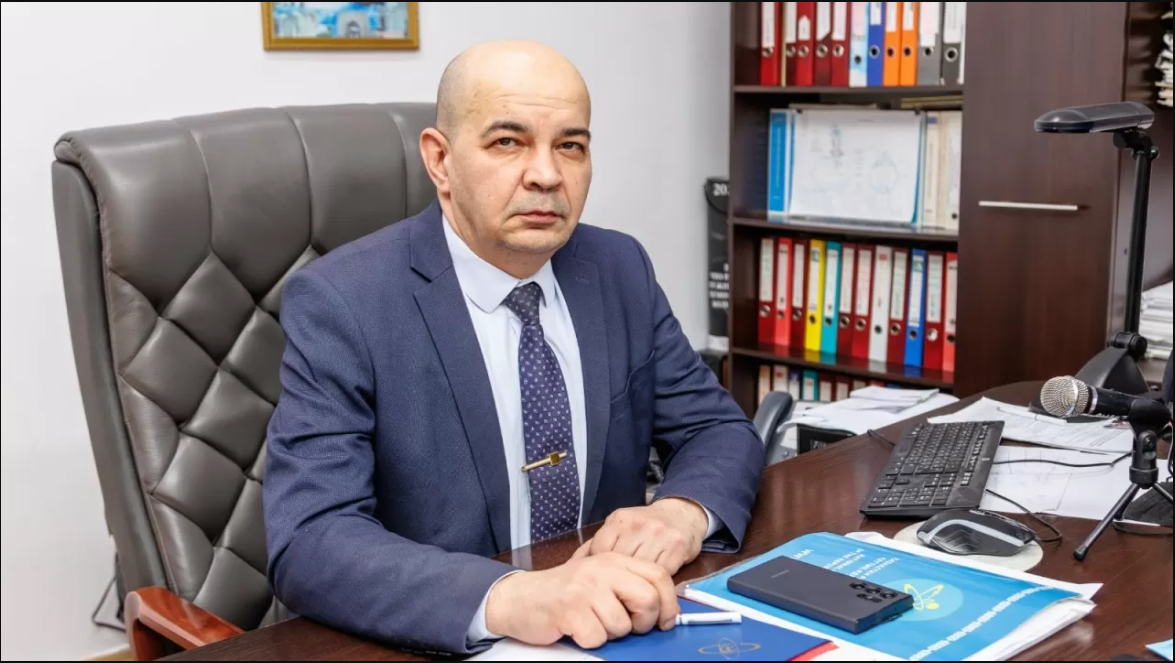
According to the presentation, the NNC RK experimental base is a strategic scientific research infrastructure developed over decades in Kazakhstan, featuring research reactors, specialized test facilities, and materials science equipment capable of simulating conditions difficult to replicate in operating nuclear reactors, including the behavior of nuclear fuel, structural materials, and safety system components under high temperatures, intense irradiation, and transient conditions.
Gnyrya noted that these experimental capabilities make NNC RK highly attractive in international nuclear energy research. The center currently collaborates with research institutions and nuclear industry enterprises in France, Japan, Russia, the United States, and other countries, and participates in projects led by the International Atomic Energy Agency (IAEA). Cooperation areas encompass reactor safety, nuclear fuel and structural materials testing, radioactive waste management, nuclear facility decommissioning, as well as training of young specialists and exchange of scientific experience.
Regarding specific facilities, the IGR research reactor is used to study the behavior of nuclear fuel under high-speed transient conditions, with experimental data supporting the development of new fuel types and improvements in reactor safety technologies. The IVG.1M research reactor focuses on studying structural material performance under high-temperature and intense neutron irradiation conditions, holding significant value for advanced reactor technologies and the development of new nuclear power materials.
NNC RK also possesses experimental infrastructure for severe accident research, enabling large-scale experiments on core melt behavior and the effectiveness of core catchers. Gnyrya stated that such data helps reactor technology developers make more accurate engineering judgments during the design phase and further improve safety systems of modern nuclear power plants.
In the field of advanced energy technologies, NNC RK is conducting research on radiation resistance of structural materials, changes in physical properties, and service life prediction. Gnyrya noted that the development of next-generation energy technologies requires new materials capable of maintaining performance under extreme temperatures, high mechanical loads, and intense neutron irradiation environments.
He also mentioned that Kazakhstan's materials science tokamak KTM serves as an important platform for controlled thermonuclear fusion research, enabling testing of materials required for future fusion power plants. Related research will provide long-term scientific support for the development of advanced energy technologies.
Gnyrya stated that possessing a modern domestic experimental infrastructure is a key condition for Kazakhstan to enhance its scientific and technological independence. As nuclear energy development advances, Kazakhstan needs to establish a corresponding scientific and technological foundation to support the operation of energy facilities, independent technology assessment, safety verification, and professional personnel training. NNC RK will continue to improve its research facilities, expand international cooperation, and introduce new experimental methods.
Disclaimer: Information republished from partner media, institutions or other websites is provided for reference and communication purposes only. It does not imply endorsement of its views or verification of its accuracy. Please contact us if any content infringes rights or requires correction.