
Serbia Launches Nuclear Program: Experts to Train in France for 17 Months, First Nuclear Power Plant Expected by 2040
 Scan to share
The nuclear cooperation agreement signed between Serbia and France officially launched the first phase of the country's nuclear energy program on July 29. Under the agreement, Serbian experts will travel to France over the next 17 months for training, seminars, and professional visits to acquire the new knowledge and experience needed to advance the nuclear program. Radoš Popadić, Assistant Minister at Serbia's Ministry of Mining and Energy, stated that nuclear energy could become a realistic and viable solution within Serbia's energy mix.
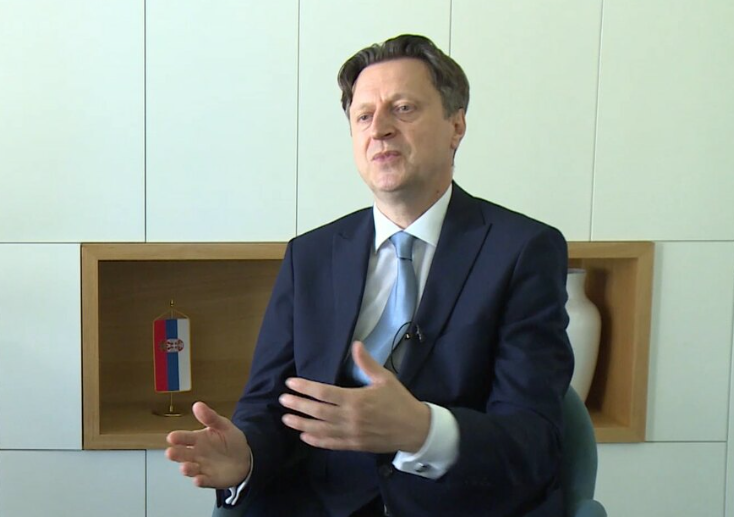
The primary task of the first phase is to assess existing capabilities and identify what additional resources are needed as the process moves forward. According to the plan, Serbia needs to demonstrate the necessity of developing nuclear energy in strategic documents, as decarbonization efforts, the adoption of electric vehicles, and the expansion of data centers are driving sustained growth in electricity demand. Popadić explained that this phase will also foster joint collaboration between Serbian and French government agencies, universities, and research institutions, laying the groundwork for subsequent decision-making.
Talent development is regarded as a critical component of the entire program. Popadić acknowledged that training a qualified nuclear engineer requires several years or even decades, as university education must be closely integrated with engineering practice. Currently, Serbia's Vinča Institute of Nuclear Sciences and the Faculty of Technical Sciences in Novi Sad have proposed launching relevant master's programs, while a significant number of Serbian experts abroad are expected to return and contribute to the national nuclear program. He emphasized that the nuclear program is a long-term undertaking lasting approximately fifteen years and must be steadily advanced through long-term planning.
From the perspective of the energy mix, nuclear power is seen as a more stable supplementary source compared to hydropower, wind, and solar, with minimal impact from weather conditions. Neighboring countries such as Hungary, Romania, Bulgaria, and Slovenia already possess nuclear power capacity. Serbia's first nuclear power plant is expected to be completed around 2040, with small modular reactors (SMRs) also listed as one of the candidate options. However, Popadić also cautioned that recent droughts and low water levels have highlighted nuclear plants' dependence on cooling water, while next-generation units with advanced cooling systems can operate with reduced water consumption.
Regarding safety and public communication, Popadić believes that public perception of nuclear power remains stuck in the era of the Chernobyl accident, while technology has advanced significantly over the past decades, and the International Atomic Energy Agency systematically shares safety experience with countries newly entering the nuclear field. He called on the government to communicate information to the public in a timely and transparent manner, ensuring the entire process proceeds in the open. Serbia lifted its ban on nuclear power production in November 2024, ending a long-standing moratorium on nuclear plant construction that had been in place since 1989. France currently leads Europe in nuclear power generation.
Disclaimer: Information republished from partner media, institutions or other websites is provided for reference and communication purposes only. It does not imply endorsement of its views or verification of its accuracy. Please contact us if any content infringes rights or requires correction.