
CGN's First Spatial Truss-Type Heavy-Duty Intelligent Warehouse Robot Piloted at Ningde Nuclear Power Project
 Scan to share
Recently, the pilot project of CGN's first spatial truss-type heavy-duty intelligent warehouse robot, jointly launched by the Equipment Package and Supply Center and the Ningde Project Department, was officially put into operation at the Ningde Nuclear Power Project. The deployment and commissioning of this spatial truss intelligent warehouse robot marks a new stage for nuclear power engineering material warehousing, officially entering a three-dimensional, unmanned, and intelligent phase.
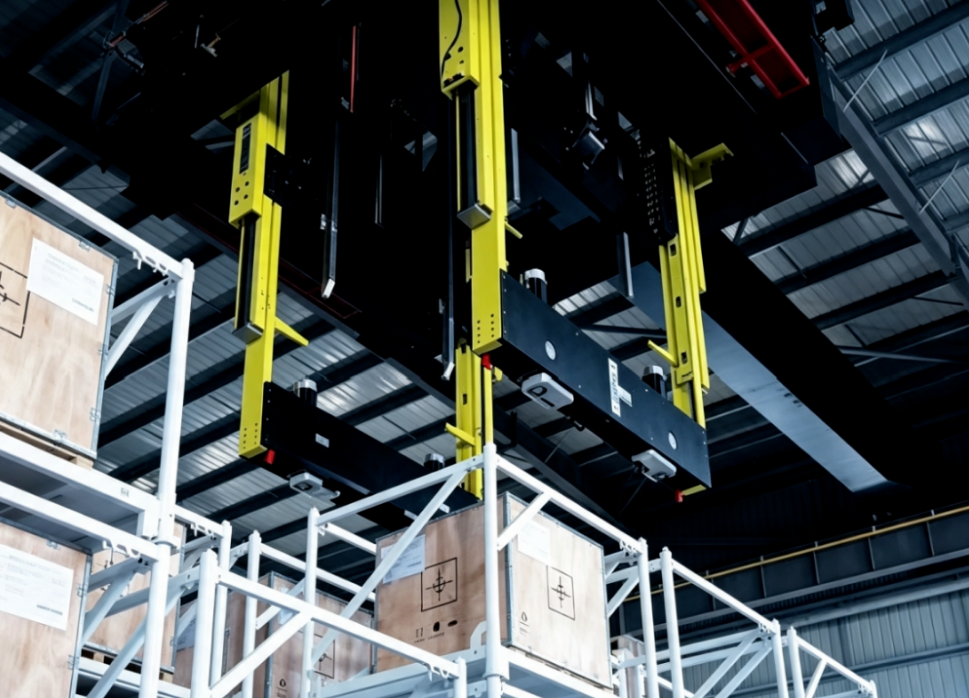
As an intelligent device tailor-made for large-material scenarios in nuclear power engineering, the spatial truss intelligent warehouse robot breaks the limitations of traditional light-duty warehousing equipment. It adopts a robust truss-type structure and achieves millimeter-level precision control and multi-axis heavy-load capacity through X, Y, and Z three-axis spatial positioning, enabling it to carry medium and large-sized materials smoothly and safely, effectively transforming traditional planar warehousing into efficient three-dimensional storage space.
The application of this spatial truss intelligent warehouse robot brings three core breakthroughs to material management in nuclear power engineering:
First, dual improvement in space utilization efficiency and quality. The robot effectively revitalizes warehousing space, adding 8,500 cubic meters of storage capacity, with storage capacity exceeding 20,000 tons. Space utilization efficiency is more than three times that of traditional warehouses, saving over 7,000 square meters of site area.
Second, comprehensive enhancement of intrinsic safety. The equipment achieves "zero manual handling, zero working at height, and zero heavy-load manual operations" in warehousing operations, eliminating safety hazards at the source and significantly improving the safety assurance level of on-site operations.
Third, significantly strengthened material support capability. With standardized bin layouts, the efficiency of storage, turnover, and preparation of large materials is greatly improved, making material flow smoother and more efficient.
Disclaimer: Information republished from partner media, institutions or other websites is provided for reference and communication purposes only. It does not imply endorsement of its views or verification of its accuracy. Please contact us if any content infringes rights or requires correction.