
Construction of Proton Therapy Center in Ulsan, South Korea Faces Hurdles: Government Funding Allocation Adjustments Impact Project Progress
 Scan to share
The proton therapy center construction project in Ulsan, South Korea, has recently encountered obstacles to progress. The project was once regarded as a key component in improving the regional cancer treatment system in southeastern South Korea, but due to shifts in government medical financial support priorities, the difficulty of securing large-scale national funding independently has increased significantly.
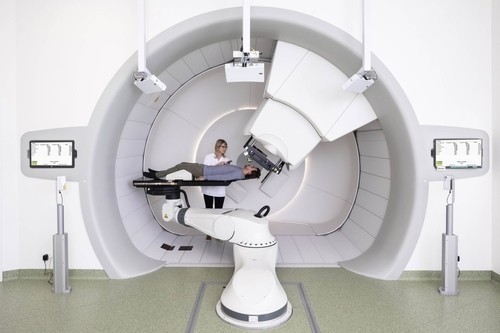
According to information from Ulsan City on August 6, Ulsan City completed the "Feasibility Study and Basic Planning Services for Proton Therapy Center Construction" in March of last year and began seeking national funding. However, the Ministry of Health and Welfare responded that it would be difficult to provide large-scale project funding to Ulsan City alone. Previously, Ulsan City had planned to establish a proton therapy center to build a medical system enabling cancer patients to undergo surgery, chemotherapy, and precision radiotherapy within the region, reducing the need for patients to travel to the Seoul metropolitan area for treatment, and forming a cancer treatment hub in southeastern regions including Busan, Ulsan, and South Gyeongsang Province. To this end, Ulsan City had sought government funding support exceeding 100 billion KRW.
The project environment has changed within just over a year. The medical reform direction currently promoted by the Ministry of Health and Welfare is to establish a "regional comprehensive medical system," focusing on supporting hospitals with critical care capabilities within regions so that patients can receive treatment locally. Financial support is also more concentrated on modernizing critical care and high-difficulty treatment facilities and equipment at 17 regional responsible medical institutions nationwide, rather than separately building advanced medical equipment projects.
Related budgets have been invested consecutively. Last year, the government prioritized an allocation of 81.2 billion KRW, and this year allocated 74.2 billion KRW for the "Regional Responsible Medical Institution Critical Care and High-Difficulty Treatment Facility and Equipment Modernization Project." Against this backdrop, securing dedicated national funding for the Ulsan proton therapy center as an independent project has become more difficult.
Ulsan University Hospital is currently prioritizing related budgets for other medical facility construction, including the purchase of the TrueBeam high-precision radiotherapy system, which can be used for basic radiation therapy for various cancers, as well as the addition of advanced operating rooms, including 4 robotic operating rooms and 1 hybrid operating room. The hospital invested 13.5 billion KRW last year, including 5.4 billion KRW in national funding, 5.4 billion KRW in municipal funding, and 2.7 billion KRW in self-raised funds; this year, it invested 15 billion KRW, including 6 billion KRW in national funding, 6 billion KRW in municipal funding, and 3 billion KRW in self-raised funds.
For Ulsan University Hospital, independently introducing proton therapy machines also poses financial pressure. Proton therapy equipment requires separate site selection and the construction of dedicated facilities, and the total cost of two machines can easily exceed 100 billion KRW. Meanwhile, the hospital has already invested over 70 billion KRW in the "Regional Responsible Medical Institution Complex and Severe Case Facility and Equipment Modernization Project," leaving insufficient self-raised funds in the short term to advance the proton therapy center construction.
In addition, other cities in the Yeongnam region of South Korea are also advancing related initiatives. Daegu's Keimyung University Dongsan Hospital has recently begun building the first proton therapy center outside the Seoul metropolitan area, and Kyungpook National University Chilgok Hospital is also considering introducing proton therapy technology. As a result, the feasibility study previously conducted by Ulsan City based on patient demand and economic benefits, as well as the designation of the wide-area medical service zone, are also facing reassessment.
An official from Ulsan City stated that due to changes in the budget support criteria of the Ministry of Health and Welfare, Ulsan University Hospital finds it difficult to independently advance the project, and the proton therapy center construction will continue to be studied as a long-term task.
Disclaimer: Information republished from partner media, institutions or other websites is provided for reference and communication purposes only. It does not imply endorsement of its views or verification of its accuracy. Please contact us if any content infringes rights or requires correction.