
UT MD Anderson Cancer Center Collaborates on Development of Proton and Helium Ion Therapy Platform
 Scan to share
Recently, the University of Texas MD Anderson Cancer Center (UT MD Anderson) in the United States and Israeli proton therapy equipment company P-Cure reached a strategic collaboration to jointly develop and validate a compact upright particle therapy platform. The two parties aim to enable a single system to deliver both proton and helium ion beams, so that in the future the particle type can be selected based on tumor location, disease characteristics, and treatment goals.
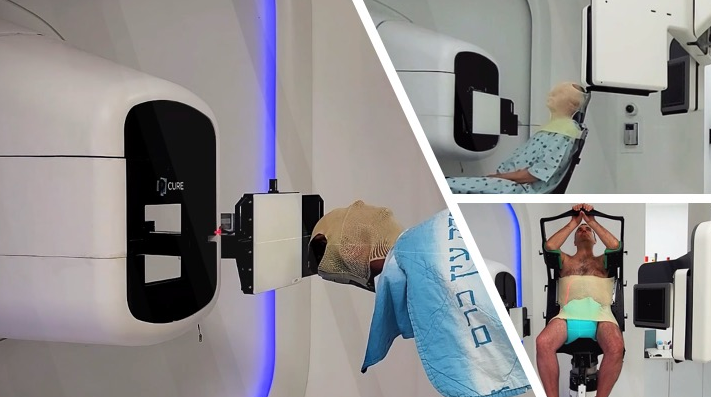
The collaboration will start with the existing proton therapy equipment. P-Cure's compact proton system has received marketing clearance from the U.S. Food and Drug Administration (FDA); the equipment uses a synchrotron to generate proton beams and delivers dose to the target area through pencil beam scanning. On the basis of this equipment, the two parties will evaluate the clinical utility, patient experience, and operational workflows of upright treatment, establishing a reference for the development of the dual-particle platform.
In addition to the evaluation of the proton equipment, the two parties will conduct preclinical research on helium ion therapy, examining the lateral scattering of the beam in tissue, dose distribution, and biological effects. Subsequent clinical studies will further evaluate which treatment scenarios may benefit from helium ion beams and accumulate evidence for determining the scope of application and treatment protocols.
The collaboration agreement covers equipment research and development, translational research, and clinical validation. MD Anderson Cancer Center may receive corresponding payments upon reaching agreed clinical milestones or achieving commercial sales, and will manage institutional conflicts of interest involved in this collaboration in accordance with institutional policies. The dual-particle platform is currently in the research, development, and validation stage, and the clinical application of the helium ion function still requires completion of the corresponding research and regulatory procedures.
Disclaimer: Information republished from partner media, institutions or other websites is provided for reference and communication purposes only. It does not imply endorsement of its views or verification of its accuracy. Please contact us if any content infringes rights or requires correction.