
U.S. Department of Energy Selects SHINE Technologies for Genesis Initiative, AI to Optimize Reprocessing of 95,000 Tons of Spent Nuclear Fuel
 Scan to share
The U.S. Department of Energy has selected SHINE Technologies to participate in the “Genesis” mission, advancing the application of artificial intelligence in the nuclear industry. The core objective of the project is to develop an AI-assisted design system for engineers to plan more efficient spent fuel reprocessing facilities. The United States currently has approximately 95,000 tons of accumulated spent nuclear fuel, which has historically posed long-term storage and disposal challenges. The new approach seeks to recover still-valuable components from this material, reducing waste volume and improving resource utilization...
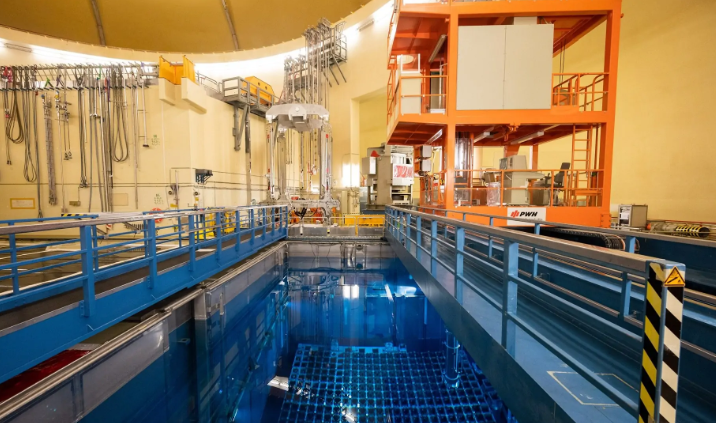
The key to this project lies in transforming traditional engineering design methods. In the past, metrics such as throughput, final product quality, and waste volume in nuclear fuel reprocessing processes were typically evaluated separately, making it difficult to optimize simultaneously under complex constraints. With the introduction of algorithms, the system can compare hundreds of process combinations in a relatively short time, incorporating chemical separation efficiency, plant configuration, operating costs, and waste generation into a unified model, providing a design pathway closer to the optimal solution for future commercial facilities.
The technical foundation comes from two tools developed at Argonne National Laboratory: one for simulating chemical separation processes and another for simulating entire plant configurations. SHINE will work with Argonne to add AI modules on top of these tools, expanding the scope of solution searches. The project will also use data from SHINE's commercial medical isotope facility, Chrysalis, which has already completed full regulatory licensing review. The technical experience gained there will serve as a reference for future spent fuel reprocessing plants.
SHINE will also join the Prometheus Consortium, led by Idaho National Laboratory, working with multiple national laboratories and private companies to develop AI tools for the nuclear industry. Through this collaboration, SHINE can provide its own process and operational data while gaining early access to new models and software developed by the consortium. This means AI will not only be used for single-facility design but may also gradually extend to nuclear material processing, facility operations, safety assessment, and supply chain management.
The “Genesis” mission has a budget exceeding $5 billion and aims to accelerate scientific discovery and energy technology innovation by combining supercomputing, quantum systems, and artificial intelligence. SHINE CEO Greg Piefer believes there is a close connection between energy and AI: advanced computing requires affordable and reliable energy support, while AI can help design more efficient energy systems. If this pilot project proves successful, the United States may extend similar approaches to other stages of nuclear waste management in the future, providing new technical pathways for the sustainable development of the nuclear energy industry.
Disclaimer: Information republished from partner media, institutions or other websites is provided for reference and communication purposes only. It does not imply endorsement of its views or verification of its accuracy. Please contact us if any content infringes rights or requires correction.