
Fractionated radiotherapy did not significantly alter surface properties of two types of dental restorative composites
 Scan to share
On August 5, a recently published in vitro study showed that under a simulated clinical head and neck cancer radiotherapy regimen, the surface microhardness and roughness of two modern dental restorative composites did not change significantly.
The study focused on the effects of therapeutic ionizing radiation on the durability of dental restorative materials. After head and neck cancer patients receive radiotherapy, the oral environment may change, including reduced saliva secretion, mucositis, radiation caries, and other issues, which may affect the surface condition and long-term performance of restorations. To this end, the research team selected Giomer resin composite based on glass ionomer technology and Ormocer resin composite based on organosiloxane technology for evaluation.
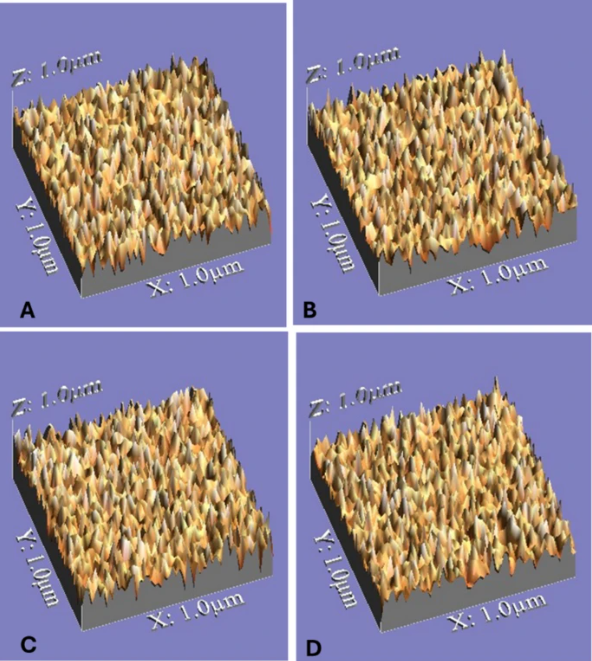
Three-dimensional surface topography images of the tested materials. (A) Ormocer before irradiation, (B) Ormocer after irradiation, (C) Giomer before irradiation, (D) Giomer after irradiation. The surface topography before and after irradiation was essentially consistent.
A total of 96 disc-shaped specimens were prepared, with 48 specimens per material. Specimens were divided into surface microhardness and surface roughness groups according to test parameters, and further subdivided into non-irradiated control and irradiated groups. The irradiated group was exposed using a medical linear accelerator with 10 MV photon beams, receiving 2 Gy per fraction, 5 fractions per week, for a cumulative dose of 70 Gy over 35 days, a regimen designed to simulate clinically relevant fractionated radiotherapy.
Results showed that the mean microhardness of Giomer material in the non-irradiated and irradiated groups was 77.62±1.49 and 77.97±1.14, respectively, with no statistically significant difference; the corresponding values for Ormocer material were 77.39±1.47 and 77.59±1.40, also showing no significant difference. Regarding surface roughness, the mean Ra values for Giomer material in the non-irradiated and irradiated groups were 0.26±0.02 μm and 0.27±0.03 μm, respectively; for Ormocer material, the mean Ra values in both groups were 0.27±0.02 μm, with no statistically significant changes detected.
The study concluded that under the present in vitro experimental conditions, 70 Gy therapeutic radiation did not significantly affect the surface microhardness or roughness of the tested Giomer and Ormocer restorative materials, suggesting that these two material types can maintain relatively stable surface characteristics after exposure to clinically relevant radiation doses. However, the study also noted that the experiment did not fully replicate the complex oral environment of head and neck radiotherapy patients and evaluated only two materials. Future studies incorporating more material types, artificial aging, thermal cycling, mechanical loading, and in vivo research are still needed to further validate the relevant conclusions.
Disclaimer: Information republished from partner media, institutions or other websites is provided for reference and communication purposes only. It does not imply endorsement of its views or verification of its accuracy. Please contact us if any content infringes rights or requires correction.