
South Korea to Resume Actinium-225 Production Next Year to Ease Shortage of Raw Materials for Anti-Cancer Radiopharmaceuticals
 Scan to share
South Korea's domestic production project for actinium-225 (Ac-225), a radioisotope used in next-generation cancer treatment, is expected to resume next year after being stalled for more than a year. Funding was secured in the first half of this year, and the Korea Institute of Radiological & Medical Sciences (KIRAMS) plans to complete facility construction and trial production before launching full-scale production in the second half of next year, aiming to alleviate the raw material shortage facing domestic clinical research and radiopharmaceutical development.
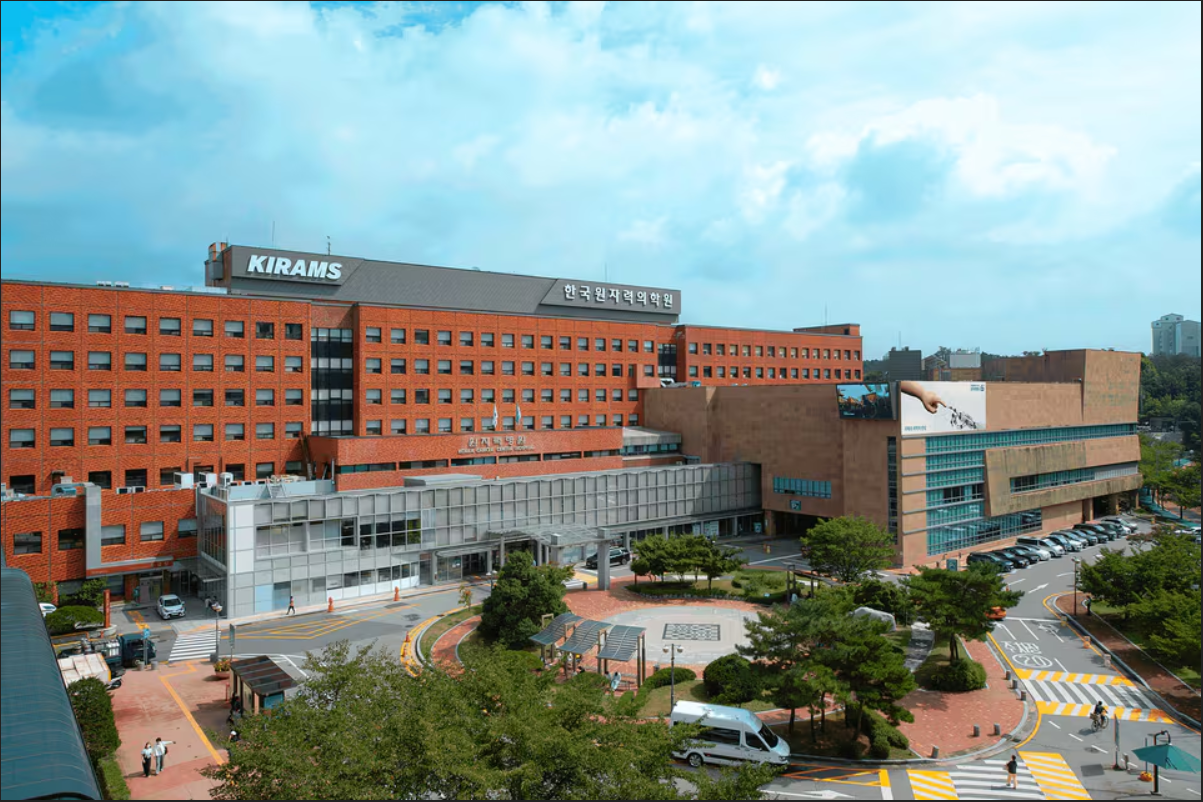
KIRAMS is affiliated with the Ministry of Science and ICT. The institute received approval from the Nuclear Safety and Security Commission in May last year to produce Ac-225 using a cyclotron. The project first entered the review process in 2018 and took seven years to gain approval, with initial production originally planned by the end of last year. However, work on upgrading production facilities and procuring equipment was suspended after approximately 2 billion KRW in budget was not approved during parliamentary review.
Ac-225 can be produced by bombarding radium-226 (Ra-226) with a proton beam. During the production process, opening sealed Ra-226 containers may generate radon gas and gamma radiation, necessitating additional safety facilities such as lead shielding and hazardous gas monitoring. With funding now secured, the institute plans to advance the procurement of lead materials and gas monitoring equipment, and after completing facility modifications, will reapply for a license from the Korea Institute of Nuclear Safety. If approval proceeds smoothly, trial production could begin in the second quarter of next year, with full-scale production starting in the second half of the year.
Under the current plan, each production run at KIRAMS is expected to yield 1 to 2 millicuries of Ac-225, sufficient to meet the treatment needs of approximately 3 to 4 patients. Once routine production is established, the institute plans to implement a production schedule of twice per month. In parallel, the institute is developing solid target technology with the aim of increasing output by 10 to 15 times; if the related patented technology is converted into a solid target device by 2028, production capacity could be enhanced around 2029.
Ac-225 is an alpha-particle-emitting radioisotope and a key raw material for targeted radionuclide therapy (TRT). This therapeutic approach, which delivers radiation more precisely to cancer cells, is being studied for use in refractory cancers such as prostate cancer and neuroendocrine tumors.
Currently, global supply of Ac-225 remains significantly insufficient. Data indicates that global annual demand is approximately 1,850 gigabecquerels (GBq), while actual annual production as of 2024 was approximately 67 GBq, equivalent to only about one-thirtieth of demand. As limited production capacity is prioritized for regions such as the United States and Europe where clinical trials are underway, South Korean research institutions and companies have repeatedly faced situations where raw materials could not be obtained as needed.
KIRAMS is currently conducting joint research on Ac-225-based radiopharmaceuticals with companies including SK Biopharmaceuticals and FutureChem, with most research materials still relying on imports from the United States and Germany. The institute stated that once domestic production begins, it is expected to reduce import cost pressures, make joint research progress more stable, and lower the entry barrier for Ac-225 radiopharmaceutical development.
Against the backdrop of global supply constraints, companies are also accelerating their Ac-225 production capacity expansion. According to available information, U.S. nuclear energy company TerraPower announced in March this year plans to invest approximately $674 million to build an Ac-225 production facility in Philadelphia.
KIRAMS stated that since the number of medical institutions conducting Ac-225 therapy in South Korea remains limited, initial production output is expected to largely meet domestic demand. Once production becomes stable in the future, production batches will be gradually increased in response to market demand.
Disclaimer: Information republished from partner media, institutions or other websites is provided for reference and communication purposes only. It does not imply endorsement of its views or verification of its accuracy. Please contact us if any content infringes rights or requires correction.