
Ikata Nuclear Power Station Reports 5 Notifiable Events in July, None Causing Radiological Environmental Impact
 Scan to share
Shikoku Electric Power Co. reported on August 10 that the five events reported to Ehime Prefecture, Ikata Town, and relevant local governments from the Ikata Nuclear Power Station in July 2026 did not fall under legally required reporting events and caused no radiological impact on the environment.
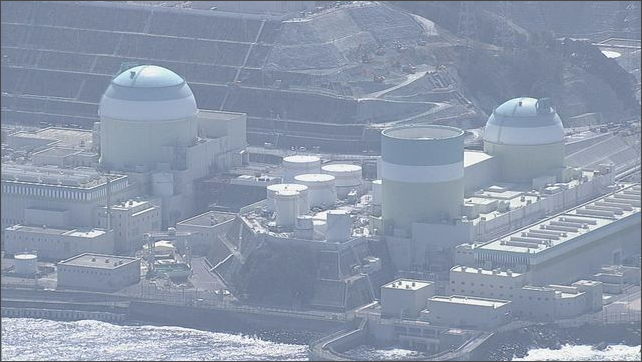
The five events were as follows: On July 3, an employee of a partner company at the Ikata Nuclear Power Station experienced physical discomfort at an office location in a non-controlled area and was transported by ambulance at 17:18 that day. The employee was conscious at the time and experienced no radiation exposure or radioactive contamination.
On July 16, during the decommissioning process of Unit 2 at the Ikata Nuclear Power Station, seawater leakage was discovered at the flange of the seawater outlet pipe of emergency diesel generator 2B in the reactor auxiliary building. After maintenance personnel determined that a detailed inspection of the flange was required, the leak point was isolated, and the leakage was confirmed to have stopped at 15:38 that day. The maximum estimated volume of leaked seawater was approximately 7 cubic meters, all of which was recovered in the floor drain sump within the building and did not flow outside. Subsequent inspection revealed a through-hole approximately 7 mm in diameter at the flange, and the station replaced the flange and confirmed water flow integrity, restoring normal conditions at 14:05 on July 17. This event did not affect the unit or cause radiological environmental impact, and further investigation into the cause will be conducted.
On July 19, during normal operation of Unit 3 at the Ikata Nuclear Power Station, fluctuations were observed in the conductivity meter readings for the secondary loop water quality of steam generator 3A in the central control room. Manual sampling and analysis showed no abnormality in water quality, leading to the determination that inspection of the relevant instrumentation was necessary. Maintenance personnel inspected and cleaned the instrument detector and discovered traces of condensed water dripping above the converter, after which the converter was inspected and cleaned. After confirming no abnormality in the instrumentation, the unit was restored to normal condition at 13:00 on July 21. This event did not affect unit operation or cause radiological environmental impact.
On July 27, during normal operation of Unit 3 at the Ikata Nuclear Power Station, a worker from a partner company discovered smoke emanating from the operating cable and control panel during a pre-use inspection of the cantilever crane at the large equipment entry hatch in the non-controlled area of the turbine building, and notified the fire department at 10:38 that day. The crane power supply was immediately cut off on site, and the smoke was confirmed to have stopped. The fire department confirmed at 12:27 on site that this did not constitute a fire. This event did not affect the unit or cause radiological environmental impact.
At approximately 16:28 on July 28, an earthquake occurred in the Kumamoto region of Kumamoto Prefecture, Japan, and ground motion was observed at the Ikata Nuclear Power Station. The station confirmed no abnormality in related equipment, and the earthquake caused no radiological environmental impact. Observation data showed readings of 3 gal in both horizontal and vertical directions for Unit 1, 3 gal in both horizontal and vertical directions for Unit 2, and 4 gal horizontal and 3 gal vertical for Unit 3.
Shikoku Electric Power Co. also submitted an investigation report to Ehime Prefecture, Ikata Town, and relevant local governments regarding the previously reported event of ion exchange resin outflow from the condensate demineralizer tower of the condensate demineralization system at Unit 3 of the Ikata Nuclear Power Station. The event occurred on December 19, 2025, when Unit 3 was undergoing its 18th periodic inspection. During secondary loop purification operation, workers discovered ion exchange resin accumulated in the inlet strainer of the condensate booster pump.
Inspection revealed that some flange connection bolts at the lower outlet header inside condensate demineralizer tower 3D were loose, allowing resin to leak through the flange gaps. The leaked resin was fully captured by strainers within the condensate system. The station subsequently inspected all flanges of the lower outlet header of the demineralizer tower, retightened the flange bolts, and after confirming through water flow testing that no further resin leakage occurred, restored normal conditions at 15:54 on December 23, 2025. This event did not affect the unit or cause radiological impact on the surrounding environment.
The report concluded that the lower outlet header has an arc-shaped configuration, making it structurally susceptible to deformation of individual pipe segments. Although flange bolts were tightened with similar force during maintenance, some flange mating surface gaps varied significantly, resulting in insufficient local surface pressure. Subsequently, fluid-induced vibration from water flow acted on the lower outlet header, causing the flange bolts in a vibration-prone state to gradually loosen and create gaps, ultimately leading to resin outflow.
In response to this issue, the station has implemented mating surface gap measurements before and after inspection of the lower outlet header flanges of the relevant demineralizer towers, and confirmed flange bolt tightening conditions after inspection. No further resin outflow has been detected during subsequent operation of the condensate demineralization system. Shikoku Electric Power Co. will also incorporate requirements for mating surface gap measurement during disassembly and reassembly of arc-shaped piping, comparison with historical data, and post-inspection confirmation of flange bolt tightening into the work procedures for this equipment and similar equipment.
Disclaimer: Information republished from partner media, institutions or other websites is provided for reference and communication purposes only. It does not imply endorsement of its views or verification of its accuracy. Please contact us if any content infringes rights or requires correction.