
Budapest Launches Feasibility Study for Long-Distance Heat Supply from Paks Nuclear Power Plant
 Scan to share
On August 11, 2026, Budapest Public Services Company (BKM), in partnership with the Budapest University of Technology and Economics, launched a feasibility study to explore the delivery of thermal energy from the Paks Nuclear Power Plant to the city's district heating system via a hot-water pipeline of approximately 125 kilometers.
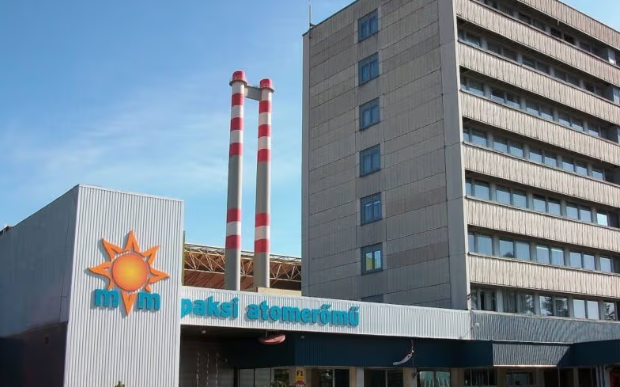
The study focuses on the technical, economic, and construction feasibility of the project. The Paks Nuclear Power Plant is located about 100 kilometers from the capital, and the current heat load of Budapest's district heating system is approximately 100 MWth in summer, peaking at 1,000 MWth in winter.
The core significance of this concept lies not only in providing a low-carbon heat source for the city but also in improving the efficiency of waste heat utilization at the nuclear power plant. The Paks Nuclear Power Plant currently relies on water from the Danube River for cooling, and operational risks are rising as summer high temperatures and abnormal river water levels become more frequent. Last week, due to record-low water levels in the Danube, the plant experienced a complete shutdown for the first time in its 44 years of operation. If a portion of the heat can be exported to Budapest through the heating pipeline network, it would help reduce the thermal load discharged into the Danube and alleviate pressure on the cooling system during high-temperature seasons.
Budapest Public Services Company believes the project could also deliver significant emission reduction and energy security benefits. Replacing a portion of natural gas-based heating with nuclear thermal energy would reduce carbon dioxide emissions and lower Hungary's dependence on imported natural gas. The proposed hot-water pipeline may be routed along the Danube, which could offer certain advantages in terms of administrative approvals, construction organization, and route coordination. At the same time, other district heating systems and industrial users along the pipeline route would also have the opportunity to connect, further enhancing the project's energy utilization efficiency and economic viability.
Paks is Hungary's only nuclear power plant, currently operating four VVER-440 reactors with a total installed capacity of 1,916 MWe. These units were commissioned between 1983 and 1987 and are planned to operate at least until the mid-2050s. In addition, Hungary launched the construction of two new VVER-1200 units in February of this year, meaning that Paks will remain a stable source of electricity and heat for a considerable period, providing a long-term resource base for the long-distance heating project.
Nuclear heat supply is not a new model—the Paks Nuclear Power Plant already supplies heat to the nearby town of Paks. Similar cases can also be found in the Czech Republic, where the Temelín Nuclear Power Plant has been supplying heat to České Budějovice since 2023, and a hot-water pipeline from the Dukovany Nuclear Power Plant to Brno is planned to begin construction next year. As climate change intensifies, natural gas prices fluctuate, and urban low-carbon transition pressures rise, Budapest's reassessment of nuclear heat supply reflects that Central and Eastern European countries are more actively exploring the comprehensive energy value of nuclear power plants beyond electricity generation.
Disclaimer: Information republished from partner media, institutions or other websites is provided for reference and communication purposes only. It does not imply endorsement of its views or verification of its accuracy. Please contact us if any content infringes rights or requires correction.