
Hungary's Paks II Nuclear Project May Require Major Adjustments
 Scan to share
According to sources familiar with Hungary's nuclear industry and discussions on the Paks II nuclear project, the new Hungarian government led by Peter Magyar believes that the Paks II project, based on Russia's Rosatom design, can only proceed if major adjustments are made.
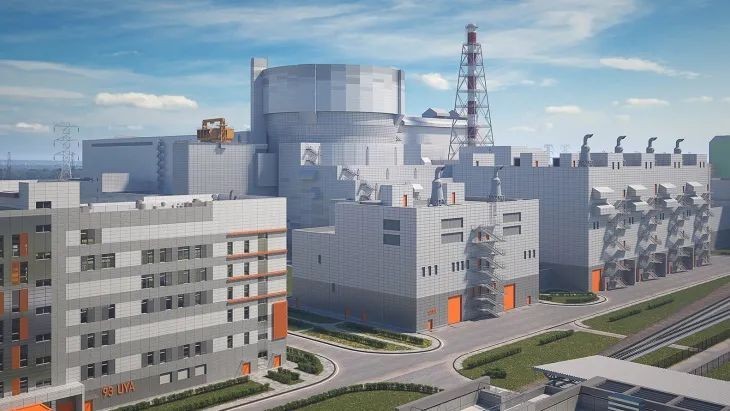
Sources said that due to factors such as ethics, technology, sanctions restrictions, licensing procedures, and existing contract terms, the Paks II project is difficult to continue under its original arrangement. However, industry insiders also believe that it would not be appropriate to abandon the project outright due to short-term sentiment or temporary setbacks. If more participants could be brought in, especially Western companies, to jointly address issues such as the supply of alternative components, communication and coordination with the EU, and the advancement of licensing procedures, there remains room for the project to continue.
Currently, Hungary's Ministry of Energy and the new management of the Paks II project are reviewing the project, including related agreements and contracts. The Hungarian government is studying the possibility of continuing the project with greater participation from Western companies, while not entirely ruling out the option of abandoning the Russian-made VVER-1200 reactors and shifting toward small modular reactors (SMRs).
It is understood that the Hungarian Prime Minister has not yet received a final proposal from the Ministry of Energy and has requested a comprehensive assessment of the project's current status. The Hungarian government also recognizes that terminating the agreement with Rosatom could expose it to compensation risks amounting to billions of euros, while the Russian side holds a relatively strong position in contractual legal terms. Therefore, Budapest must weigh its options carefully before making a final decision.
Rosatom has previously stated that construction of the Paks II project is proceeding according to plan and the schedule approved by Hungarian contractors. On February 5 this year, the first concrete was poured for Unit 5. Under International Atomic Energy Agency (IAEA) standards, the project has thus officially entered the "nuclear power plant under construction" phase, marking the transition from preliminary preparation to main construction.
The construction of the Paks II nuclear power plant is proceeding based on the intergovernmental agreement signed between Russia and Hungary in 2014, as well as three foundational contracts for the construction of two VVER-1200 reactor units. The project is expected to involve an investment of 12.5 billion euros, with approximately 80% of the funding originally planned to come from Russian loans. The two new units are scheduled to begin commercial operation in the first half of the 2030s.
The Paks nuclear power plant is located on the banks of the Danube River, approximately 100 kilometers south of Budapest. It currently operates four VVER-440 reactors, which were built and commissioned in the 1980s with Soviet assistance. At present, the plant accounts for approximately 45% of Hungary's electricity generation and 36% of its electricity consumption. Once Paks II is completed, the total installed capacity of the Paks nuclear power plant is expected to increase from the current approximately 2,000 megawatts to 4,400 megawatts.
Disclaimer: Information republished from partner media, institutions or other websites is provided for reference and communication purposes only. It does not imply endorsement of its views or verification of its accuracy. Please contact us if any content infringes rights or requires correction.