
First American Nuclear Company's Regulatory Engagement Plan for Proposed HALEU Fuel Facility Accepted for Docketing by NRC
 Scan to share
First American Nuclear Co. (FANCO) announced on August 17 that its regulatory engagement plan for the proposed Class II high-assay low-enriched uranium (HALEU) conversion and fuel fabrication facility has been accepted for docketing by the U.S. Nuclear Regulatory Commission (NRC). The facility will serve the company's EAGL-1 small modular reactor project currently under development.
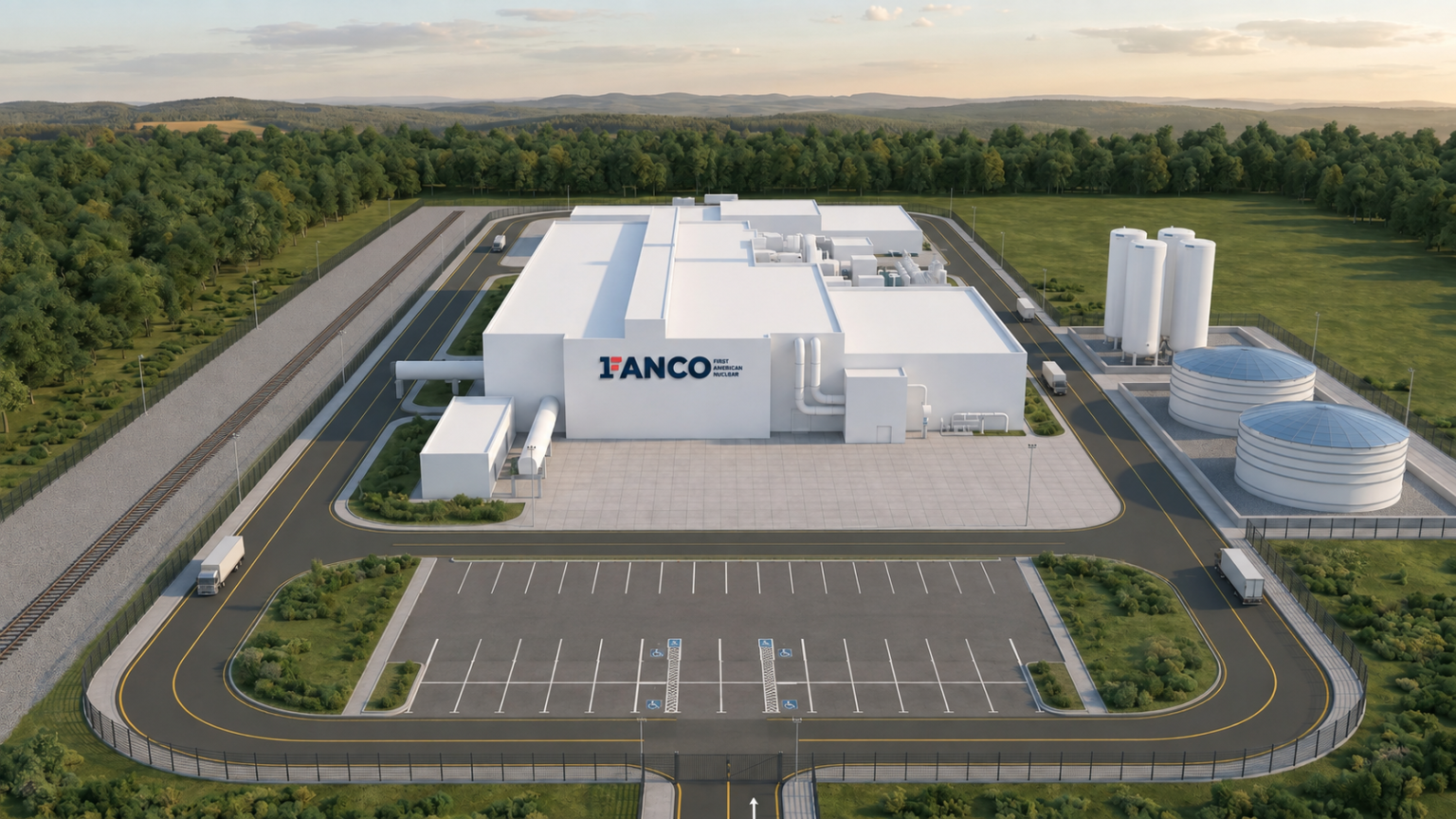
According to the company's disclosure, the NRC ADAMS accession number for the letter of intent is ML26222A181, and the NRC ADAMS accession number for the regulatory engagement plan is ML26222A177. This submission advances the pre-application regulatory engagement between FANCO and the NRC regarding the proposed ceramic fuel fabrication facility. The facility is planned to support the EAGL-1 lead-bismuth eutectic-cooled fast reactor and may offer fuel fabrication capabilities to other advanced reactor customers.
FANCO stated that the proposed facility is also expected to have the capability to process uranium hexafluoride into other fuel forms, subject to NRC approval and the terms of the company's future license application.
Prior to this regulatory engagement plan submission, FANCO submitted a letter of intent to the NRC on August 6, 2026, stating the company's plan to apply for a license under Part 70 of Title 10 of the U.S. Code of Federal Regulations for the possession and use of special nuclear material, and to support the construction, ownership, and operation of the proposed fuel fabrication facility. The company currently expects to submit its license application in the fourth quarter of 2027.
FANCO Chief Executive Officer Mike Reinboth stated that large-scale deployment of advanced nuclear energy in the United States depends not only on reactor technology innovation, but also on a safe, sufficient, and domestic fuel supply. Submitting the regulatory engagement plan is an important step in advancing the company's integrated commercial strategy, combining fuel cycle platform development with the needs of the EAGL-1 project and future advanced reactor development.
FANCO stated that the proposed fuel facility is designed to complement a critical segment of the U.S. nuclear fuel supply chain by establishing domestic capability to convert enriched uranium into finished fuel products. Through pre-application engagement, the company hopes to conduct early and transparent technical exchanges with the NRC on matters including facility design, process flows, safety controls, environmental considerations, safeguards, and organizational responsibilities.
FANCO's Executive Vice President of Regulatory Affairs, Licensing, and Quality, Michelle Catts, stated that the regulatory engagement plan provides a structured framework for the company's interactions with the NRC, facilitating sufficient communication before the formal application submission and enabling subsequent reviews to build on early substantive technical dialogue and a thorough understanding of the facility design and operational approach.
Under the plan, FANCO will hold pre-application meetings with the NRC and conduct other technical exchanges to support preparation for the future license application review. The subsequent license application is expected to cover facility activities, design, processes, equipment, administrative measures, safety controls, environmental considerations, and safeguards plans, with the goal of meeting regulatory requirements for public health and safety, worker safety, environmental protection, and common defense and security.
FANCO, headquartered in Indianapolis, Indiana, is developing the EAGL-1 reactor. This reactor type is a 240 MWe lead-bismuth-cooled fast neutron small modular reactor, designed for factory fabrication and scalable multi-unit deployment. The company stated that its fuel approach initially envisions uranium dioxide fuel, with flexibility to expand to other fuel types as the project progresses.
Disclaimer: Information republished from partner media, institutions or other websites is provided for reference and communication purposes only. It does not imply endorsement of its views or verification of its accuracy. Please contact us if any content infringes rights or requires correction.