
U.S. Laboratory Advances Nuclear Waste Cleanup Technology R&D with Artificial Intelligence
 Scan to share
Researchers in South Carolina, U.S., are leveraging artificial intelligence to develop new tools for tackling complex tasks such as nuclear material disposal, waste management, and environmental cleanup. The relevant projects are being conducted at the Advanced Manufacturing Collaborative (AMC) in Aiken, a facility affiliated with the Savannah River National Laboratory (SRNL), spanning approximately 63,000 square feet, with the project launched on August 7, 2025.
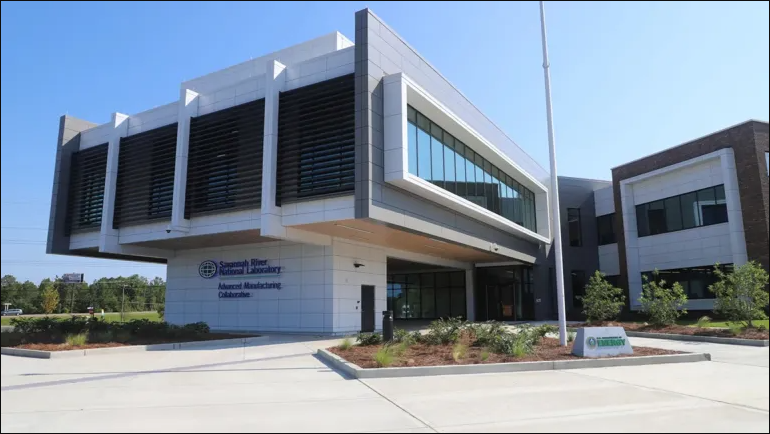
The Advanced Manufacturing Collaborative brings together researchers, engineers, students, industry partners, and university teams, with a focus on advancing R&D in artificial intelligence, robotics, additive manufacturing, and advanced materials. Johnny Green, Director of the Savannah River National Laboratory, stated that one year after the facility became operational, it is enhancing relevant technical capabilities, creating collaboration opportunities, and accelerating the development of technologies with real-world impact. He noted that the center's progress reflects how multi-party collaboration is driving advancements in environmental technologies, energy infrastructure, nuclear energy, fusion energy, and national security-related fields.
Over the past year, the Advanced Manufacturing Collaborative has prioritized nuclear materials, waste management, and environmental cleanup as key focus areas. Research teams are developing an artificial intelligence model to enhance predictive capabilities and optimize manufacturing processes. According to the Savannah River National Laboratory, the model integrates the laboratory's more than 70 years of experience in nuclear materials, environmental remediation, and facility decommissioning, while incorporating site-specific data to support applications related to environmental remediation, waste management, and infrastructure resilience.
According to the laboratory, such models are expected to save more than $150 billion in costs across the full lifecycle of nuclear cleanup in the future, while also providing technical support for the protection of national security-related assets. The work also aligns with the U.S. Department of Energy's (DOE) "Genesis Mission," an initiative aimed at uniting national laboratories, universities, and industry to leverage artificial intelligence in advancing technology across energy, scientific discovery, and national security.
To support AI research and development, scientists are utilizing a mission-driven high-performance computing system accessible to Savannah River National Laboratory employees. This system provides computing power for AI projects under the "Genesis Mission" while also supporting the laboratory's complex modeling and simulation efforts.
The Advanced Manufacturing Collaborative also houses laboratories and shared research spaces, consolidating multiple technology development efforts on a single platform. Research areas include materials design and processing, additive manufacturing, robotics, and automation. The center also collaborates with external organizations, including Silica-X Corporation, 3D Systems, and the Georgia Institute of Technology. Among these, a project developed jointly by the Savannah River National Laboratory and Silica-X Corporation on safe absorption and storage materials for nuclear waste has received an R&D 100 Award, an annual recognition of 100 representative technological innovations.
G. Jeremy Leong, Director of the Advanced Manufacturing Collaborative, stated that the center is fostering an R&D space that encourages exploration, experimentation, and creation. The first year of operations, built on collaboration and teamwork, has accelerated the journey of new ideas from concept to application.
Disclaimer: Information republished from partner media, institutions or other websites is provided for reference and communication purposes only. It does not imply endorsement of its views or verification of its accuracy. Please contact us if any content infringes rights or requires correction.