
NSF Funds $30 Million Turbulence Research Center Focused on Predictive Modeling for Fusion Energy
 Scan to share
The U.S. National Science Foundation (NSF) has established a new Science and Technology Center with a total funding of $30 million, focusing on the understanding and prediction of turbulence. The project targets application scenarios such as fusion energy, astrophysics, and hypersonic flight, aiming to tackle the challenges of cross-scale turbulence modeling and prediction in complex physical systems. Researchers and students from San José State University (SJSU) will participate in the related research.
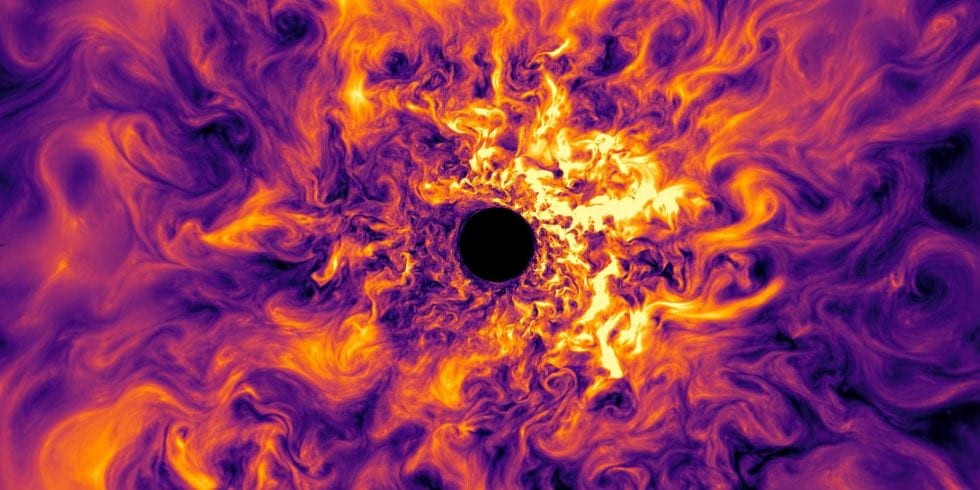
This is a three-dimensional simulated turbulent velocity field at the core collapse point of a massive star before a supernova explosion. Image credit: S. Couch, based on research by Fields and Couch published in The Astrophysical Journal, Volume 921, Page 28.
The center is led by Michigan State University and is named the "Transformative Exploration of Multiphysics and Engineering Science Turbulence" (TEMPEST) Science and Technology Center. The project will bring together physicists, mathematicians, engineers, computer scientists, and artificial intelligence researchers from multiple U.S. universities and research institutions, integrating theoretical analysis, numerical computation, experimental research, and artificial intelligence methods to establish a turbulence research framework applicable to real-world physical systems.
San José State University will primarily contribute its research strengths in multiscale mathematical modeling, computational fluid dynamics, and scientific machine learning, advancing the translation of fundamental turbulence science into predictive simulations of complex physical systems.
Liam Stanton, Associate Professor of Applied Mathematics in the Department of Mathematics and Statistics at San José State University, will participate in research on multiscale transport and turbulent mixing under extreme physical conditions, with a focus on fusion energy and high-energy-density plasmas. His research interests include developing mathematical and computational models that bridge microscopic particle interactions, kinetic theory, and continuum-scale transport processes.
Stanton noted that fusion experiments involve physical processes spanning extremely wide spatial and temporal scales, and understanding how microscopic plasma interactions affect large-scale turbulent mixing and energy transport exceeds the capability of any single researcher or single computational approach. The TEMPEST project will advance cross-scale coupling modeling by integrating experiments, mathematics, large-scale simulations, and artificial intelligence.
A core objective of the project is to advance turbulence models from "reproducing experimental results after calibration" to "predicting turbulent transport and mixing before experiments." Improved predictive capability will help enhance the computational tools used to design and interpret inertial confinement fusion and magneto-inertial fusion experiments.
Mike Wood, Assistant Professor jointly appointed at San José State University's Moss Landing Marine Laboratories and the Department of Computer Science, will also participate in the project. He will leverage his experience in computational fluid dynamics and high-performance computing, combined with machine learning and neural network techniques, to develop novel turbulence models. Since even the most powerful existing computers cannot explicitly resolve all turbulent scales in complex flows, researchers must approximate the effects of unresolved turbulence through modeling. Wood's research will explore how machine learning and high-resolution simulation data can improve the modeling accuracy of unresolved processes.
TEMPEST will also conduct research on non-conventional turbulence. Such turbulent systems typically exist under extreme conditions and involve cross-scale interactions and multiple coupled physical processes, challenging traditional modeling assumptions. The center plans to test new theoretical and computational methods in fusion plasmas, astrophysical flows, and hypersonic aerospace environments.
In addition to Michigan State University and San José State University, the TEMPEST project includes researchers from Baylor University, Auburn University, the University of Rochester, Yale University, Texas A&M University, and the Georgia Institute of Technology. Unfunded partners include Los Alamos National Laboratory, Sandia National Laboratories, Lawrence Livermore National Laboratory, Pacific Fusion, and General Atomics.
San José State University students will directly participate in center research through interdisciplinary projects in applied mathematics, computational fluid dynamics, scientific computing, machine learning, and data science, with opportunities to establish collaborative connections with TEMPEST member institutions, national laboratories, and large-scale research facilities. The project also plans to make research data and software openly available and to conduct education and public engagement activities, cultivating scientific talent capable of leveraging artificial intelligence and working across traditional disciplinary boundaries.
Disclaimer: Information republished from partner media, institutions or other websites is provided for reference and communication purposes only. It does not imply endorsement of its views or verification of its accuracy. Please contact us if any content infringes rights or requires correction.