
Europe Advances Space Nuclear Power Research, Targeting Lunar and Mars Missions
 Scan to share
The European Space Agency (ESA) is accelerating its assessment of nuclear energy applications in deep-space missions, focusing on using small nuclear reactors to power spacecraft electric propulsion systems, as well as providing stable energy for future fixed lunar surface facilities and subsequent Mars missions.
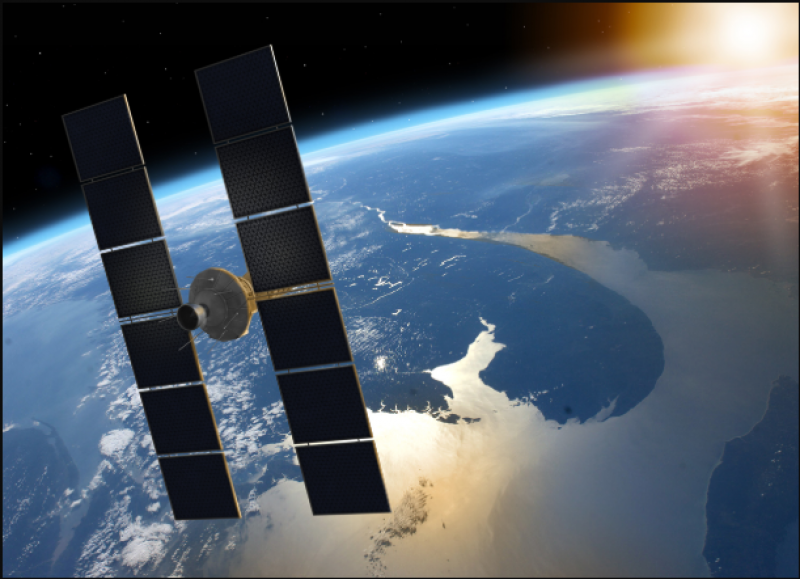
Existing space missions primarily rely on chemical fuels and solar panels. The former is limited by the amount of propellant that can be carried, while the latter suffers from declining power generation efficiency as spacecraft move farther from the Sun. ESA believes that nuclear power systems could compensate for the shortcomings of both approaches, particularly in long-duration lunar operations and deeper space exploration.
ESA completed a nuclear thermal propulsion study last year. In March this year, the agency published research findings on nuclear electric propulsion; in the summer, ESA also announced preparations to establish an autonomous European plutonium-238 supply chain. Plutonium-238 can be used to provide electricity for probes and spacecraft that operate far from the Sun over extended periods.
Early research concepts were proposed with participation from ArianeGroup and Framatome Space, based on using fission reactors to heat hydrogen, which is then expelled at high speed through nozzles to generate thrust. Such nuclear thermal propulsion systems could theoretically improve spacecraft or rocket efficiency, potentially shortening the current approximately nine-month Mars transit time while also enhancing spacecraft payload capacity.
More recently, ESA has expanded its research focus to include a nuclear electric propulsion concept called "RocketRoll." This concept envisions using small nuclear reactors to generate electricity for powering electric propulsion engines. Related studies suggest that such systems could provide stable power over extended periods, enabling spacecraft to achieve higher efficiency, longer mission lifetimes, and greater payload capabilities.
European teams involved in this program include multiple consortia led by Belgium's Tractebel, France's National Centre for Scientific Research (CNRS), and OHB Czech Space. The research scope covers small nuclear power sources generating hundreds of kilowatts up to multi-megawatt nuclear power sources. ESA has stated that 100 kilowatts is considered the minimum threshold for a nuclear electric propulsion concept to be practically meaningful, as below this power level, solar systems may still offer greater efficiency advantages.
Beyond spacecraft propulsion, nuclear energy is also viewed as a key energy option for future lunar bases. The lunar night lasts approximately 14 Earth days, during which solar panels cannot generate electricity. To build long-term operational lunar surface facilities, reliance on large-scale energy storage systems or independent power sources such as nuclear reactors would be necessary. ESA believes that small nuclear reactors could provide continuous power to communication systems, lunar vehicles, robots, scientific facilities, and living quarters, reducing dependence on large batteries and solar arrays.
Safety is a key challenge for space nuclear power applications. ESA is studying relevant reactor designs aimed at keeping reactors in a non-activated state during launch and only activating them after entering a safe orbit, thereby reducing the risk of nuclear fuel leakage in the event of a launch accident.
On the nuclear fuel supply front, Europe is advancing a project called "Endure." Led by Tractebel and supported by the Belgian Nuclear Research Centre (SCK CEN), the project aims to establish an autonomous production supply chain for plutonium-238 for space missions. Plutonium-238 is not typically used in conventional nuclear reactors, but it can be used in radioisotope power systems, colloquially known as "nuclear batteries," which are suitable for providing electricity to deep-space probes operating in regions with insufficient sunlight.
Related studies indicate that Europe has the foundation to develop this supply chain, including raw materials such as neptunium-237, research reactor facilities, and technical expertise accumulated in countries such as Belgium and France. ESA has established a dedicated team to continue advancing research on space nuclear power and the associated fuel supply systems.
Disclaimer: Information republished from partner media, institutions or other websites is provided for reference and communication purposes only. It does not imply endorsement of its views or verification of its accuracy. Please contact us if any content infringes rights or requires correction.