
Paris, France workshop explores ATHENA thermal-hydraulics nuclear safety research cooperation framework
 Scan to share
On September 10-11, 2026, dozens of researchers, experts and related professionals gathered in Paris, France to participate in the "Building the ATHENA Framework" workshop, discussing collaborative mechanisms for thermal-hydraulics nuclear safety research. ATHENA stands for "Advanced Thermal-Hydraulics Experiments for Nuclear Analysis and Safety Applications," and aims to establish a more coordinated and more sustainable thermal-hydraulics research framework.
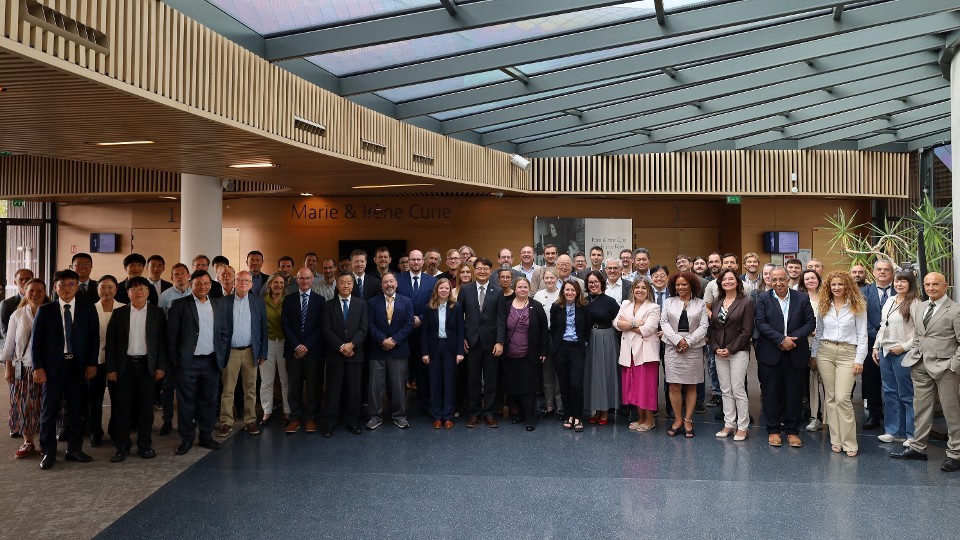
Participants believed that clarifying the framework's flexibility, applicable boundaries and advantages requires strengthened communication among all relevant parties to ensure that different research needs are effectively addressed. This workshop provided a platform for exchange among all parties, with focus on the foundational conditions for framework development, priorities of participating parties, and future work directions.
This activity is a continuation of a series of work by the Nuclear Energy Agency (NEA) of the Organisation for Economic Co-operation and Development on nuclear research facilities and related infrastructure after closure. The relevant preliminary studies and recent analyses were led by the NEA Committee on the Safety of Nuclear Installations (CSNI) and its Working Group on Analysis and Management of Accidents (WGAMA).
The NEA's previously published "Strategic Roadmap for Nuclear Reactor Safety Research" and "Nuclear Energy Agency Advanced Thermal-Hydraulics Experiments for Nuclear Analysis and Safety Framework (NEA/ATHENA) Strategic Plan" provided background support for the challenges, risks and opportunities facing nuclear safety research.
During the workshop, participants discussed the baseline setting, operating context and potential cooperation modalities of the ATHENA framework. The proposed framework will focus on enhancing the coordination of NEA joint project-related activities and providing greater flexibility to participating members.
According to the discussion vision, the ATHENA framework will better meet stakeholders' priorities by connecting experimental facilities, pooling research resources and coordinating related programmes. This cooperation approach aims to improve research efficiency, maintain long-term sustainability and enhance relevant capabilities, and is particularly applicable to rapidly developing fields that individual projects find difficult to cover independently.
In accordance with the general arrangements for NEA joint projects, ATHENA is planned to operate independently of the CSNI work programme while maintaining alignment with CSNI-led related work, to ensure that experimental results can support safety analysis and computer code validation. ATHENA will also explore establishing a centralized data repository, organizing International Standard Problem (ISP) studies and conducting benchmark exercises, and will maintain close collaboration with WGAMA to strengthen the linkage between research activities.
Disclaimer: Information republished from partner media, institutions or other websites is provided for reference and communication purposes only. It does not imply endorsement of its views or verification of its accuracy. Please contact us if any content infringes rights or requires correction.