
New Progress in Research on Microstructural Stability of High-Silicon Austenitic Steels for Lead-Cooled Fast Reactors
 Scan to share
Recently, the Special Alloys Research Department of the Institute of Metal Research, Chinese Academy of Sciences, in collaboration with the Department of Mechanical Engineering of The Hong Kong Polytechnic University, building on prior work that revealed Si-induced austenite decomposition behavior in high-silicon austenitic steels and the resulting mechanical property degradation mechanism (Acta Mater., 272 (2024) 119948), systematically investigated the regulatory effect of Nb on austenite decomposition behavior during long-term thermal aging at 550°C by introducing the stabilizing element Nb. The study found that Nb exhibits a “dual role” in high-silicon austenitic steels: on the one hand, Nb significantly retards austenite decomposition by preferentially forming NbC to suppress M23C6 carbide precipitation; on the other hand, the strong interaction between Nb and Si promotes the formation of (Nb, Si)-rich clusters and further induces a new mode of austenite decomposition (Fig. 1, Fig. 2). The study further revealed a two-stage evolution mechanism of Nb-regulated austenite decomposition. During intermediate-stage thermal aging, (Nb, Si) clusters serve as favorable precursors for M6C carbide nucleation; M6C growth consumes Ni and C from the surrounding austenite, forming local Ni-depleted and C-depleted microzones that induce the γ→α-ferrite transformation. After longer-term thermal aging, (Nb, Si) clusters further promote G-phase nucleation, leading to a eutectoid transformation of γ → G phase + α ferrite, whose lamellar cooperative growth is mainly controlled by Nb diffusion in the austenite at the decomposition front.
Based on the above mechanism, the research team further proposed a 900°C stabilization treatment, which pre-precipitates dispersed secondary NbC while simultaneously reducing the solid-solution Nb and C contents in the austenite, thereby synergistically suppressing both types of austenite decomposition induced by M6C carbides and Nb partitioning. After the stabilization treatment, no obvious austenite decomposition was observed in the material even after long-term thermal aging at 550°C for 3000 h (Fig. 4). This provides a new theoretical basis for the composition design and microstructural stability control of long-life high-silicon austenitic steels resistant to lead-bismuth corrosion.
The related results were published under the title “Niobium partitioning-mediated austenite decomposition in a Si-modified austenitic stainless steel during long-term thermal aging at 550 ℃” in Acta Materialia 321 (2026) 122764. Dr. Xie Ang is the first author, and Professor Chen Shenghu and Professor Rong Lijian are the co-corresponding authors. This research was funded by the Strategic Priority Research Program Category A of the Chinese Academy of Sciences, the Liaoning Province Doctoral Startup Project, and the State-owned Capital Program (Category C).
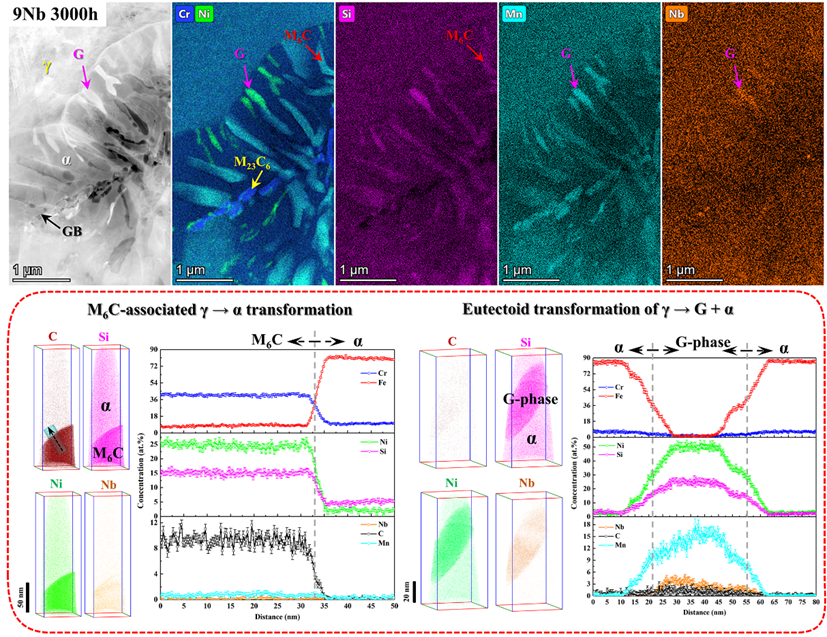
Fig. 1 Nb partitioning-mediated austenite decomposition process
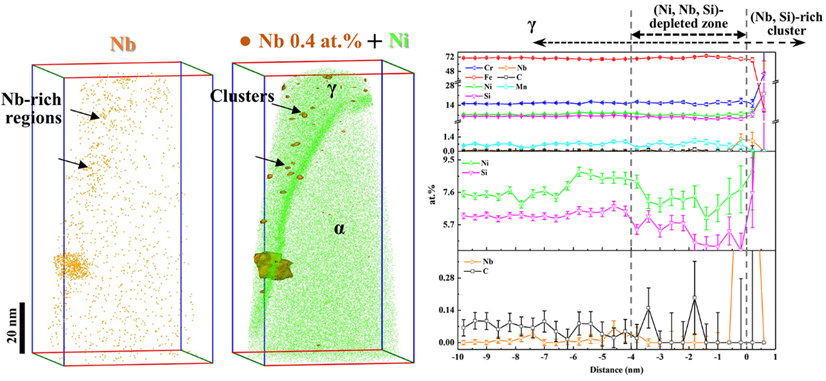
Fig. 2 Formation of (Nb, Si)-rich clusters and compositional changes in the adjacent austenite
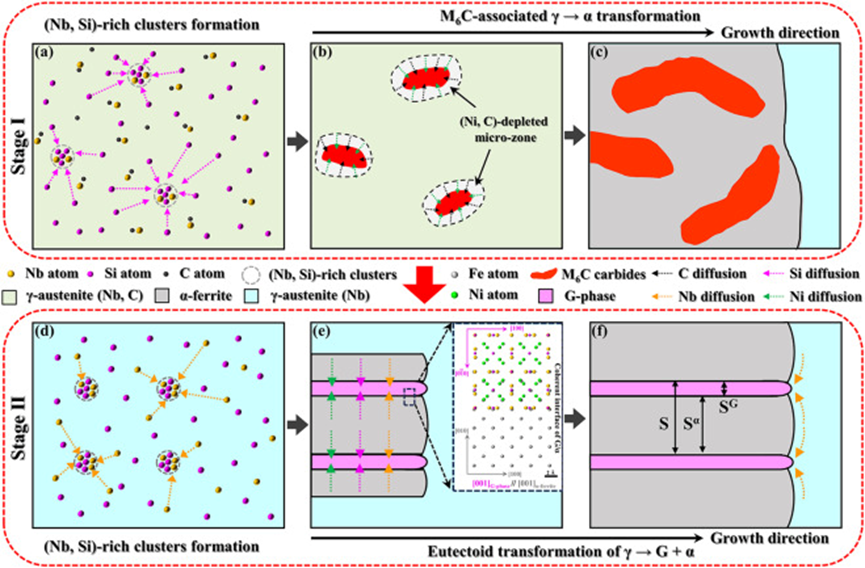
Fig. 3 Two-stage evolution mechanism of Nb-regulated decomposition of high-silicon austenite
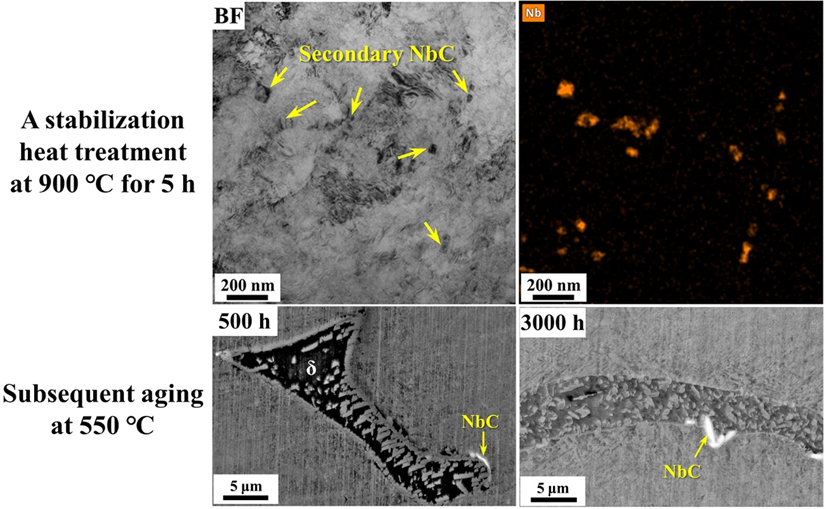
Fig. 4 Stabilization treatment further suppresses austenite decomposition
Disclaimer: Information republished from partner media, institutions or other websites is provided for reference and communication purposes only. It does not imply endorsement of its views or verification of its accuracy. Please contact us if any content infringes rights or requires correction.